

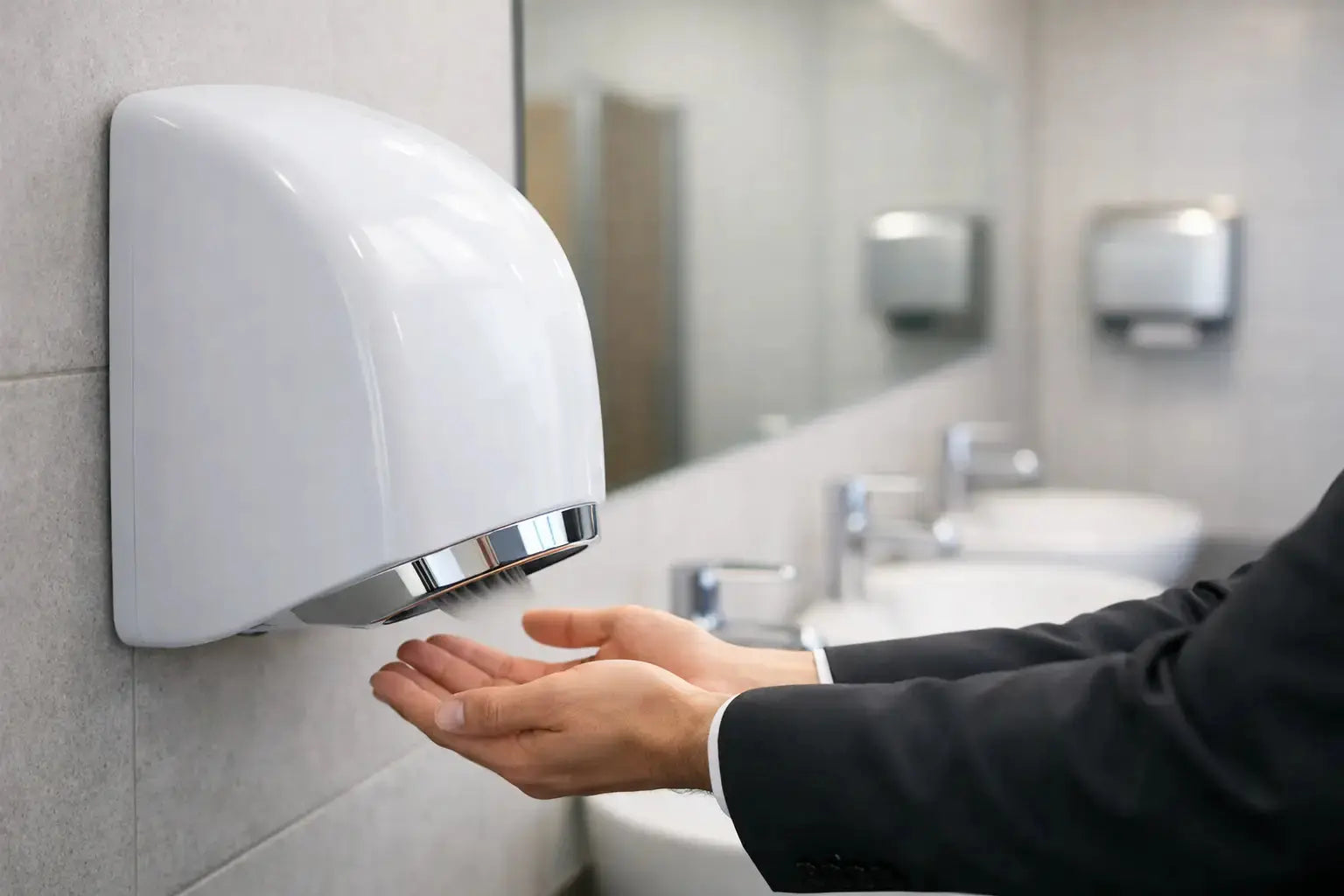
A wet, high-traffic washroom exposes weak equipment fast. If you are specifying a wall mounted hand dryer for restroom use, the wrong choice usually shows up in complaints about noise, dry times, breakdowns, or water on the floor. The right unit does the opposite - it keeps maintenance predictable, supports hygiene, and fits the space without overcomplicating installation.
For commercial buyers, contractors, and property owners, hand dryers are rarely a one-size-fits-all purchase. A small office washroom, a restaurant, a school, and a public facility all ask for different performance levels. Speed matters, but so do noise output, electrical requirements, vandal resistance, and the way the dryer handles water during use.
How to choose a wall mounted hand dryer for restroom use
The first decision is traffic level. In a low-use restroom, a standard warm-air dryer may be acceptable if the priority is lower upfront cost and simple operation. In a busy environment, that same model can feel slow, create lineups, and frustrate users. High-speed units usually make more sense where turnover is constant, because shorter dry times improve user flow and reduce idle time at the sink area.
Power supply should be reviewed before model selection, not after. Some dryers are straightforward replacements for older units, while others may require different voltage or dedicated electrical planning. For renovation projects, that can affect labour, wall preparation, and overall budget. A dryer that looks competitively priced on paper may become less attractive if the installation scope expands.
Mounting height and wall construction also matter. Drywall with light backing is not the same as a masonry wall or a properly reinforced commercial partition. A vandal-resistant or heavy-duty unit needs secure support, especially in schools, arenas, transit spaces, and other demanding sites. If accessibility is part of the project scope, placement needs to work with clearances and reach ranges from the start.
Drying speed, energy use, and user experience
Drying speed is usually the feature buyers look at first, and for good reason. Faster drying generally improves satisfaction and reduces paper towel fallback where both options exist. But speed should be judged with context. Some high-speed dryers perform very well while producing more sound, and that trade-off is acceptable in some commercial settings but less desirable in hospitality or office interiors.
Energy use is another point where product claims need a practical read. A dryer with higher wattage may complete the job quickly and reduce total run time per user. A lower-wattage unit may consume less peak power but take longer. The better value depends on traffic patterns, expected daily use, and whether the site prioritizes speed, energy reduction, or a balance of both.
Sensor reliability deserves close attention. Automatic activation is now standard in many spaces, but not all sensors are equally consistent. Delayed response, false starts, or poor hand detection create a poor impression very quickly. In premium or customer-facing washrooms, dependable sensor performance is part of the overall fit and finish, not just a technical detail.
Air temperature is also worth considering. Some users prefer warm airflow because it feels more familiar, while jet-style dryers often focus on speed rather than heat. Neither approach is universally better. In colder climates and winter-heavy use conditions, warm air can feel more comfortable. In high-volume commercial washrooms, users often care more about getting dry quickly and moving on.
Hygiene and maintenance considerations
Hygiene claims around hand dryers are often oversimplified. In practice, cleanliness depends on the full washroom environment, not just the drying method. A well-maintained dryer in a properly cleaned restroom can be a strong, practical choice. What matters most is how the unit fits into the site's cleaning routine and how it manages water during operation.
Some high-speed dryers can blow water off hands and onto adjacent surfaces or flooring if the sink area is tight or poorly laid out. That can increase janitorial work and create slip concerns. In compact restrooms, placement relative to sinks, doors, and walkways should be planned carefully. Faster is not always better if it creates a mess around the unit.
Filter systems can add value, especially in commercial settings where buyers want an added layer of air quality control. That said, filters are only useful if they are easy to access and realistically maintained. If a facility team is unlikely to replace filters on schedule, a simpler model may be the smarter long-term option.
Surface finish affects maintenance more than many buyers expect. Stainless steel and brushed finishes can be durable and suited to commercial use, but they may still show fingerprints depending on the model and lighting. White or coated housings can work well in certain interiors, though they may show wear differently over time. For public washrooms, durability and ease of cleaning usually outweigh purely decorative preferences.
Matching the dryer to the restroom type
A wall mounted hand dryer for restroom applications in retail or restaurant settings usually needs a balance of appearance, speed, and manageable sound. Customers notice the fixture, so a bulky institutional look may not suit the space. At the same time, the unit has to handle repeated daily use without becoming a maintenance issue.
Office washrooms often benefit from quieter operation. In these environments, extreme speed may be less important than a more refined user experience. If the restroom is close to workspaces, boardrooms, or reception areas, noise control should be part of the buying decision.
Schools, recreation facilities, and public buildings usually call for a more rugged specification. Here, durability, tamper resistance, and fast drying are often the priority. Decorative finishes matter less. The unit needs to perform consistently, withstand rough handling, and keep maintenance calls down.
Healthcare and senior-focused environments may place greater emphasis on accessibility, intuitive use, and manageable sound levels. In these settings, the user profile is broader, and comfort can be as important as throughput. The best choice is often a reliable model with clear activation and sensible placement, rather than the most aggressive high-speed option available.
Installation and replacement planning
If you are replacing an existing hand dryer, measure more than the old unit's width and height. Check electrical compatibility, mounting pattern, wall condition, and surrounding clearances. This is especially important in retrofits where tile repair or patching could become part of the job if the new model does not cover the previous footprint.
For new construction or full washroom renovations, dryer selection should happen early enough to coordinate with electrical rough-in and millwork or accessory placement. A hand dryer installed too close to a garbage receptacle, baby change station, or door swing can make the washroom feel cramped and less functional.
Maintenance access should not be an afterthought. If a unit is difficult to service, routine upkeep becomes slower and more expensive. Contractors and facility teams generally benefit from models with straightforward mounting systems and accessible internal components. That practical difference may not be obvious in product photos, but it matters over the life of the fixture.
For buyers comparing options across a broad commercial washroom category, Plumbing Market makes it easier to review fixtures and supporting products in one place, which is useful when the hand dryer is only one part of a larger restroom specification.
What buyers should compare before ordering
A good product comparison starts with five points: voltage, wattage, dry time, decibel rating, and housing material. From there, look at sensor type, warranty support, and whether the unit is intended for light, medium, or heavy traffic. These details help narrow the field quickly and prevent overbuying or underbuying.
Price should be evaluated as a total installed and operating cost, not just a unit cost. A cheaper dryer can become expensive if it is noisy enough to generate complaints, slow enough to reduce user satisfaction, or fragile enough to require early replacement. On the other hand, paying for premium performance in a lightly used washroom may not deliver much practical return.
The best purchase is usually the one that fits the building's actual use pattern. A thoughtfully selected wall mounted hand dryer for restroom spaces supports cleanliness, user flow, and long-term maintenance without drawing attention to itself. That is usually the mark of the right specification - it works every day, fits the room, and solves the problem without adding a new one.
If you are choosing for a renovation or commercial fit-out, start with the washroom's traffic, sound tolerance, and electrical setup. Once those are clear, the right model tends to reveal itself much faster.


