

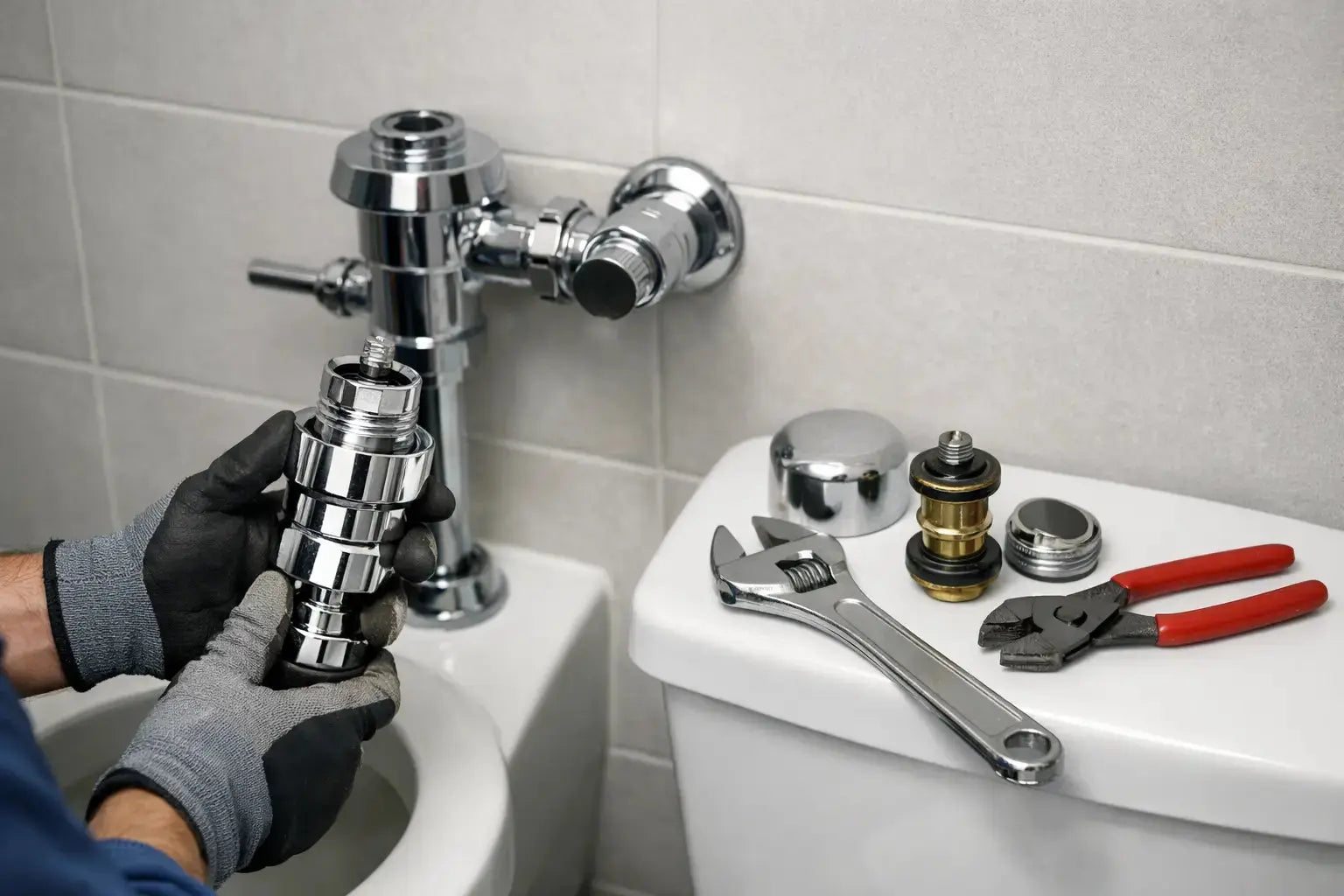
A washroom can have quality fixtures, clean finishes, and a solid maintenance routine, yet one worn flush valve will still create complaints fast. When toilets keep running, flushing turns inconsistent, or water use starts climbing, commercial flush valve replacement becomes less of a repair decision and more of an operating cost decision.
In commercial settings, the flush valve does more work than most people realize. Restaurants, offices, schools, retail spaces, and multi-unit properties put repeated demand on every component inside the valve body. Diaphragms wear out, handles loosen, vacuum breakers degrade, and older assemblies stop delivering the flush performance the fixture was designed for. Sometimes a rebuild kit is enough. Sometimes replacing the full valve is the smarter move.
When commercial flush valve replacement is the right call
Not every problem means the entire valve has reached the end of its service life. A leaking handle assembly, worn diaphragm, or damaged relief valve can often be addressed with replacement parts. That option makes sense when the body is still in good condition, the model is clearly identified, and parts are readily available from a trusted brand.
Full commercial flush valve replacement tends to make more sense when the valve is heavily scaled, corroded, repeatedly repaired, or no longer performing consistently after maintenance. It is also the better route when the original model is obsolete or when labour spent troubleshooting an older assembly starts to outweigh the cost of a new unit. In high-traffic buildings, repeat callbacks usually cost more than a clean replacement.
There is also a water-efficiency angle. Older flush valves may not align well with newer fixture performance targets, especially in facilities trying to reduce consumption or standardize washroom hardware across multiple rooms. Replacing an aging unit with a current commercial-grade model can improve consistency and simplify future maintenance.
What usually fails first
The most common issues are familiar to facility managers and plumbers. A valve that runs continuously often points to diaphragm wear, debris in the bypass, or seal damage. Weak flushes may indicate pressure problems, a mismatch between valve and fixture, or internal wear that affects timing and volume. Hard-to-operate handles, slow shutoff, and intermittent flushing often show up in older valves that have seen years of service.
The challenge is that symptoms can overlap. A toilet that does not clear properly might look like a bowl issue when the real problem is the flushometer. A valve that hisses after use may need a rebuild, but if the body threads are compromised or internal surfaces are heavily damaged, replacement is the safer long-term fix.
That is why product matching matters more than guesswork. Commercial valves are not interchangeable in every situation, even when they look similar from the outside.
How to choose the right replacement valve
The first step is identifying the fixture type. A water closet flush valve and a urinal flush valve are designed for different flow requirements, and using the wrong one creates immediate performance issues. The next step is checking flush volume. Commercial fixtures are engineered around specific water usage ratings, so the replacement valve needs to match that requirement closely.
Connection size matters as well. Inlet and outlet dimensions must align with the existing installation, and rough-in conditions should be confirmed before ordering. Handle orientation can also matter in tighter layouts or accessibility-driven washroom designs.
Brand compatibility is another practical factor. Sticking with a known commercial brand often makes future service easier because repair kits, handle parts, diaphragms, vacuum breakers, and stop assemblies are easier to source. For trade buyers and maintenance teams, standardizing by brand across a property can reduce parts inventory and service time.
Material and finish are worth considering too, especially in visible public washrooms. Chrome-plated brass remains the standard for durability and appearance, but the real priority is commercial-grade construction that can hold up under frequent use and regular cleaning.
Manual or sensor-operated?
For many properties, a manual flush valve remains the simplest and most economical choice. It is proven, familiar to service, and generally easier to maintain with readily available parts. In busy commercial environments where durability and straightforward servicing matter most, manual models still make strong sense.
Sensor-operated flush valves bring a different set of benefits. They can improve hygiene, support touch-free washroom design, and help deliver a more uniform user experience. They may also be preferred in premium commercial spaces or facilities with specific accessibility and sanitation goals. The trade-off is complexity. Electronic components, power supply considerations, and sensor calibration add variables that do not exist with standard manual valves.
For many buyers, the right answer depends on traffic level, maintenance capacity, and budget rather than trend alone.
Commercial flush valve replacement and fixture matching
A flush valve should not be selected in isolation. The toilet or urinal, the building water pressure, and the intended flush volume all work together. If one piece is mismatched, the whole system can underperform.
This is especially important in retrofit projects. Older commercial washrooms may have legacy fixtures, unusual supply conditions, or previous repair work that changed dimensions or components over time. What fits physically may still be wrong hydraulically. Checking model specs, pressure requirements, and installation details before purchase helps avoid ordering a valve that will need to be returned or modified in the field.
For contractors, this is where reliable category depth matters. Being able to compare complete valves, repair kits, stops, vacuum breakers, spuds, and related components in one place makes sourcing more efficient. Plumbing Market serves that need well by offering commercial plumbing products alongside the replacement parts and installation essentials that often get overlooked until the job is underway.
Signs you should replace instead of rebuild
If the valve has been rebuilt more than once in a short period, replacement is usually the better investment. The same applies when mineral buildup is severe, the body shows visible wear, or parts availability is inconsistent. Rebuilding only the internal components will not correct every issue if the valve housing itself has reached the point where sealing surfaces or threads are compromised.
Replacement is also a practical choice when property managers want to reduce service variability. A new valve gives you a known baseline. Instead of mixing old bodies with new internal parts across multiple stalls, you create a more consistent maintenance environment.
That matters in schools, restaurants, offices, and public facilities where downtime creates immediate inconvenience. Saving on the initial part cost does not always save money if the result is another service call a month later.
Installation considerations before you order
Commercial flush valve replacement is rarely difficult for a qualified installer, but ordering errors can slow the project. Confirm the fixture type, flush rate, inlet size, tailpiece or spud requirements, and whether trim components need replacement at the same time. If the stop assembly or vacuum breaker is already worn, replacing only the main valve may leave part of the problem unresolved.
It is also worth checking local code and site requirements, especially in institutional or multi-unit settings where water efficiency standards or accessibility expectations may apply. Canadian buyers managing larger properties often benefit from choosing assemblies and parts that can be repeated across locations rather than buying one-off solutions for each washroom.
For visible washrooms, finish consistency can matter as much as function. In back-of-house environments, serviceability may be the bigger concern. Those priorities are different, and the right product choice should reflect that.
Buying for reliability, not just fit
A flush valve is one of those products that gets attention only when it fails. In commercial spaces, that makes durability the main value driver. The best replacement is not simply the one that threads into place. It is the one that matches the fixture properly, performs reliably under the building's water conditions, and supports easy maintenance with accessible replacement parts.
That is why recognized commercial brands continue to matter. Consistent engineering, available service kits, and dependable product documentation reduce guesswork. For homeowners tackling light commercial applications, and for trade professionals managing multiple properties, that predictability is worth paying for.
If you are weighing rebuild versus replacement, the real question is simple: will this valve give you another dependable service cycle, or are you about to spend more time and labour nursing along a part that is already at the end of its useful life? When reliability, water performance, and maintenance efficiency all point in the same direction, commercial flush valve replacement is usually the cleaner decision.
Choose the valve with the same care you would give any high-use commercial component, because the right match keeps the washroom quieter, more efficient, and easier to manage long after the install is done.


