

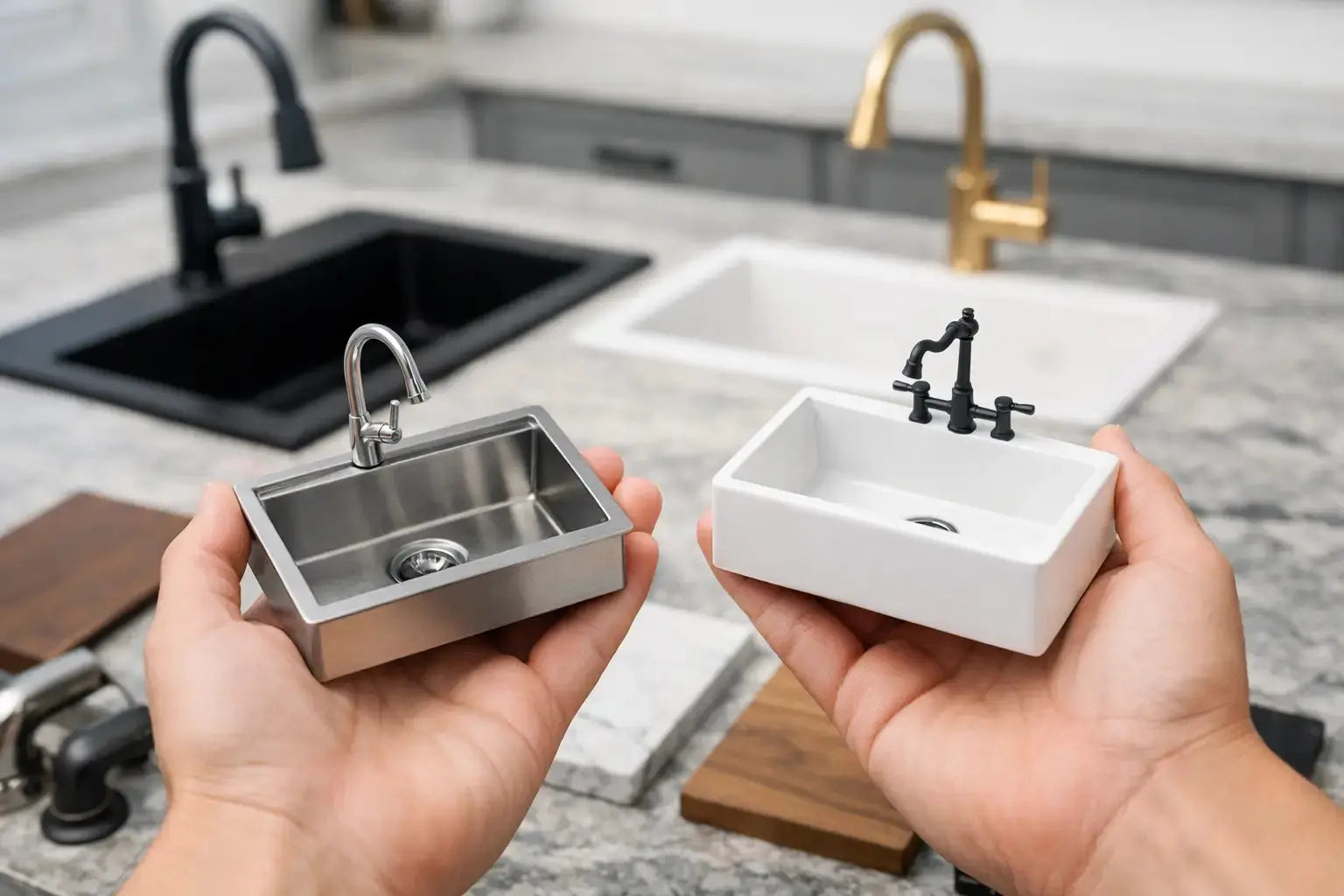
A kitchen sink looks simple until you have to live with the wrong one. A bowl that is too shallow splashes constantly, a sink that is too large can consume valuable base cabinet space, and the wrong material can show wear faster than expected. If you are working out how to select kitchen sink options for a renovation, replacement, or new build, the right choice comes down to fit, function, and finish - not just appearance.
The best sink for one kitchen can be the wrong call in another. A condo kitchen, a busy family home, and a light commercial prep area all place different demands on size, bowl layout, and material. That is why it helps to narrow the decision in the same order professionals do: cabinet size first, installation style second, daily use third, and finish last.
How to select kitchen sink without guessing
Start with the cabinet, countertop, and plumbing layout you already have or plan to install. Many sink selection mistakes happen when shoppers focus first on style and only later realize the sink will not work with the base cabinet, faucet reach, or drain placement.
Your base cabinet sets the upper limit. A larger sink may look appealing online, but if the cabinet width cannot support it, the option is off the table. This matters even more with farmhouse models, which often require a specific cabinet configuration and front-panel modifications.
Countertop material also matters. Undermount sinks are common with stone and solid surface counters because they create a clean edge and make wipe-down easier. Drop-in models are often more flexible for laminate installations and replacement projects because the rim covers the cutout. If you are replacing an existing sink without changing the counter, the existing opening may effectively decide the sink type for you.
Then look at your plumbing rough-in. Drain position, garbage disposer clearance, and available depth below the sink all affect what will fit comfortably. This is especially relevant when you want a deeper bowl but already have pull-out waste bins, filtration systems, or limited cabinet height.
Size matters more than most buyers expect
When deciding how to select kitchen sink dimensions, think beyond outside measurements. What really changes day-to-day use is the interior bowl space, depth, and how the sink shares room with accessories and under-sink storage.
A large single bowl suits households that wash oversized cookware, baking sheets, and stock pots. It gives you uninterrupted space, which is often more useful than two narrow compartments. On the other hand, a double bowl still makes sense if you regularly separate prep and cleanup, hand-wash dishes while keeping one side clear, or want one bowl dedicated to rinsing.
Depth is another trade-off. A deeper sink helps contain splashing and conceal dishes, but if it is too deep for the user, it can become uncomfortable over time. Taller users may welcome a deeper bowl, while shorter users may prefer something more moderate, especially if the countertop is already on the higher side.
For smaller kitchens, it is usually better to choose a well-proportioned sink that preserves landing space on both sides rather than forcing in the biggest model possible. The sink should support workflow, not dominate the whole counter.
Single bowl, double bowl, or workstation
Single bowl sinks are often the most versatile choice for modern residential kitchens. They work well for larger cookware and give a cleaner, less segmented interior.
Double bowl sinks remain practical where multitasking matters. Equal bowls are balanced, while offset double bowls offer a larger main side and a smaller secondary side. That smaller bowl can be useful for rinsing produce, draining pasta, or keeping cleaning tasks separate.
Workstation sinks add ledges and accessory compatibility, such as cutting boards, drying racks, and colanders. They can be efficient in compact kitchens, but they are most useful when you know you will use the accessories regularly. Otherwise, you may be paying for features that stay in the cabinet.
Choose the right installation type
Installation style affects appearance, cleanability, and what is required from the cabinet and countertop.
Undermount sinks are a strong choice for many renovated kitchens because they look clean and make it easy to sweep crumbs directly into the bowl. They are especially common with quartz, granite, and other solid countertop surfaces. The trade-off is that installation needs to be precise, and the countertop must be suitable for the mounting method.
Top-mount or drop-in sinks are practical and often easier for replacement jobs. The rim sits on the counter, which helps cover minor cutout inconsistencies and can simplify installation. For many homeowners and contractors, this is still the most straightforward route when replacing an older sink without a full counter change.
Farmhouse sinks create a strong visual statement and offer generous front-to-back capacity. They can be excellent in larger kitchens and design-led renovations, but they are not the automatic premium choice for every project. They usually require more planning, more cabinet coordination, and careful attention to faucet reach and front clearance.
Integrated sink designs, typically paired with matching countertop materials, offer a very streamlined appearance. They are less common as a simple replacement option and are more relevant in custom or higher-end kitchen builds.
Material affects wear, noise, and upkeep
Material is where style and performance meet. It is also where many buyers need to think realistically about how the kitchen is used.
Stainless steel remains the most widely selected option because it is durable, versatile, and easy to coordinate with appliances and modern faucets. Gauge matters here. A heavier gauge usually feels more substantial and can reduce noise and flex. Sound-deadening pads and undercoating also improve performance, especially in busy kitchens.
Granite composite sinks are popular for buyers who want a more design-forward finish with strong scratch and stain resistance. They tend to feel quieter than stainless steel and are available in colours that can soften the look of the kitchen. The trade-off is that not every cleaner is suitable, and some lighter shades may require more attention to keep looking fresh.
Fireclay sinks bring a classic, high-impact look, especially in farmhouse styles. They are durable and attractive, but they are also heavier and demand more installation planning. If you are working within strict cabinet or countertop constraints, weight and fit should be checked early.
Cast iron with enamel coating offers a substantial feel and a traditional look, but it is heavy and can be less forgiving if cookware is dropped. For some projects, the appearance justifies it. For others, stainless steel or composite is the more practical choice.
Do not overlook faucet and accessory compatibility
A sink does not work on its own. Faucet holes, deck space, drain opening size, and accessory support should all be reviewed before purchase.
If you want a deck-mounted kitchen faucet, make sure the sink offers the right hole configuration or enough room behind the bowl. If the faucet will be countertop-mounted, confirm that the sink shape and rear clearance still allow comfortable operation. Tall pull-down faucets, soap dispensers, air switches, filtered water taps, and disposal controls all need space.
You should also consider sink bottom grids, strainers, basket drains, and compatible accessories at the same time. A workstation sink without the right accessory set loses much of its value. Likewise, a premium sink paired with low-quality drains or mismatched hardware can create avoidable frustration during installation.
Match the sink to the way the kitchen is actually used
This is often the deciding factor. A rental property, a family home, and a chef-focused renovation do not need the same sink.
For busy family kitchens, easy-clean surfaces, generous bowl capacity, and good splash control usually matter more than statement design. For smaller urban kitchens, a compact workstation sink or efficient single bowl can make better use of limited counter area. For higher-end renovations, buyers may prioritize finish coordination, branded accessories, and visual impact alongside performance.
Trade professionals and experienced renovators also know to account for the full scope of the job. Sink clips, mounting hardware, strainers, trap alignment, shutoffs, faucet compatibility, and cabinet modifications can affect labour time just as much as the sink choice itself. That is why sourcing from a retailer with strong category depth can save time when you need the fixture and the installation essentials in one order.
A practical checklist before you buy
Before finalizing your decision, confirm five things: cabinet width, countertop cutout or mounting plan, bowl configuration, material, and faucet compatibility. If even one of those is still unclear, pause and verify measurements.
It also helps to think one step beyond purchase. Ask how the sink will feel after six months of daily use, not just how it looks on product pages. The right kitchen sink should support prep, cleanup, and traffic flow without demanding constant attention.
If you are still comparing options, keep the selection process simple. Start with fit, narrow by function, then choose the finish and brand that match the rest of the kitchen. That approach leads to better decisions - and fewer surprises once installation begins.
A kitchen sink is used more than almost any other fixture in the room, so it is worth choosing with the same care as the faucet, countertop, and cabinetry around it.


