

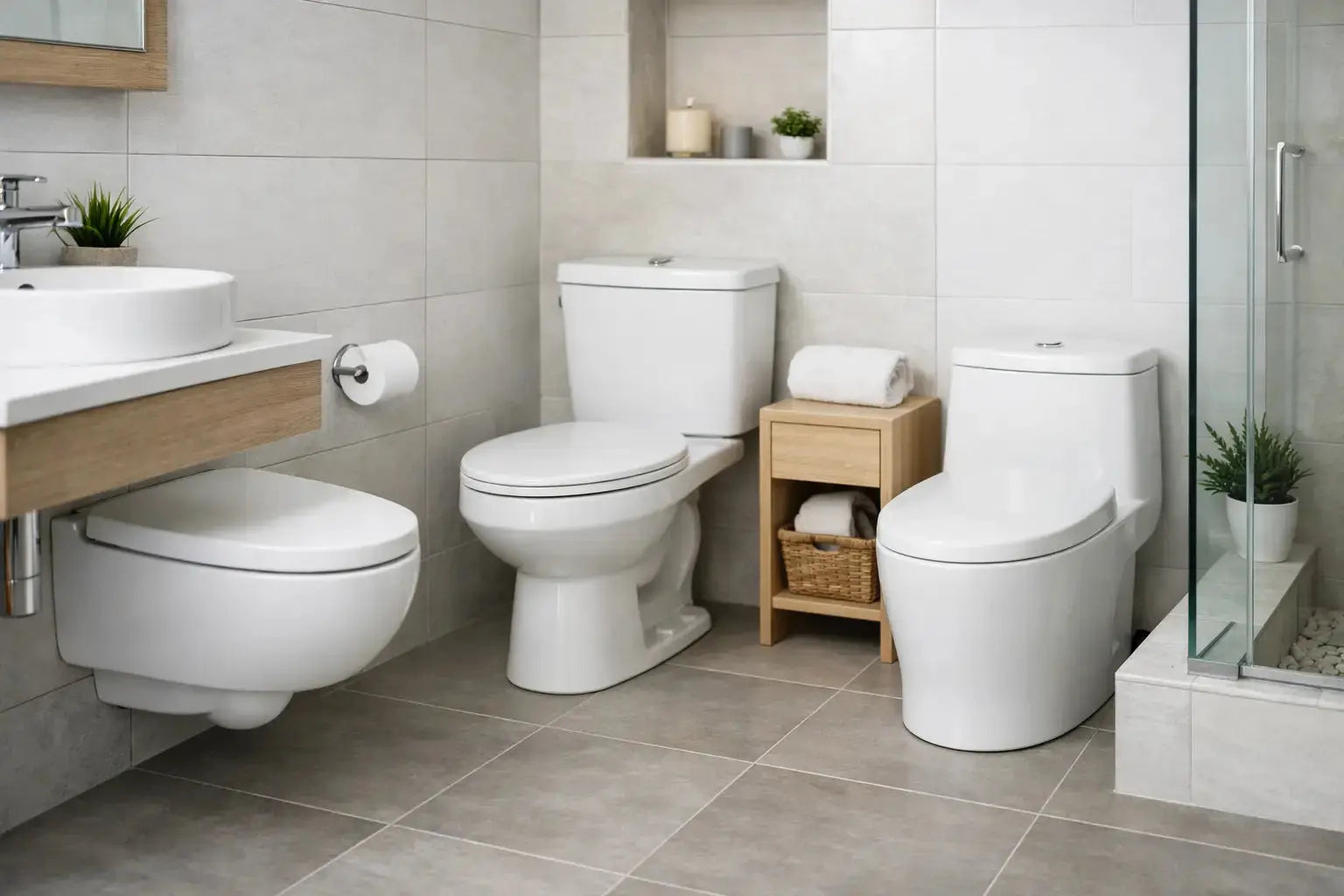
A few inches can decide whether a small bathroom feels functional or frustrating. When you are comparing the best toilets for small bathrooms, the right choice is not just about overall size - it is about projection, bowl shape, tank design, rough-in, and how the toilet fits with the rest of the layout.
In tight powder rooms, condo ensuites, basement baths, and secondary family bathrooms, clearance matters. A toilet that looks compact on paper can still crowd the vanity swing, interfere with the door, or leave too little knee room. That is why the buying process should start with measurements and installation requirements before style enters the picture.
What makes the best toilets for small bathrooms?
The most effective space-saving toilets reduce front-to-back depth without creating installation problems or compromising everyday comfort. In practical terms, the best options usually share a few traits: a shorter projection from the wall, a compact tank profile, and dimensions that work with standard Canadian bathroom layouts.
Round-front toilets are often the first place buyers look, and for good reason. They typically save a couple of inches compared with elongated bowls. In a narrow room, that difference can improve traffic flow and make the space feel less cramped. The trade-off is comfort. Many homeowners prefer elongated bowls for everyday use, especially in primary bathrooms, so the right answer depends on who uses the room and how often.
Wall-hung toilets are another strong option when floor space is limited. Because the bowl is mounted to the wall and the tank sits inside the wall cavity, the room feels more open and easier to clean. The catch is installation. They require compatible in-wall carriers, proper wall construction, and more planning than a standard floor-mounted unit. They are excellent for renovations where walls are already open, but less practical for simple replacements.
One-piece toilets can also work well in small bathrooms. Their integrated tank-and-bowl design often gives them a cleaner footprint and a more compact visual profile. Two-piece toilets remain popular because they offer broad selection and value, but in a small room, a one-piece model may feel less bulky even when the dimensions are similar.
Start with the rough-in before anything else
If there is one specification that should not be guessed, it is the rough-in. Most residential toilets use a 12-inch rough-in, measured from the finished wall to the centre of the floor drain bolts. Some spaces, especially in older homes, use a 10-inch or 14-inch rough-in instead.
This matters because the best toilets for small bathrooms still need to fit the existing plumbing. A toilet with an ideal projection will not help if the rough-in is wrong. In some cases, a 10-inch rough-in toilet is the best way to reclaim space in a tight bathroom because it lets the fixture sit properly without awkward gaps or modifications.
For renovators and trade professionals, this is also where product selection becomes more precise. Once the rough-in is confirmed, it becomes easier to compare compact one-piece models, round-front bowls, skirted designs, or wall-hung systems without risking a fit issue at installation.
Toilet types that save the most space
A standard floor-mounted toilet is still the simplest option for many projects, but not all floor-mounted models are equal. Compact elongated toilets are increasingly popular because they try to balance comfort with reduced projection. These models are useful when a round bowl feels too tight for daily use, but a full elongated model extends too far into the room.
Wall-hung toilets save the most visible space and can make a small bathroom look more finished. They also allow adjustable bowl height, which can be helpful in custom renovations or accessibility-focused designs. Still, they usually cost more once the carrier and in-wall tank are included, and service access needs to be considered during planning.
Corner toilets are less common, but they can solve unusual layouts where a conventional rear-wall installation wastes usable floor area. They are not the first choice for every small bathroom, but in awkward powder rooms or angled spaces, they can be the most efficient fit.
For straightforward replacement projects, a compact two-piece or one-piece floor-mounted toilet is often the most efficient purchase. It keeps installation familiar while improving space use where it counts.
Bowl shape, seat height, and comfort in a small room
The smallest toilet is not always the best toilet. A bathroom that is used every day still needs to be comfortable.
Round bowls save space, but elongated bowls are generally more comfortable for adults. If the bathroom is a main ensuite or a frequently used family bath, a compact elongated design may be the better compromise. In a powder room or guest bath, a round-front toilet often makes more sense because the room is used briefly and less often.
Seat height also matters. Comfort-height toilets are easier for many adults to use, particularly older homeowners, but they can feel less suitable for young children. Standard-height toilets may suit family homes better in some cases. In a very small bathroom, visual bulk can also come into play. A taller toilet may look more prominent, even if the actual footprint is compact.
Flush performance still matters
A small bathroom does not mean you should accept weak performance. A compact toilet should still clear the bowl efficiently, refill properly, and meet water-efficiency expectations.
Look for reputable flushing systems from established brands. Gravity-fed models are common and reliable, while pressure-assisted systems can provide stronger performance in some applications, particularly in commercial or high-use settings. The trade-off with pressure-assisted toilets is noise. In a compact ensuite beside a bedroom, that may be a deciding factor.
Water consumption is another key point for Canadian buyers. Many modern toilets are designed for efficient flushing without sacrificing performance, and dual-flush models can be a smart fit for small residential bathrooms where water savings are a priority. They do add another feature to maintain, though, so some buyers still prefer the simplicity of a well-engineered single-flush toilet.
Design details that help in tight spaces
In a small bathroom, cleaning access and visual simplicity can make the room feel more usable. Skirted toilets hide the trapway, which creates a cleaner look and reduces hard-to-reach surfaces. This can be especially useful when there is limited space beside the bowl.
A concealed or compact tank profile also helps reduce visual clutter. Some modern one-piece toilets have a streamlined look that suits smaller contemporary bathrooms, while traditional two-piece toilets may fit better in classic renovation styles or budget-conscious projects.
Lid and seat features should not be overlooked. Soft-close seats are now common and add a better day-to-day experience, especially in family homes. Quick-release seats can also make cleaning easier, which matters more when the room is tight and every angle is harder to reach.
How to choose the best toilets for small bathrooms
The right buying process is simple. Measure the rough-in first, then measure the maximum projection your layout can handle. After that, decide whether bowl comfort or space savings matters more in that room.
If the bathroom is very tight, start with round-front and compact elongated models. If the room is being fully renovated and walls are open, consider a wall-hung system. If installation simplicity and broad selection matter most, focus on floor-mounted one-piece and two-piece toilets from established brands.
It also helps to think about the whole room, not just the toilet. Door swing, vanity depth, shower clearance, and heating registers can all affect which model actually works. A toilet that saves three inches on paper can solve a real layout problem when those inches are in the right place.
For homeowners and contractors comparing options across premium and technical categories, this is where a broad product assortment becomes useful. Plumbing Market carries a wide range of toilet styles, rough-in configurations, and trusted brands, which makes it easier to match a compact fixture to the actual needs of the project rather than settling for a one-size-fits-all option.
Common mistakes to avoid
The most common mistake is buying by appearance alone. A sleek compact toilet may still project too far, or it may require a rough-in that does not match the existing setup.
Another mistake is focusing only on length and ignoring side clearance. In small bathrooms, the space beside the bowl affects comfort, cleaning access, and code compliance. It is also easy to overlook seat shape, flush noise, or replacement part availability, especially when shopping for highly styled models.
Finally, avoid assuming every small bathroom needs the absolute smallest toilet available. Sometimes a slightly deeper compact elongated model is the better long-term choice if the room can support it. The best result is the one that fits properly, performs reliably, and feels right in daily use.
When space is limited, precision beats guesswork. A toilet that matches the room, the plumbing, and the way the bathroom is used will always deliver better value than a model chosen on size alone.


