

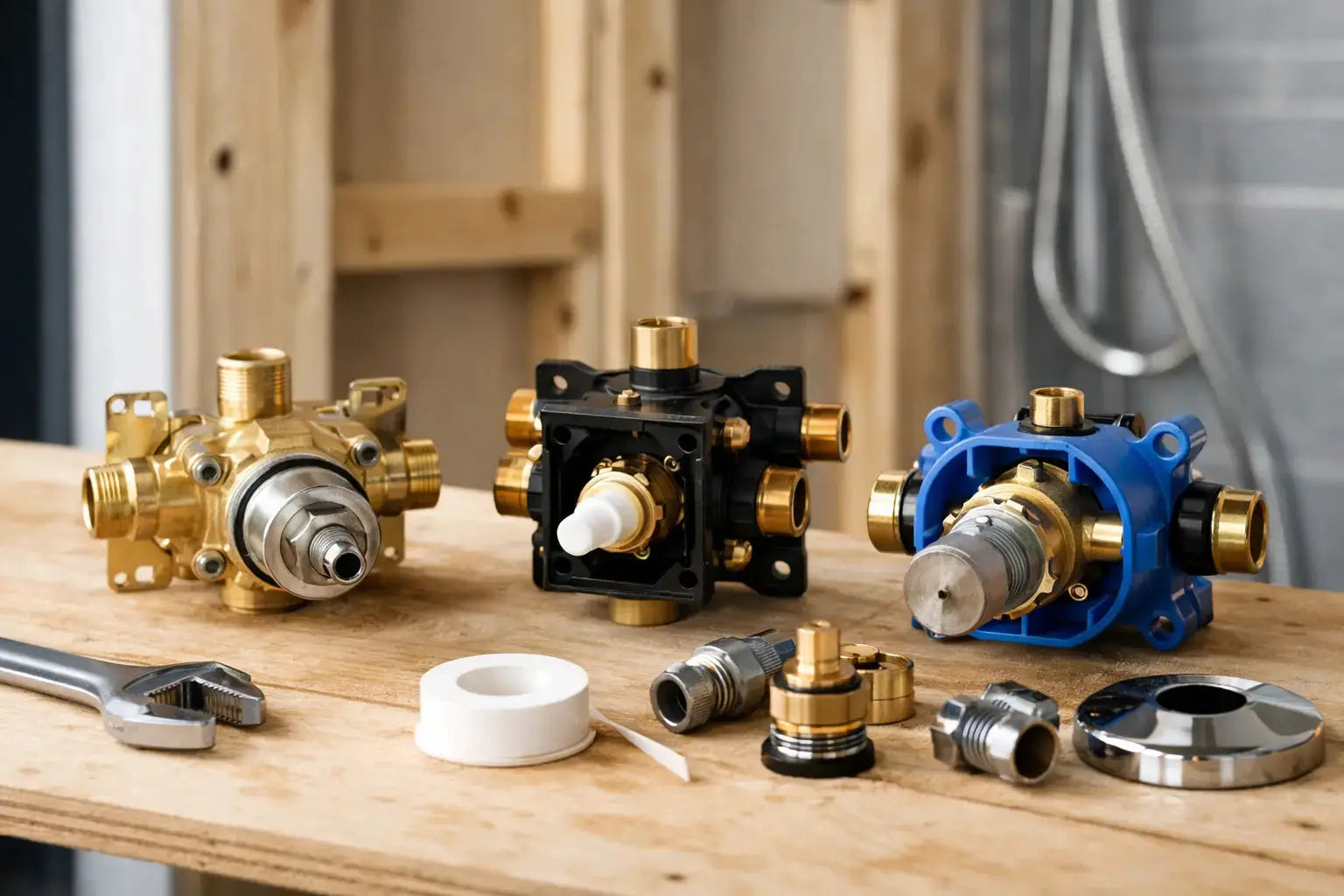
Behind every clean-looking shower trim set is a part that decides how the shower actually performs. If you are comparing shower rough in valve types, you are really choosing how water will mix, how temperature will be controlled, and whether your trim and plumbing layout will work together without surprises later.
That decision matters early. Once the wall is closed, changing the valve body is far more disruptive than swapping a handle or showerhead. For homeowners, renovators, plumbers, and contractors, the right rough-in valve is less about appearance and more about compatibility, safety, and the kind of shower experience the project calls for.
What a shower rough-in valve actually does
A shower rough-in valve is the in-wall body that connects the hot and cold supply lines to the shower outlet or outlets. The visible trim - handle, plate, diverter control, and sometimes volume control - attaches to that hidden valve system.
In practical terms, the valve handles three jobs. It mixes water, controls temperature, and in some setups manages water flow between one or more shower functions. That means the rough-in valve affects whether a shower stays comfortable when another fixture is used, whether the handle offers precise adjustment, and whether the trim you want can even be installed on the valve you have.
This is where many buying mistakes happen. People often shop the trim first because that is the visible part. But trim and rough-in valves are not universally interchangeable, even within the same brand. In many cases, the valve platform determines which trim families are compatible.
The main shower rough in valve types
Most residential shower rough in valve types fall into three core categories: pressure balance valves, thermostatic valves, and transfer or diverter valves. Some shower systems use only one of these, while others combine two valve functions in the same installation.
Pressure balance valves
A pressure balance valve is the most common option for standard tub and shower or shower-only installations. It monitors the pressure relationship between hot and cold water supplies and adjusts to reduce sudden temperature swings.
If someone flushes a toilet or starts a washing machine, a pressure balance valve helps prevent the shower from going sharply hot or cold. That safety function is the main reason these valves are widely used and accepted in many residential applications.
For many projects, this is the practical choice. It is typically more affordable than a thermostatic setup, easier to specify for a straightforward shower, and available across major brands and trim styles. The trade-off is control. A pressure balance valve usually gives you temperature and flow control through a single handle or a simpler control format, but it is not as precise as a thermostatic system.
Thermostatic valves
A thermostatic valve is built for more exact temperature control. Instead of only reacting to pressure changes, it regulates water temperature to a selected setting and maintains it more consistently.
This is the better fit when the shower is meant to feel more tailored or higher-end. If the project includes body sprays, a rain head, a hand shower, or multiple outlets, thermostatic systems are often the more capable platform. They also suit households that value repeatable comfort - set the temperature where you like it and return to it easily.
The trade-off is cost and complexity. Thermostatic systems often require separate volume control or diverter components, depending on the brand and trim design. They also demand more attention to product matching during specification. You get better performance and more flexibility, but you need to buy the right companion parts.
Diverter and transfer valves
Diverter and transfer valves do not replace the main mixing valve. They work alongside it when the shower has multiple functions.
A simple diverter valve sends water from one outlet to another, such as from a showerhead to a hand shower. A transfer valve is used when the setup includes several outputs and may allow switching between them or even running more than one function at the same time, depending on the model.
This distinction matters in custom showers. A single-handle pressure balance trim may look complete, but if the design includes a rain head, wall-mounted hand shower, and body jets, you may need a separate thermostatic valve plus a diverter or transfer valve to operate the system properly.
How to choose between shower rough in valve types
The right valve depends on the shower layout, the trim you want, and how the end user expects the shower to perform.
For a basic secondary bathroom or a standard tub and shower replacement, a pressure balance valve is often the most efficient choice. It covers safety requirements, keeps specification simple, and works well when only one shower function is being controlled.
For a primary ensuite, design-led renovation, or project with multiple spray functions, a thermostatic setup is usually worth the extra investment. It offers more refined temperature stability and tends to pair better with premium trim collections and more advanced shower configurations.
If the plan includes two or more outlets, think beyond the mixing valve itself. You need to confirm whether the system requires an integrated diverter, a separate diverter rough-in, or a transfer valve sized for the number of functions being installed.
Compatibility matters more than most buyers expect
Valve compatibility is not a small detail. It is often the detail that decides whether the project goes smoothly.
Brands design rough-in valves and trims as systems, not mix-and-match parts. A Riobel trim generally needs the corresponding Riobel rough-in platform. The same logic applies across other brands. Even within one manufacturer, one trim collection may fit one valve family but not another.
It also matters whether the installation is shower-only or tub and shower. Some rough-in valves include tub spout compatibility, while others are configured strictly for shower use. Ordering the wrong body can delay installation and create costly rework once the plumber is on site.
This is one reason selection depth matters when sourcing. A supplier such as Plumbing Market serves both style-driven and technical needs because the finished trim, matching rough-in valve, and supporting parts can be evaluated together rather than as separate decisions.
Canadian code, safety, and real-world performance
In Canada, code compliance and anti-scald protection are part of the conversation, not an afterthought. Pressure balance and thermostatic valves are both used to support safe showering, but local code requirements and installation conditions still need to be verified by a qualified plumber or contractor.
Water pressure also affects product choice. A valve that performs well in one home may feel underwhelming in another if supply conditions are limited or if the shower system is too ambitious for the available flow rate. This is especially relevant in condos, older homes, and renovations where existing plumbing lines may constrain what the shower can realistically deliver.
There is also the matter of serviceability. Some rough-in valve platforms offer easier access to cartridges and replacement parts over time. That may not seem urgent during a renovation, but it becomes valuable years later when maintenance is needed.
Common buying mistakes to avoid
The most common mistake is buying trim without confirming the required rough-in valve. The second is assuming all multi-function showers use the same type of diverter setup. The third is choosing a valve based only on price, without considering how the shower will actually be used.
Another frequent issue is underbuilding the system. A homeowner may want a rain head and hand shower today, then decide later to add body sprays. If the original rough-in valve does not support that expansion, the wall may need to be opened again. In projects where future flexibility matters, it can make sense to choose a more capable valve platform from the start.
When each valve type makes the most sense
Pressure balance valves suit budget-conscious remodels, standard bathrooms, rental units, and projects where simplicity is the priority. Thermostatic valves fit premium ensuites, custom renovations, and showers with multiple outputs or more exact performance expectations. Diverter and transfer valves become necessary once the shower moves beyond a single outlet.
There is no universal best option. There is only the valve type that matches the trim, the plumbing layout, the number of functions, and the expectations for comfort and control.
Before the wall is closed, take the extra time to match the rough-in valve to the full shower plan, not just the finish on the handle. That is usually the difference between a shower that merely looks right and one that works right for years.


