

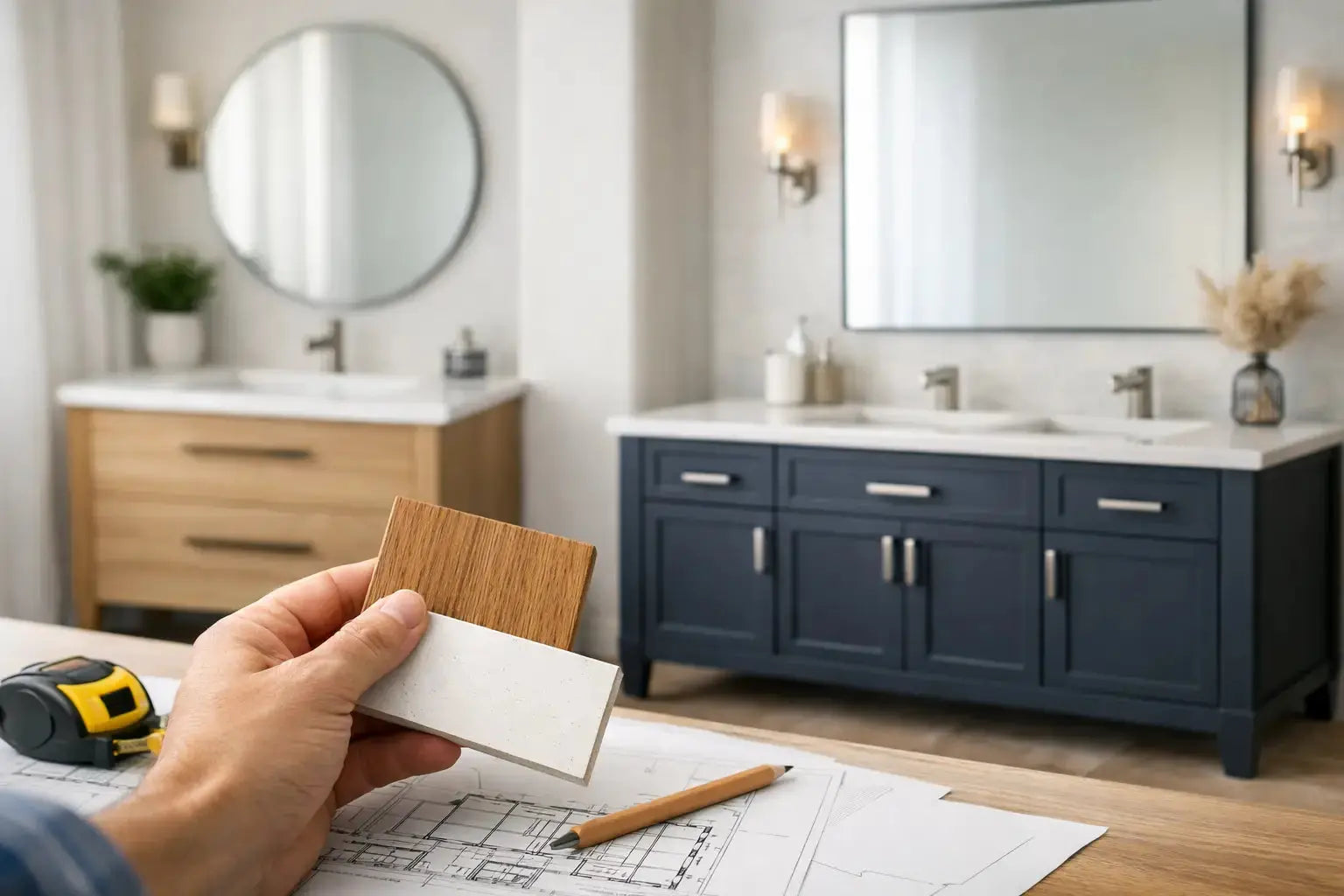
A bathroom vanity can solve three problems at once - storage, sink placement, and visual balance. It can also create new ones if the size is off, the plumbing does not line up, or the finish fights the rest of the room. If you are figuring out how to choose bathroom vanity options for a renovation or replacement, the right starting point is not colour or countertop. It is fit.
How to choose bathroom vanity for your layout
Before comparing styles, measure the room properly. Vanity shopping goes faster when you know your maximum width, your comfortable depth, and how much clearance you need for doors, drawers, and traffic flow.
In smaller bathrooms and powder rooms, depth matters as much as width. A unit that looks compact online can still project too far into the room and make the space feel cramped. In a primary ensuite, the bigger issue is often balance. A vanity that is too small can make a larger bathroom look unfinished, even if it technically fits.
Our Kube Bath Bliss 16 vs 18 comparison shows how two vanity sizes in the same line fit a small bathroom.
You will also want to check rough-in locations. Existing drain and water supply positions affect how easily a new vanity can be installed. A wall-mounted model, a freestanding cabinet, and a double-sink vanity each place different demands on plumbing alignment. If you are replacing like for like, installation is usually simpler. If you are changing width, sink location, or mounting style, expect more adjustment.
Door swing and drawer clearance deserve attention too. Make sure the vanity will not interfere with the toilet, shower glass, or entry door. This is especially important in condo bathrooms and older homes where every inch counts.
Standard sizes and what they suit
Single vanities commonly range from 24 to 48 inches wide, while double vanities usually start around 60 inches. That does not mean bigger is always better. A 60-inch model can be ideal for a shared ensuite, but excessive in a bathroom that needs open floor space more than a second sink.
Height is another decision that affects daily use. Comfort-height vanities are popular because they feel more natural for adults, but lower options may still suit family bathrooms or projects designed around an existing mirror or backsplash line. If multiple people use the space, think about who the vanity needs to work for most often.
Start with function, then choose style
The fastest way to narrow the field is to decide how the vanity needs to perform. Some buyers need concealed storage for daily-use products. Others want a clean furniture look with minimal visual weight. Contractors may be focused on efficient installation and dependable dimensions. Design still matters, but function should lead.
If storage is the priority, look closely at drawer configuration. Deep drawers are useful for larger bottles, hair tools, and backup supplies, while shallow top drawers are better for grooming items. Cabinet-door vanities offer flexibility, but drawers often make access easier. The trade-off is that interior drawer construction must work around plumbing, which can reduce usable space under the sink.
Open-shelf vanities can make a small bathroom feel less heavy, but they demand tidier storage habits. They are often better for guest baths than high-use family bathrooms. For practical daily use, many homeowners prefer a mix of drawers and closed storage.
Freestanding vs wall-mounted
Freestanding vanities remain the most common choice because they work across a wide range of bathroom layouts and plumbing conditions. They also tend to offer more straightforward installation and more enclosed storage.
Wall-mounted vanities create a lighter, more modern look and can help a compact bathroom feel larger. They also make floor cleaning easier. The trade-off is installation complexity. Wall support, plumbing placement, and precise mounting matter more, and not every wall is equally ready for that type of unit.
If you are renovating an older property, check the wall structure before committing to a floating design. If you want a simpler replacement with fewer unknowns, freestanding is often the safer choice.
Choose a vanity material that suits bathroom conditions
Bathrooms deal with moisture, temperature changes, and frequent cleaning. That is why vanity construction matters as much as finish.
Solid wood is valued for its durability and premium feel, but it can respond to humidity if the room has poor ventilation. MDF and engineered wood are common in many vanities and can perform well when properly finished, though quality varies by manufacturer. Plywood construction is often a strong middle ground for stability and moisture resistance.
The finish should also match the room's maintenance level. Matte painted surfaces can look clean and current, but they may show marks more easily in busy family bathrooms. Woodgrain finishes are practical for hiding minor wear. High-gloss surfaces suit contemporary spaces, though they can show fingerprints more readily.
Countertop material affects both appearance and upkeep. Quartz is a strong choice for many households because it is durable and low maintenance. Ceramic and integrated sink tops can be cost-effective and easy to clean. Natural stone can deliver a premium look, but it typically requires more care.
Sink configuration changes the whole vanity
When people think about how to choose bathroom vanity models, they often focus on cabinet style first. In practice, sink configuration affects usability just as much.
A single-sink vanity usually provides more counter space and works well in smaller bathrooms or for solo use. A double-sink vanity supports shared routines, but it reduces uninterrupted counter area and demands more width. In some ensuites, one generous sink with better storage is more useful than squeezing in two basins.
Sink type matters too. Undermount sinks are popular for their clean look and easier countertop wipe-down. Vessel sinks create a more decorative focal point, but they change faucet compatibility and overall height. Integrated tops simplify coordination and can streamline installation, which is useful when speed and budget matter.
Make sure the faucet drilling matches your plan. Not every vanity top is configured for every faucet style, and changing direction late in the project can create delays.
Match the vanity to the bathroom, not just the trend
A vanity should feel consistent with the rest of the bathroom. That does not mean every finish must match exactly, but the lines, hardware, and colour palette should make sense together.
For modern bathrooms, clean slab fronts, simple hardware, and restrained finishes usually work best. Transitional spaces often suit shaker-style vanities, brushed metal hardware, and neutral tops. Traditional bathrooms can support more detail, furniture-inspired legs, and richer wood finishes.
Colour should be chosen with the room's lighting and surface materials in mind. White remains popular because it keeps the bathroom bright and versatile. Black and dark wood tones add contrast and a more grounded look, though they can visually shrink a compact room. Mid-tone oak and walnut finishes continue to appeal because they add warmth without feeling overly formal.
Mirror size, medicine cabinet depth, wall lighting, and backsplash height all affect how the vanity reads once installed. A well-chosen vanity does not work alone. It needs to fit the full composition of the room.
Budget for the full vanity package
Vanity pricing varies widely because the product category includes everything from compact powder room units to large furniture-style double vanities with premium tops and hardware. When comparing options, consider the total package rather than the cabinet price alone.
Some vanities include the top and sink, while others are sold separately. Faucets, drains, mirrors, side splashes, and rough-in adjustments may also need to be added. Delivery access matters too, especially for larger assembled units going into condos, basements, or upper floors.
For trade professionals and experienced renovators, it often makes sense to compare specifications closely rather than shop by appearance first. Construction details, included components, and installation requirements can change the real project cost quickly. A broad product selection, like the one available through Plumbing Market, helps when you need to compare vanity styles alongside faucets, drains, and other bathroom essentials in one place.
Common mistakes to avoid when choosing a bathroom vanity
The most common mistake is buying by photo instead of by dimensions. The second is underestimating plumbing constraints. A vanity can be the right look and still be the wrong product for the room.
Another frequent issue is choosing too little storage for the people using the bathroom every day. A sleek design may look better at first glance, but if countertop clutter appears within a week, the vanity is not really doing its job. It is also worth thinking ahead about cleaning. Decorative feet, open shelves, and specialty finishes can all be attractive, but they may add maintenance.
If the bathroom serves children now but needs to work for adults later, choose a vanity with lasting utility rather than a highly specific short-term solution. Good bathroom products should carry a renovation forward, not force another update too soon.
The best vanity is the one that fits your room, supports your routine, and works with your plumbing without unnecessary compromise. Once those basics are right, style becomes a much easier decision.


