

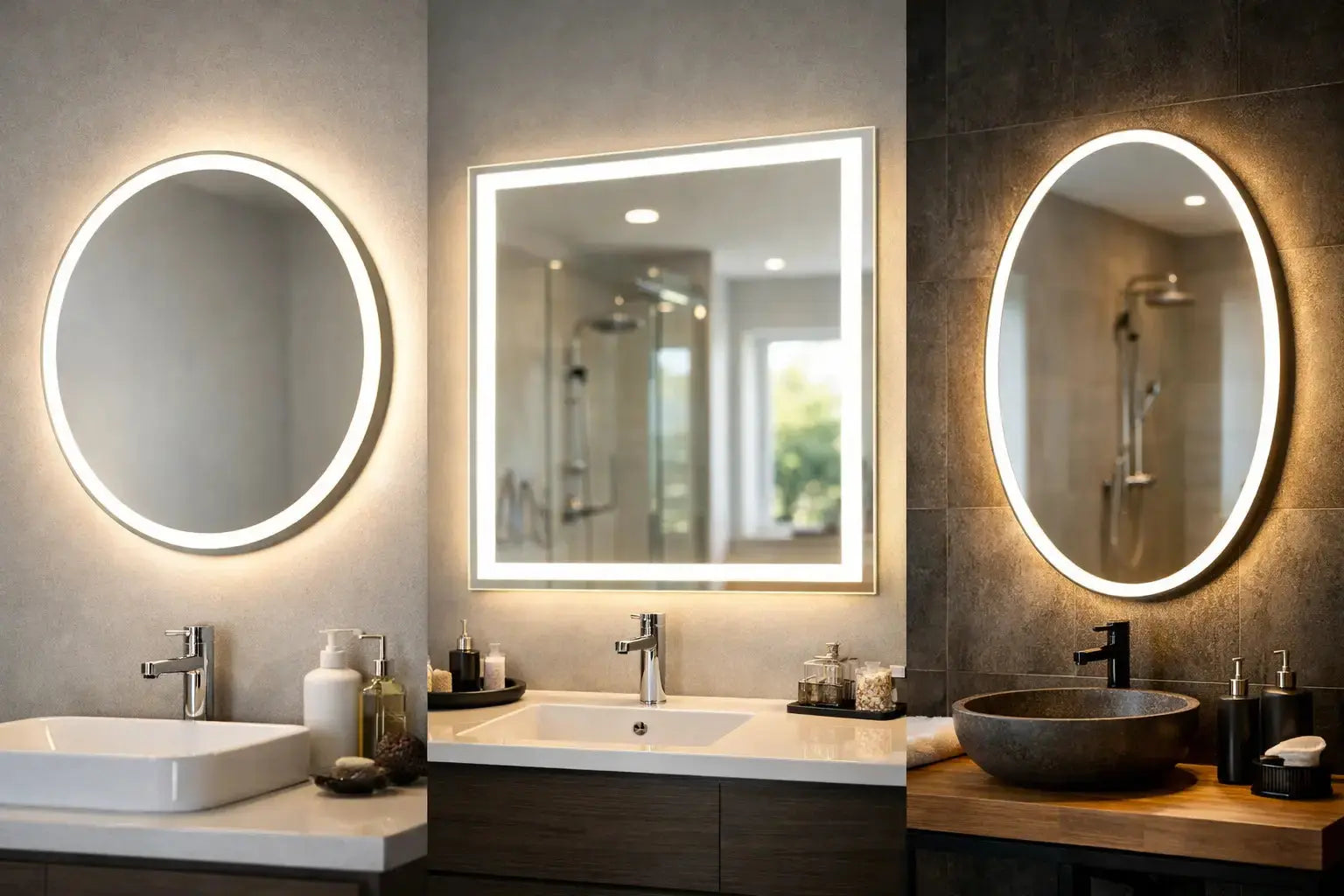
A mirror can make a carefully selected vanity, faucet, and wall finish look unfinished if its light is poorly placed. The best bathroom mirrors with lighting provide clear facial illumination where it matters, reduce countertop clutter, and give the room a finished, intentional look. For Canadian homeowners, renovators, and trade buyers, the right choice comes down to mirror size, mounting location, electrical requirements, and the features clients will actually use every day.
Best bathroom mirrors with lighting: what to look for
An illuminated bathroom mirror combines a reflective surface with integrated LED lighting, usually positioned around the perimeter, behind the glass, or in vertical light strips. It is not always intended to replace all ceiling lighting. In most bathrooms, it works best as dedicated task lighting at the vanity, supported by general overhead lighting for the rest of the room.
Start with light quality. A mirror with a high colour rendering index, commonly shown as CRI, gives a more accurate view of skin tone, makeup, and shaving detail. Look for a CRI of 90 or above when precise grooming is a priority. Colour temperature also changes the result: 3000K gives a warmer residential appearance, 4000K is a balanced neutral white, and 5000K has a cooler, brighter daylight effect. Neutral white is often the most practical choice for a primary bathroom, while warmer light can better suit a powder room designed around atmosphere.
Brightness matters, but more output is not automatically better. A very bright mirror in a small ensuite can create glare, particularly with glossy tile or a polished countertop. Dimmable lighting is useful because it allows one mirror to serve a bright morning routine and a low-light evening visit. If dimming is important, verify whether the mirror uses a compatible wall dimmer, an integrated touch control, or both before ordering.
Select the correct width and height
For a single vanity, the mirror is usually narrower than the vanity cabinet. A common approach is to leave several inches of wall space on each side, giving the installation a balanced look while allowing room for sconces, switches, or wall accessories. A 24- to 30-inch mirror often suits a compact vanity, while a 36- to 48-inch option is a practical range for larger single-sink vanities.
A double vanity needs a different decision. One wide illuminated mirror creates a clean, contemporary wall and can make a smaller room feel more open. Two individual mirrors define each sink position and can provide better task lighting for two users. The best layout depends on sink spacing, faucet placement, and whether the wall includes a central medicine cabinet, window, or decorative feature.
Height should be planned from the finished floor and countertop, not simply centred on the wall. The mirror must work for the people using it, with enough reflected area above the faucet and adequate clearance below the light fixture or ceiling. Before finalizing a size, mark the proposed outline on the wall with painter's tape. It is a quick way to catch an oversized mirror or an awkward conflict with a faucet, backsplash, or side wall.
Choose lighting direction for the vanity task
The position of the LEDs affects how the mirror performs. Front-lit models send light directly toward the user and are generally stronger for shaving, skincare, and makeup. They are a dependable choice when the bathroom has limited overhead lighting.
Backlit mirrors cast light onto the wall behind the glass, creating a soft halo effect. They are popular in modern bathrooms because they add depth and provide gentle ambient light. Their trade-off is that they may not deliver enough direct illumination for detailed grooming on their own. A backlit mirror can be an excellent design feature, but it may need ceiling lights or side sconces to complete the lighting plan.
Some models combine front and back lighting. This arrangement gives the vanity more useful light while retaining the visual effect of a floating illuminated mirror. It is often the most versatile option for primary bathrooms, although it can cost more than a basic backlit design.
Features worth paying for
Integrated features should solve a real problem, not complicate a straightforward bathroom installation. An anti-fog or defogger pad is one of the most useful additions in a busy ensuite or family bath. It gently warms a portion of the glass so the central viewing area remains clear after a shower. Because it is typically wired into the mirror, consider whether it should turn on automatically with the light or separately through its own control.
Touch controls keep the mirror face clean and are convenient for adjusting brightness or colour temperature. However, a wall switch is still preferred by many homeowners and contractors because it is familiar, easy to access, and keeps operation consistent for guests. Some illuminated mirrors remember the last brightness and colour setting after power is restored, while others reset to a default setting. This detail affects daily usability more than many buyers expect.
A built-in clock, Bluetooth speaker, or USB charging port may suit a high-use primary bathroom, but these features are not essential for most projects. They can add cost and introduce more components to service later. For a rental unit, guest bathroom, or commercial washroom, a simple, durable mirror with appropriate lighting and straightforward controls is often the better purchase.
Consider frame, shape, and storage
Frameless rectangular mirrors fit a wide range of vanity styles and maximize the reflective area. Rounded corners soften a room with square tile, linear cabinetry, and angular faucets. Round and oval mirrors bring a more decorative look, though their usable reflective width can be less than a rectangular model of similar overall size.
Framed illuminated mirrors can tie into black, brass, chrome, or other hardware finishes, but confirm that the frame does not block useful light output. For bathrooms where storage is limited, a lighted medicine cabinet may be more practical than a flat mirror. It combines illumination and concealed storage, although it requires consideration of wall depth, recessing options, door swing, and the location of studs or plumbing.
Electrical and installation checks before ordering
An illuminated mirror is an electrical fixture, not just a décor accessory. Confirm the product's voltage, hardwired or plug-in configuration, wire location, mounting method, and overall depth before the wall is closed. For a renovation, planning the electrical rough-in early helps avoid visible cords, last-minute drywall repairs, or a mirror that cannot sit flush against the wall.
Bathroom location ratings require attention. A mirror installed close to a shower, tub, or other water source may need a rating suitable for that zone. Requirements can vary by location and applicable electrical code, so contractors and homeowners should confirm the installation with a qualified electrician. Products intended for the Canadian market should carry the appropriate certification mark for electrical safety.
Also check the wall structure. Larger mirrors can be heavy, especially models with thick glass, metal frames, or integrated cabinets. Use the manufacturer-specified mounting hardware and secure the mirror to suitable backing or framing where required. Do not assume a standard drywall anchor is enough for every model.
Match the mirror to the room type
A powder room can prioritize shape, finish, and a softer light level because detailed grooming is less likely to happen there. A primary ensuite benefits from dimming, accurate colour rendering, and a defogger, especially when more than one person uses the space during the morning rush.
For a condo bathroom, a slim-profile mirror helps preserve visual space and works well above a narrower vanity. In a commercial washroom, focus on durable construction, simple controls, suitable safety ratings, and a size that provides clear sightlines for a range of users. Contractors sourcing multiple units should also consider consistent dimensions and serviceable specifications across the project.
When comparing options, treat the mirror as part of the complete vanity wall rather than an isolated purchase. The vanity width, faucet height, backsplash, sconces, outlet placement, and ceiling lighting all influence the final result. Plumbing Market customers can narrow the selection faster by confirming those measurements and installation details before choosing a finish or feature set.
The right illuminated mirror should make the vanity easier to use without asking the room to work around it. Choose the light direction first, size it to the finished vanity wall, and reserve premium features for routines that genuinely benefit from them.


