

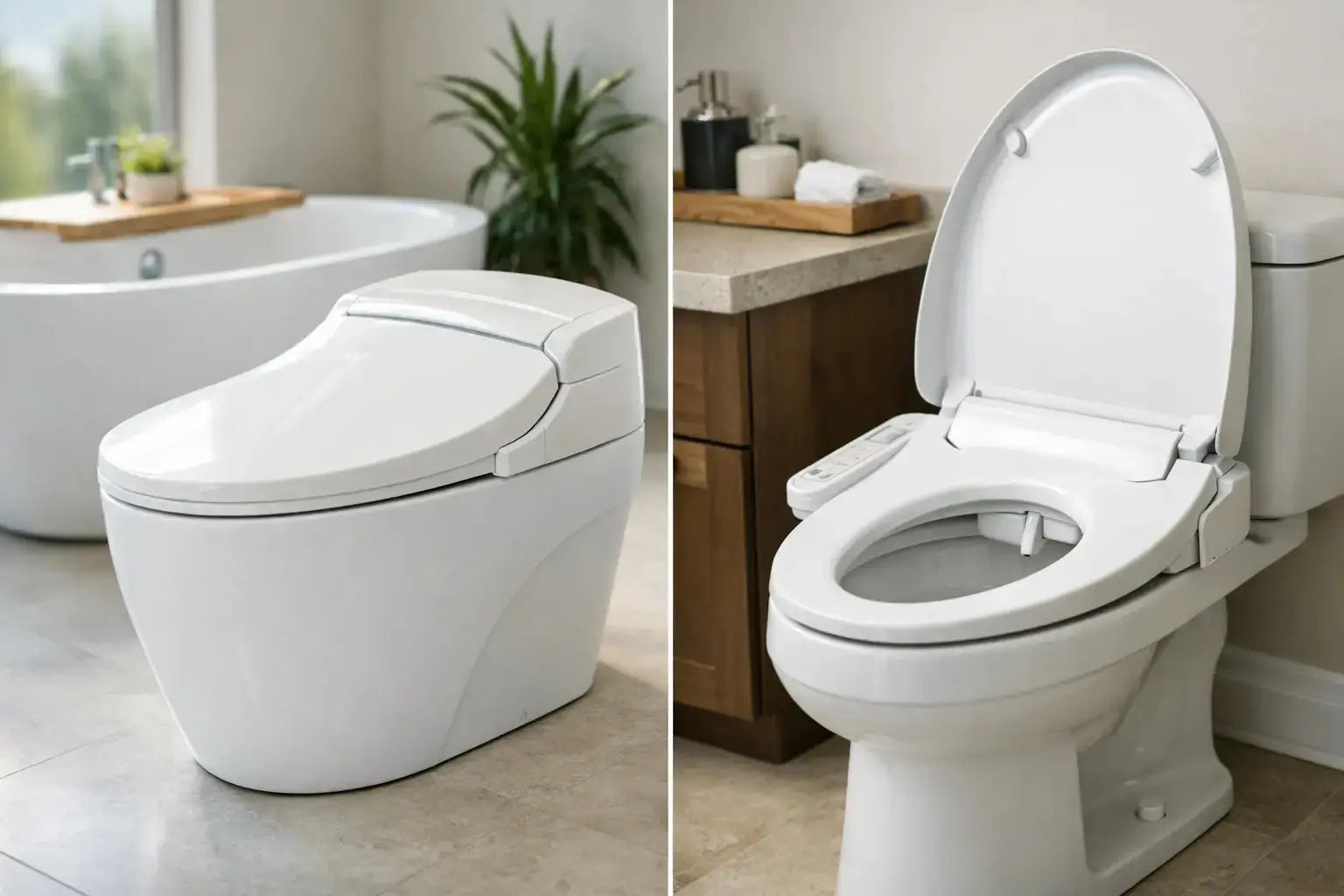
A bidet upgrade can change the daily function of a bathroom without changing its footprint. When comparing a bidet toilet vs bidet seat, the right choice is usually less about which option has more features and more about the condition of the existing bathroom, the renovation scope, available electrical service, and the level of finish you want.
A bidet seat can add warm-water washing and personal comfort to a compatible toilet at a lower entry cost. A bidet toilet, often called an integrated bidet toilet or smart toilet, combines the fixture and washlet functions in one coordinated unit. Both can deliver a significant upgrade over a standard toilet, but they involve different purchasing and installation decisions.
Bidet Toilet vs Bidet Seat: The Core Difference
A bidet seat replaces the existing toilet seat while keeping the current toilet bowl and tank. Depending on the model, it may provide a heated seat, adjustable warm-water wash, dryer, deodorizer, night light, remote control, and user presets. It connects to the toilet's cold-water supply and, for powered functions, a nearby GFCI-protected electrical outlet.
A bidet toilet is a complete fixture. The bidet functions are built into the toilet itself, so the bowl, seat, controls, flushing system, and often the tank design are engineered as one product. Many premium models have a streamlined profile, concealed connections, automatic lids, self-cleaning nozzles, and sensor or remote operation.
The practical distinction is simple: choose a bidet seat when the existing toilet is in good condition and compatible; choose a bidet toilet when replacing the complete fixture or building a more integrated bathroom design.
When a Bidet Toilet Makes More Sense
An integrated bidet toilet is often the stronger choice for a full renovation, new build, or bathroom where visual consistency matters. Because the seat and bowl are designed together, the finished look is generally cleaner than a standard toilet fitted with an add-on seat. This is especially relevant in powder rooms, ensuites, and design-forward spaces where every fixture is visible.
Many bidet toilets also simplify cleaning around the exterior. Tankless and skirted models can reduce the number of exposed edges, bolts, and crevices found on conventional toilets. That does not mean every integrated unit is maintenance-free, but the fixture can be easier to wipe down and may offer automatic nozzle rinsing or other hygiene features.
Performance and flushing should be considered separately from bidet features. A quality integrated toilet should suit the bathroom's rough-in measurement, provide dependable flushing, and meet the household's expected use. Verify the required rough-in before ordering. A 12-inch rough-in is common in Canadian homes, but 10-inch and 14-inch configurations exist, particularly in older properties or specialized layouts.
The trade-off is cost and installation complexity. A bidet toilet is a full toilet replacement, so it may involve removing the existing fixture, checking shutoff valves and supply connections, preparing electrical service, and confirming floor and wall clearances. Tankless models may also have specific electrical requirements that should be reviewed before purchase. For many renovations, coordinating a licensed plumber and qualified electrician is the most efficient approach.
When a Bidet Seat Is the Better Upgrade
A bidet seat is well suited to homeowners who want premium comfort without replacing a functioning toilet. It is also practical for phased renovations, rental properties where approved modifications are permitted, guest bathrooms, and homes where a complete fixture replacement is not yet necessary.
The key requirement is compatibility. Bidet seats are commonly available for elongated or round toilet bowls, but the shape alone is not enough. Measure the bowl length, mounting-hole spacing, flat surface area around the bolt holes, and clearance between the toilet tank and seat mounting points. A seat that technically fits the bowl but sits too close to a curved tank may not install correctly.
A standard bidet seat typically connects through a T-valve at the toilet's water supply. Non-electric models use cold water and can be a sensible option where no outlet is available. Electric seats add the comfort features most buyers expect, such as heated water, adjustable temperature, dryer settings, and a heated seat. They require a properly located GFCI outlet, not an extension cord run across the bathroom.
A seat also leaves the original toilet's flush performance unchanged. If the existing bowl stains easily, flushes poorly, has a cracked tank, or does not match the renovation plan, investing in a bidet seat may only postpone a necessary toilet replacement. In that situation, a complete bidet toilet can be the better long-term purchase.
Compare Installation, Space and Daily Use
Installation is where the bidet toilet vs bidet seat decision becomes most specific. A seat installation is usually less disruptive because the toilet remains in place. Provided the shutoff valve works, the supply line is accessible, and the electrical outlet is correctly positioned, installation can often be completed with limited plumbing work.
A full bidet toilet installation requires more planning but can produce a more refined result. Confirm the rough-in, supply location, power requirements, finished wall clearance, and the distance to nearby vanities, tubs, or doors. Do not assume an existing outlet is adequate simply because it is close to the toilet. It must be safely located and suitable for the unit's stated electrical requirements.
Space matters as well. Some bidet seats extend farther from the rear of the bowl than a conventional seat, which can affect clearance in a tight water closet. Integrated toilets vary considerably in projection, height, and width. Review product dimensions against the room plan, including space required to open a lid or access side-mounted controls.
For households with multiple users, consider control preferences. A side-panel control is simple and always available, while a wireless remote can be easier to operate from a seated position and may offer more individualized settings. Features such as adjustable nozzle position, water pressure, oscillating wash, and dryer temperature are worth comparing because comfort is personal.
Cost Is More Than the Product Price
A bidet seat generally has the lower initial cost because it uses the existing toilet. However, the final budget can increase if an electrician must install a new GFCI outlet or if the current shutoff valve, supply line, or toilet mounting hardware needs attention.
A bidet toilet has a higher fixture cost and can require more labour, but it may eliminate the need to buy a separate toilet and seat. During a full bathroom renovation, that difference can be easier to justify because plumbing, electrical, flooring, and finishing work are already being coordinated.
Think about ownership over several years. Reputable brands offer replacement parts and support for components such as seats, remotes, filters, valves, and nozzles. This matters for both product types, particularly for electronically controlled models. Selecting a recognized brand and confirming parts availability can be more valuable than choosing the lowest-priced option.
Choosing the Right Option for Your Project
Choose a bidet seat if the toilet is relatively new, fits the room well, and performs reliably. It is the efficient route for adding wash functions, particularly when the project budget is focused on a single upgrade rather than a full renovation.
Choose a bidet toilet if you are replacing an outdated fixture, correcting poor flush performance, building a modern ensuite, or want the cleanest integrated appearance. It is also the better fit when toilet height, bowl shape, and overall fixture design need to be selected as part of the same plan.
For contractors and renovators, the decision should be made early enough to coordinate electrical rough-in and verify finished dimensions. For homeowners, start with the existing toilet: measure it, assess its condition, and determine whether a nearby GFCI outlet is available. Plumbing Market's broad selection of toilets, bidet seats, valves, and installation essentials makes it easier to source the fixture choice that matches the job instead of forcing the job to match a limited product range.
The best bidet upgrade is the one that fits the bathroom as it exists, supports the level of comfort you want, and can be installed correctly from day one.


