

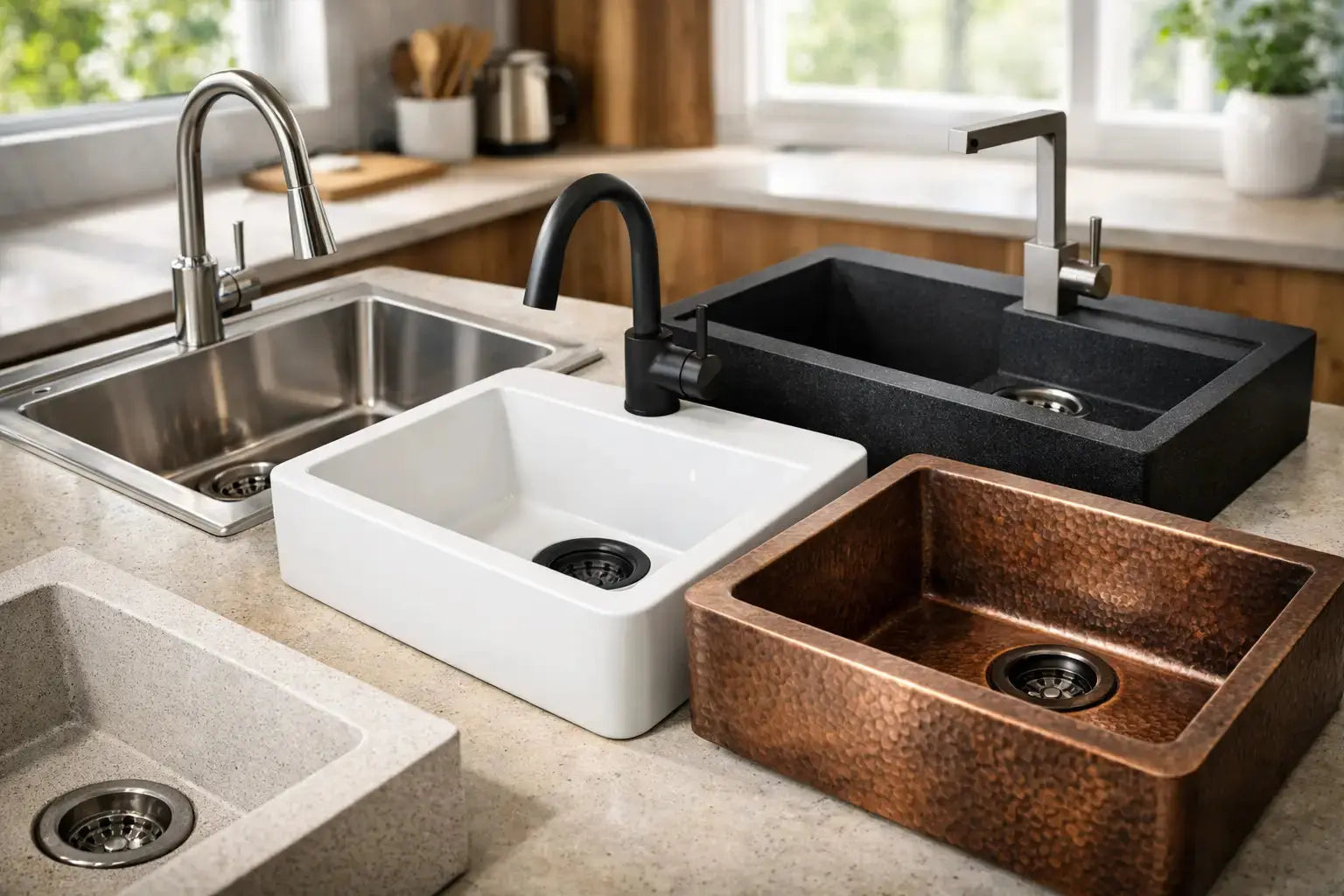
A kitchen sink earns its place every day. It handles hot cookware, sharp utensils, heavy pots, food preparation and constant cleaning, so material selection affects far more than appearance. This kitchen sink materials buying guide compares the most common options for Canadian kitchens, with practical factors for homeowners, renovators, contractors and replacement projects.
The right choice depends on how the kitchen is used, the installation style, cabinet support, faucet configuration and the level of maintenance the owner is prepared to accept. A white fireclay apron-front sink can be the focal point of a traditional kitchen, while a 16-gauge stainless steel undermount sink may be the more efficient choice for a high-use family or rental property.
Kitchen Sink Materials Buying Guide: Start With the Installation
Before comparing finishes and colours, confirm the sink type your counter and base cabinet can support. Material weight, rim design and bowl depth all matter during installation.
Undermount sinks install below the counter surface and create a clean edge for wiping water and crumbs directly into the bowl. They are especially common with quartz, granite and solid-surface counters. Stainless steel and granite composite are frequent undermount choices. The countertop fabricator and installer must use appropriate mounting hardware, particularly for heavier sinks.
Drop-in, or top-mount, sinks rest on the countertop through an exposed rim. They are compatible with more counter materials and can simplify a replacement where the existing cutout must be retained. Many drop-in models include faucet holes in the rear deck, which is useful when the faucet will not be mounted through the countertop or wall.
Farmhouse or apron-front sinks extend over the front of the cabinet. They offer generous bowl capacity and a distinctive look, but commonly require a purpose-built cabinet or modifications to the cabinet face and support structure. Fireclay and cast iron farmhouse sinks are particularly heavy. Confirm the cabinet width, interior clearance, drain position and finished counter height before ordering.
A single bowl provides uninterrupted space for roasting pans, sheet pans and oversized cookware. A double bowl supports separating washing, rinsing and food prep, while low-divide designs offer a compromise. Material should support the bowl configuration, but it should not be selected in isolation from the installation plan.
Stainless Steel: The Practical All-Rounder
Stainless steel remains one of the most widely specified kitchen sink materials because it is light, corrosion-resistant, hygienic and available across a wide range of sizes and configurations. It works equally well in contemporary homes, busy family kitchens, rental units and many commercial-style applications.
For a quality residential sink, gauge is worth checking. Lower gauge numbers indicate thicker steel. A 16-gauge sink is a premium choice because it feels more substantial, resists denting better and usually reduces vibration compared with thinner models. Eighteen-gauge stainless steel can still be a sound option for standard home use, particularly where budget and cabinet weight are considerations.
Look beyond gauge alone. Sound-deadening pads and undercoating help limit the metallic noise created by running water and dishes. A properly sloped basin also helps water drain efficiently rather than pooling in corners.
The trade-off is visible water spotting and fine scratches. Brushed finishes disguise daily wear better than highly polished surfaces, but stainless steel will develop a lived-in patina over time. It is easy to maintain with routine cleaning and a soft cloth, although abrasive scouring pads and harsh chlorine products should be avoided.
Granite Composite: Colour, Durability and Everyday Ease
Granite composite sinks combine natural stone particles with resin to create a dense, matte-finish material. They are available in black, charcoal, brown, white, grey and other tones that coordinate well with stone counters, matte faucets and modern cabinetry.
This material is valued for its resistance to scratches, staining and everyday impact. It also dampens sound more effectively than stainless steel and does not show water marks as readily on darker finishes. For homeowners who want a coloured sink without the delicacy associated with some glossy enamel surfaces, granite composite is often a strong fit.
There are still practical considerations. Granite composite is heavier than stainless steel, so installers need to secure it correctly. Very hard impacts can chip an edge or corner, although this is not typical under normal household use. Dark colours may show mineral residue in hard-water areas, while light colours can require more attention after strongly pigmented foods or beverages are left on the surface.
Heat resistance varies by manufacturer, so cookware should not be placed directly from a burner or oven into the bowl without checking product specifications. A protective grid can reduce wear from heavy pots while maintaining the sink’s finish.
Fireclay: A Classic Look With Specific Requirements
Fireclay sinks are formed from clay, shaped and fired at extremely high temperatures, then finished with a hard glazed surface. The result is a traditional material with substantial weight, a smooth finish and excellent visual presence. It is most commonly selected for farmhouse kitchens, though some undermount and drop-in designs are available.
A quality fireclay sink is highly resistant to heat, stains and fading. Its non-porous surface is simple to wipe clean, and white fireclay remains a natural match for shaker cabinetry, traditional millwork and transitional kitchen designs.
Its main limitation is impact sensitivity. Fireclay is hard but not indestructible. Dropping a heavy cast-iron pan or a sharp object can chip the glaze. Repairs may be possible, but they will rarely be invisible. The sink’s weight also requires careful cabinet preparation and professional handling during installation.
Because manufacturing tolerances can be less exact than with stainless steel, measure the individual sink rather than relying only on nominal dimensions when planning a precise stone countertop cutout. This is particularly relevant for apron-front installations.
Enameled Cast Iron: Heavy, Glossy and Built for Traditional Design
Enameled cast iron sinks pair a cast-iron body with a porcelain enamel coating. They have a deep gloss, substantial feel and strong resistance to heat and staining. Available in white as well as select colours, they suit heritage, farmhouse and design-led kitchens where the sink is intended to stand out.
The enamel surface is smooth and easy to clean, but it can chip if struck hard by cookware. Once damaged, the exposed cast iron may eventually rust if not repaired. As with fireclay, weight is a serious installation factor. Cabinetry may need reinforcement, and the installer should confirm the sink’s loaded support requirements before countertop work begins.
Cast iron can be an excellent long-term choice for a homeowner who wants its finish and is willing to protect it from heavy impacts. It is usually less practical where installation simplicity, low cabinet load and a lower overall budget are priorities.
Copper and Other Specialty Materials
Copper sinks create a warm, distinctive finish that changes naturally with use. Many develop a patina, meaning colour variation is expected rather than a defect. Copper can have antimicrobial properties, but it requires a buyer who appreciates its evolving appearance and follows the manufacturer’s cleaning instructions. Acidic foods, abrasive cleaners and prolonged exposure to certain substances can affect the finish.
Solid-surface and quartz-composite options may also appear in specialized kitchen projects. Their performance differs significantly by brand and construction, so verify heat limits, scratch resistance, warranty coverage and compatible cleaners before selecting a model. Specialty materials are best chosen for a specific design or performance reason, not simply because they are different from standard stainless steel.
Match the Sink Material to How the Kitchen Works
For frequent cooking, large cookware and straightforward maintenance, a thick stainless steel sink is difficult to surpass. It is versatile, readily available in workstation, single-bowl and double-bowl configurations, and suits most countertop styles.
For a quieter basin with a coordinated colour palette, granite composite provides a durable middle ground. It works particularly well in contemporary kitchens where a black or grey sink is part of the overall fixture selection.
For a statement farmhouse installation, fireclay and enameled cast iron bring visual weight and a classic finish. Choose between them based on the look you prefer, the cabinet support available and realistic expectations around impact protection. Neither material is the right answer if the project requires a quick, lightweight replacement.
Also account for accessories. Bottom grids protect the bowl surface, basket strainers manage food debris, and sink racks or colanders can improve daily workflow. Confirm drain opening size, included accessories, overflow details where applicable, and the number of faucet and accessory holes before finalizing the order.
If you are considering Franke or Kindred, you can browse the Franke collection and the Kindred collection, or read our comparisons: Kindred Steel Queen vs Reginox, Franke Fragranite vs stainless steel vs fireclay and the Franke Manor House fireclay farmhouse sink guide.
At Plumbing Market, comparing sink material alongside installation type, bowl layout and faucet requirements helps keep the kitchen specification complete. Choose the material that fits the actual workload first, then select the finish that makes the room feel finished for years to come.


