

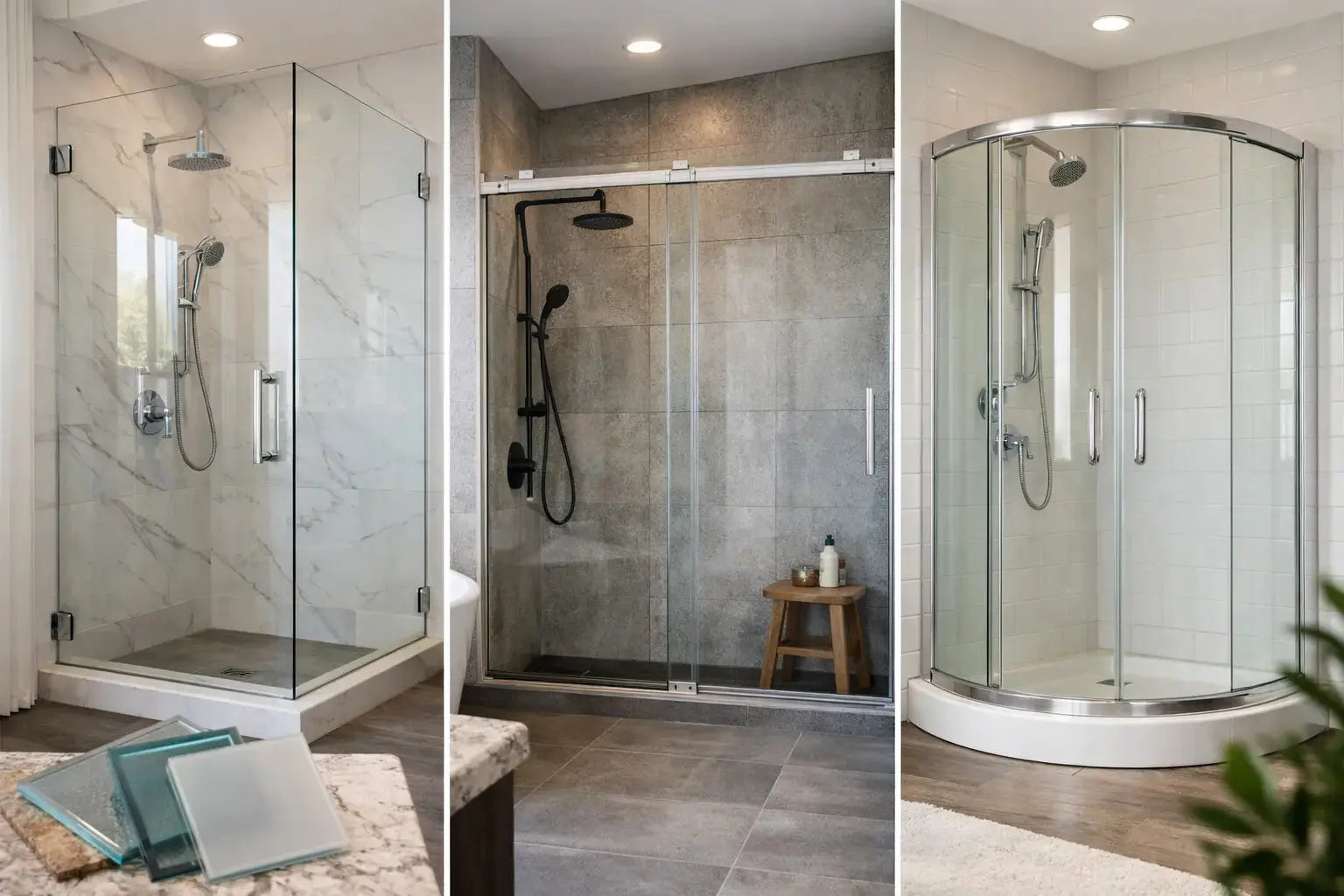
A shower that looks right on paper can still feel awkward once the door is in place. That is usually where bathroom plans succeed or fail. Shower doors affect clearance, cleaning, water control, accessibility, and the overall finish of the room, so the right choice is not just about style.
For homeowners, renovators, and trade buyers, the best decision starts with the shower layout itself. The opening width, wall condition, base or tile threshold, and surrounding fixtures all shape which door will work well long term. A polished frameless panel may suit one ensuite perfectly, while a bypass system makes far more sense in a tight secondary bath.
How shower doors change the function of a bathroom
Shower doors do more than close off a wet area. They influence how open the room feels, how easily users can enter and exit, and how much maintenance the enclosure will need over time. In smaller bathrooms, the wrong swing direction can interfere with a vanity or toilet. In larger spaces, a minimal enclosure can help preserve a cleaner, more architectural look.
This is also where product selection matters. Different door types serve different priorities. Some are chosen for compact layouts, some for accessibility, and some for a design-forward finish that keeps tile work visible. If you are sourcing for a renovation or new build, it helps to think in terms of use first, appearance second.
Common shower door types
The most practical starting point is the door configuration. That choice narrows the field quickly and avoids ordering a style that does not suit the opening.
Sliding shower doors
Sliding or bypass doors are a strong fit for alcove showers and bathrooms where floor clearance is limited. Because the panels move along a track, they do not need outward swing space. That makes them useful in condos, guest bathrooms, and family bathrooms where every inch matters.
The trade-off is cleaning. Framed and tracked systems can collect more residue around the rails than simpler hinged designs. Access is also more limited because only one side opens at a time.
Hinged and pivot shower doors
Hinged and pivot models offer a wider, more open entry. They work well in larger bathrooms and are often selected for walk-in shower designs with a fixed panel and door combination. Visually, they tend to feel more upscale, especially when paired with low-profile hardware and thicker glass.
The main requirement is clearance. You need enough room for the door to swing safely without hitting nearby fixtures or obstructing circulation. That sounds obvious, but it is one of the most common planning mistakes.
Bi-fold shower doors
Bi-fold options are useful when a standard swing door would take up too much space. They fold inward or in sections, which can solve layout issues in compact bathrooms. They are not always the first choice for a premium minimalist look, but they can be the right solution when space is tight.
Fixed panels and walk-in glass
Some showers use a fixed glass panel rather than a full door enclosure. This approach suits larger wet-room style layouts and contemporary bathrooms where openness is part of the design. It can look clean and high-end, but it depends heavily on proper drainage, panel sizing, and water containment. In the wrong layout, splash escape becomes an everyday frustration.
Framed, semi-frameless, or frameless shower doors
Once the door style is set, the next decision is the amount of framing. This affects price, visual weight, and installation tolerance.
Framed
Framed shower doors are generally more budget-friendly and can offer strong water containment. The frame provides structure and can help compensate for minor wall irregularities. For many practical renovations, especially standard alcove applications, framed options remain a reliable choice.
Semi-frameless
Semi-frameless designs balance structure and style. They reduce visible metal while maintaining support at key points. For many buyers, this is the middle ground that delivers a more current appearance without moving fully into premium frameless pricing.
Frameless
Frameless shower doors are popular for modern bathrooms because they create a clean sightline and let tile, stone, and fixture finishes stand out. They are typically built with thicker tempered glass and more precise hardware. They can elevate the room, but they also demand better measurements, stronger installation surfaces, and a higher budget.
If walls are noticeably out of plumb or the base is uneven, frameless installations may require more planning or custom sizing. That does not rule them out, but it does mean the opening needs to be assessed carefully before purchase.
Glass options and why they matter
Glass is often treated as a visual choice, but it also affects maintenance and privacy.
Clear glass remains the most requested option because it keeps the bathroom feeling larger and brighter. It works especially well when the tile work is a feature. Frosted or obscured glass adds privacy and can soften the visual impact in shared bathrooms, while textured options can introduce a more decorative look.
Thickness matters too. Thicker glass generally feels more substantial and is common in frameless designs. Tempered safety glass is standard, but coating options can also be worth considering. Protective treatments help reduce water spots and soap residue, which is useful in high-use family bathrooms and for clients who want lower maintenance.
Measuring for shower doors
This is the stage where a lot of expensive errors happen. Shower openings should never be assumed to be perfectly square, even in newer construction. Tile thickness, wall finish, base dimensions, and corner conditions all affect the final fit.
Measure the width at the top, middle, and bottom of the opening. Check the height on both sides. Confirm whether the walls are plumb and whether the threshold is level. If you are replacing existing doors, do not assume the old size is the correct ordering size. Previous installations may have been adjusted around site conditions.
For custom tile showers, hardware placement also needs attention. Drilling into tile near edges or through waterproofed areas requires proper planning. Contractors and installers already know this, but homeowners often underestimate how much the surrounding construction affects the door selection.
Hardware finishes and design coordination
Shower door hardware should work with the rest of the bathroom, not compete with it. Matte black, chrome, brushed nickel, and warm metallic finishes all have a place, depending on the faucet, shower trim, and accessory selections.
The safest approach is consistency. If the room uses chrome plumbing trim, matching or closely coordinating door hardware usually creates the cleanest result. Mixed finishes can work, but they need to look intentional. This matters most in bathrooms where the enclosure is a major visual element.
The handle style also affects function. Larger vertical pulls are easy to use and suit contemporary spaces. Smaller knobs can save space but may feel less convenient in everyday use.
Installation realities to consider
Even a well-made product can disappoint if the installation details are ignored. Shower doors are only as good as the opening they are mounted to. Wall reinforcement, substrate condition, curb slope, silicone application, and hardware alignment all contribute to long-term performance.
For standard replacements, installation may be relatively straightforward. For frameless glass, custom tile showers, or uneven openings, experience matters more. A slightly misaligned panel can lead to poor sealing, difficult operation, or stress on hinges and brackets.
In Canadian homes, this also ties into broader renovation planning. If the bathroom is being updated fully, it often makes sense to coordinate the enclosure choice with the shower base, wall finish, valve trim, and accessories instead of treating the door as a final add-on. That usually results in better fit and fewer compromises.
Buying shower doors for different project types
A primary ensuite often justifies a more design-led enclosure, especially if the goal is to showcase tile and create an open feel. Frameless hinged doors and fixed-panel layouts are common here, provided the space and budget support them.
A family bathroom usually benefits from a more maintenance-conscious choice. Sliding doors or semi-frameless options can offer a good balance of practicality, durability, and visual appeal. For rental or multi-unit projects, replacement simplicity and price control may matter more than a highly customized appearance.
Commercial and hospitality settings introduce another layer. Durability, code considerations, cleaning frequency, and part availability all become more important. In those cases, straightforward hardware and dependable configurations often outperform more decorative choices.
For buyers comparing brands and enclosure styles across a broad renovation list, a category-focused supplier such as Plumbing Market can make the selection process more efficient because the door choice rarely exists in isolation from the rest of the bathroom package.
What to decide before you buy
Before ordering, be clear on five things: the exact opening size, the door operation you need, the level of framing you want, the glass style, and the hardware finish. If any of those points are uncertain, the smartest move is to pause and confirm site conditions first.
The best shower doors are not always the most expensive or the most minimal. They are the ones that suit the room, match the installation conditions, and continue to work well after the renovation dust is gone. When the enclosure fits the space properly, the whole bathroom feels more resolved from the first use onward.


