

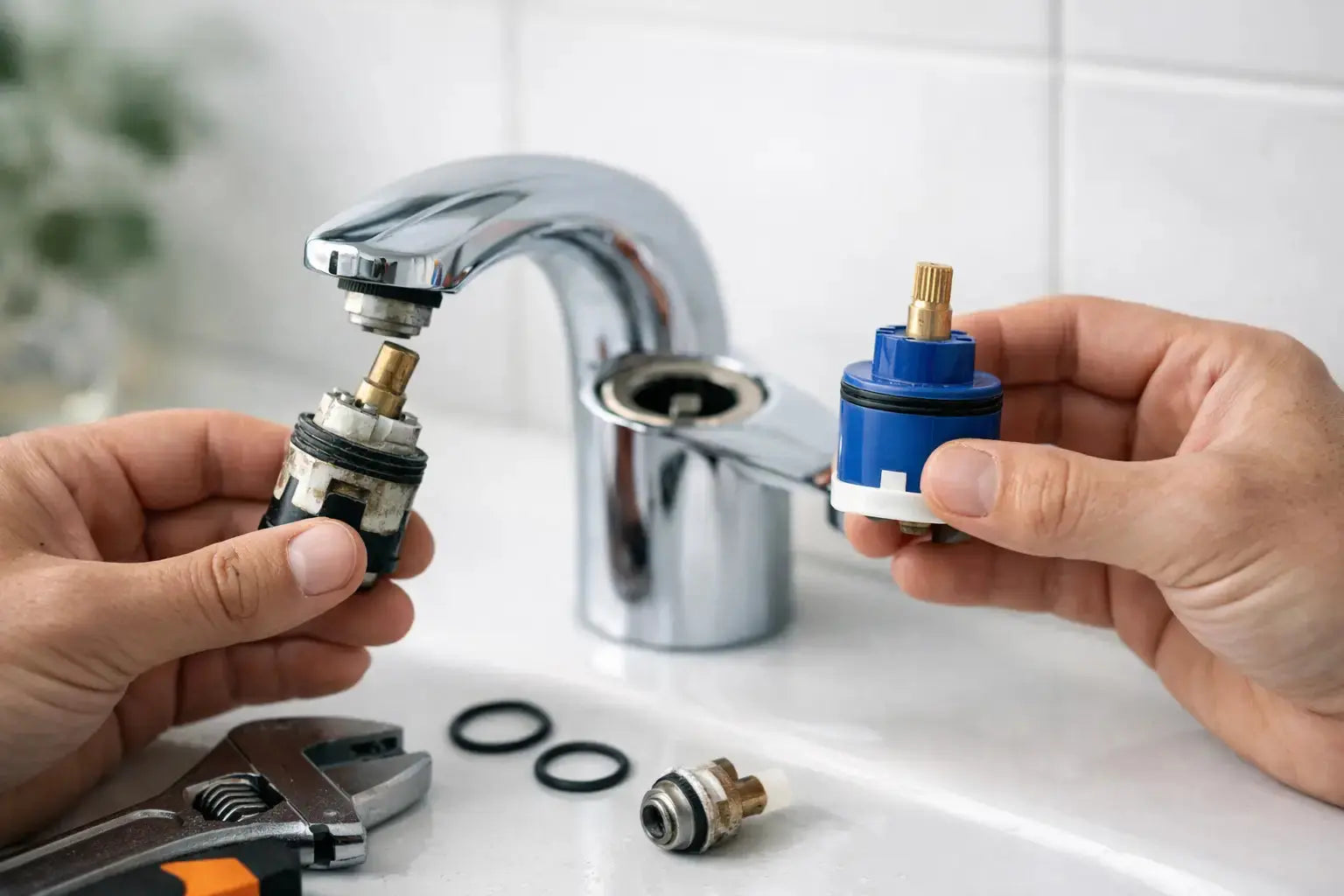
A faucet that starts dripping after shutoff, feels stiff at the handle, or swings from hot to cold without warning usually has a cartridge problem. If you are looking up how to replace faucet cartridge parts, the job is often manageable with basic tools - provided you identify the faucet correctly and avoid forcing anything.
Cartridges control water flow and temperature inside many modern kitchen and bathroom faucets. When they wear out, seals harden, mineral buildup interferes with movement, and internal components stop regulating water the way they should. Replacing the cartridge is usually more effective than trying to clean a badly worn unit, but success depends on getting the right part and following the right removal method for the faucet brand and model.
When a faucet cartridge should be replaced
Not every faucet issue points straight to the cartridge, but several symptoms make it the likely culprit. A persistent drip from the spout after the tap is fully closed is one of the most common signs. So is a handle that has become difficult to turn, unusually loose, or rough in movement.
You may also notice uneven temperature control, reduced flow from one side of the mixer, or water leaking around the handle escutcheon. In hard water areas, mineral deposits can mimic cartridge failure, so there is some judgment involved. If the faucet is older and already showing wear, replacement is usually the smarter repair.
Before you replace the cartridge
The most important part of this repair happens before you remove a single screw. Faucet cartridges are not universal. Even within the same brand, shapes, stem lengths, tab positions, and pressure-balance features can differ. A cartridge that looks close can still fail to seat properly or may prevent the handle from operating correctly.
Start by identifying the faucet brand and model if possible. Look for a logo on the handle, escutcheon, or spout. If you still have the original paperwork, that helps. If not, take clear photos before disassembly, especially of the handle, trim, retaining clip, and the old cartridge once removed. For homeowners and trade buyers alike, accurate part matching saves far more time than trial-and-error ordering.
You will also want to confirm whether the faucet uses a cartridge at all. Some older taps use compression stems, ceramic discs, or ball assemblies instead. If the faucet has a single lever and modern internal control, a cartridge is very likely, but not guaranteed.
Tools and materials for how to replace faucet cartridge
Most cartridge replacements need only a short list of tools: an Allen key set, a screwdriver, adjustable pliers, needle-nose pliers, a cartridge puller if the unit is stuck, plumber's grease approved for faucet parts, a cloth, and white vinegar for mineral buildup. A utility knife can help score old caulking or mineral crust around trim. Keep a small container nearby for set screws and clips because these pieces are easy to lose.
It is also worth having the replacement cartridge on hand before teardown. Once the faucet is apart, you do not want the sink out of service while hunting for a match.
How to replace faucet cartridge step by step
Start by shutting off the water supply beneath the sink. Turn both hot and cold shutoff valves clockwise until closed. Open the faucet to relieve pressure and confirm the water is off. Place the sink plug in the drain or cover the opening with a cloth so small parts do not disappear into the trap.
Next, remove the handle. On many faucets, a small set screw holds it in place, often hidden under a cap or at the rear of the handle body. Use the correct Allen key or screwdriver and back the screw out carefully. If the handle does not lift off easily, do not pry aggressively against finished surfaces. Mineral buildup may be holding it in place, so a gentle wiggle is better than force.
Once the handle is off, remove any decorative cap, bonnet nut, or retaining collar covering the cartridge. Some faucets use a threaded retaining nut, while others use a U-shaped clip. This detail matters. A clip should be pulled straight out, while a nut should be loosened evenly without crushing surrounding parts.
With the retaining hardware removed, pull the cartridge straight up. This is the point where simple jobs sometimes stop being simple. An older cartridge can seize inside the valve body due to scale, corrosion, or long-term compression. If it will not move by hand, apply penetrating patience before applying force. Wiggle it gently side to side. If needed, use a cartridge puller designed for faucet repair. Twisting too hard with pliers can crack the cartridge and make extraction worse.
After removal, inspect the valve body. Wipe out debris, old grease, and mineral deposits. If there is visible scale, a cloth dampened with vinegar can help loosen buildup, but avoid flooding the valve body. Check that O-rings, retaining grooves, and internal ports are clean and undamaged.
Compare the old and new cartridges side by side before installation. The tabs, notches, stem orientation, and overall length should match. Even a small difference can cause leaks, handle misalignment, or restricted flow. If the new cartridge includes instructions for hot-side orientation or balancing, follow them exactly.
Apply a small amount of plumber's grease to the O-rings if the manufacturer allows it. Then insert the new cartridge in the same orientation as the original. It should seat fully without being forced. Reinstall the retaining clip or nut, then replace trim and handle components in reverse order.
Turn the shutoff valves back on slowly. Test the faucet for smooth handle movement, proper hot and cold operation, and leaks around the handle or spout. Let the water run for a minute to flush any loosened debris.
Where this job usually goes wrong
The most common mistake is ordering the wrong cartridge. Close is not close enough. Brand-specific replacement parts matter, especially on premium faucets where tolerances are tighter and trim fit is part of the overall finish quality.
The second common issue is damaging the faucet while trying to remove a stuck cartridge. If corrosion is severe, the repair can shift from part replacement to full faucet replacement, particularly on older builder-grade units. On the other hand, a quality faucet from a recognized brand is often worth repairing because replacement parts remain available and the valve body is built to last.
Another problem is reinstalling the cartridge in the wrong direction. This can reverse hot and cold, prevent full shutoff, or stop the handle from moving through its normal range. Taking photos during disassembly helps avoid that.
Repair or replace the whole faucet?
It depends on the age of the faucet, part availability, finish condition, and labour involved. If the faucet body is in good condition and the brand still supports replacement parts, a cartridge swap is usually the most efficient fix. This is especially true for mid-range and premium kitchen and bath faucets where the cost of a cartridge is far lower than replacing the complete fixture.
If the finish is badly worn, the handle hardware is corroded, or multiple internal parts are failing, replacing the faucet may make more sense. For renovators and property owners already updating the space, a new faucet can be the cleaner long-term decision.
Choosing the right replacement cartridge
For Canadian homeowners and trade professionals, the best buying decision is usually the exact OEM or manufacturer-approved replacement. Generic alternatives may cost less upfront, but fit and lifespan can vary. That matters when the faucet is in a primary bathroom, kitchen, or commercial washroom where downtime is disruptive.
When sourcing parts, match the brand first, then verify the faucet series or cartridge profile. Photos, measurements, and any stamped numbers on the old cartridge can help narrow it down. A specialized plumbing supplier with broad faucet-part coverage is usually a better source than a general retailer because model variation is significant. Plumbing Market carries replacement parts alongside full fixture lines, which makes it easier to match technical components without bouncing between suppliers.
When to call a plumber
If the shutoff valves do not fully close, the cartridge is fused in place, the retaining nut is rounded off, or the faucet body shows cracking, professional service is the safer option. The same applies if the faucet is part of an in-wall shower valve rather than a deck-mounted sink faucet. Shower cartridge replacement is often more sensitive because improper installation can affect scald protection and concealed valve performance.
For a standard sink faucet, though, this repair is often straightforward if you work carefully and use the right part. The real difference between a quick fix and a frustrating one is preparation. Identify the faucet correctly, respect brand-specific parts, and do not force components that are telling you they need a more careful approach.
A dripping faucet can waste water and test your patience, but it also gives you a clear place to start. If you treat the cartridge as a precision replacement instead of a generic plumbing part, the repair usually goes much more smoothly.


