

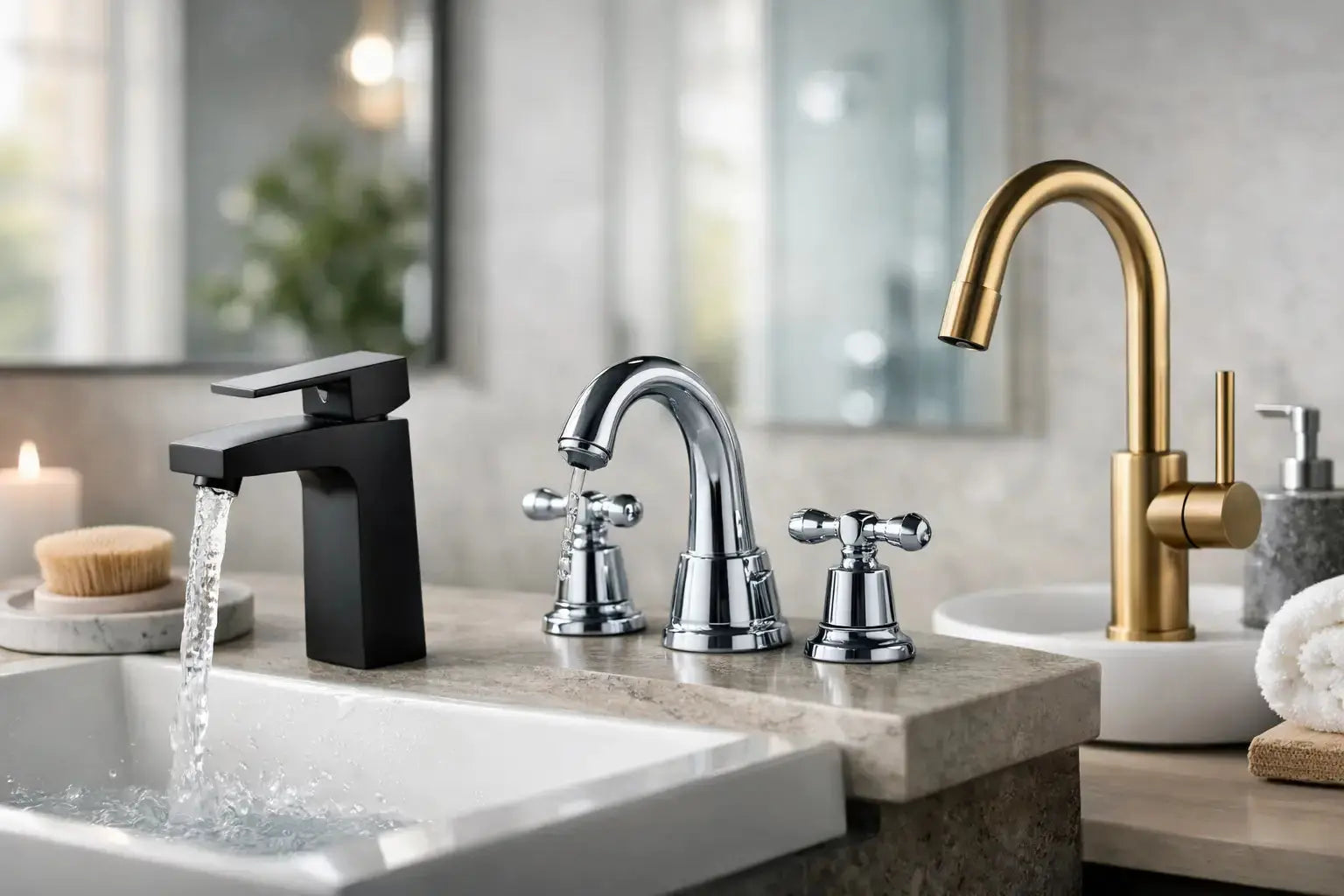
A bathroom faucet is one of the smallest fixtures in a renovation, but it can quickly make the room look dated, unfinished, or thoughtfully specified. The best bathroom faucets for renovation balance the look you want with the sink configuration, mounting requirements, water efficiency, and serviceability you will need for years after installation.
For Canadian homeowners and trade professionals, the right choice is rarely just about finish. A matte black faucet may suit a modern vanity, while a polished chrome model may be the better match for an existing shower trim. A wall-mount faucet can free up countertop space, but only if the plumbing is planned before drywall. Start with the installation conditions, then narrow the selection by style and brand.
Best Bathroom Faucets for Renovation: Start With the Sink
The faucet and sink must work as a set. Before choosing a style, confirm the number of mounting holes in the vanity top or sink, the distance between those holes, and the available clearance behind the basin. These details determine whether a faucet is a straightforward replacement or a change that requires a new countertop, sink, or valve arrangement.
A single-hole faucet is a practical choice for contemporary vanities and compact powder rooms. It has a clean profile, takes up less deck space, and typically uses one handle to control temperature and flow. If you are replacing an older three-hole faucet, a deck plate can sometimes cover the unused holes, although this depends on the faucet model and the spacing of the existing openings.
Centreset faucets suit standard three-hole sinks with closely spaced openings, commonly four inches apart. They are compact, familiar, and often a cost-effective option for rental properties, secondary bathrooms, and straightforward refreshes. Widespread faucets use separate hot and cold handles with a separate spout. Their adjustable spacing and more tailored appearance make them a strong fit for larger vanities and traditional or transitional designs.
For vessel sinks, pay close attention to spout height and reach. A standard lavatory faucet may sit too low or direct water poorly into a raised basin. A vessel faucet or wall-mount model is usually a better fit, provided the spout projects far enough to place the water stream near the drain rather than against the back wall of the sink.
Choose a Mounting Style Before Finalizing the Design
Deck-mount faucets remain the most common option because they are simple to specify, easy to access for future service, and available in the broadest range of styles. They work with most vanity tops and are suitable for renovations where in-wall plumbing is not being moved.
Wall-mount bathroom faucets create a cleaner counter surface and pair particularly well with vessel sinks, integrated basins, and minimalist vanities. The trade-off is planning. The rough-in valve and connections are concealed in the wall, so the final spout height, reach, and handle location must be confirmed before tile and wall finishes are installed. If the faucet ever requires major service, access may be more involved than with a deck-mount model.
Floor-mount faucets are generally reserved for freestanding tubs rather than lavatories. For a full bathroom renovation, matching a floor-mount tub filler with compatible sink and shower finishes can create a coordinated result, but verify that the collections share the same finish name and visual tone. Finish names alone do not guarantee an exact match across different product lines.
Match Faucet Proportions to the Vanity
A faucet can be technically compatible and still look out of place. On a narrow vanity, an oversized high-arc spout may dominate the countertop and increase splash. On a wide double vanity, undersized faucets can appear lost and may not provide adequate reach over larger basins.
Spout reach is especially relevant. The aerator should direct water comfortably into the bowl, ideally toward the drain area. A stream that lands too close to the rear of the basin can make handwashing awkward. One that lands too far forward may splash onto the counter or cabinet face.
Consider handle clearance as well. Lever handles are convenient for children, older users, and anyone with wet or soapy hands, but they need space to operate without striking a backsplash or mirror frame. Cross handles and two-handle models offer a more decorative look, though they may be less convenient for quick temperature adjustment.
Select a Finish That Works in Daily Use
Chrome remains a reliable choice for many Canadian renovations. It is versatile, reflective, widely available, and easy to coordinate with shower hardware, towel bars, and accessories. It also tends to show water spots less dramatically than darker matte finishes, although fingerprints are still visible on highly polished surfaces.
Brushed nickel and brushed gold provide a softer, warmer appearance. They work well in transitional, contemporary, and upscale traditional bathrooms, especially alongside warm wood vanities or stone-look porcelain tile. Brushed finishes can be more forgiving of fingerprints, but brands may use different tones of nickel, brass, and gold. When the bathroom includes several fixture categories, choose coordinating products from the same collection where possible.
Matte black delivers contrast and a strong architectural look. It is particularly effective with white tile, pale oak, concrete-look surfaces, and black-framed mirrors. The practical consideration is mineral residue. In hard-water areas, black fixtures may require regular wiping to prevent visible spotting. Use a soft cloth and manufacturer-approved cleaner rather than abrasive pads, harsh chemicals, or polish.
Prioritize Quality Inside the Faucet
The visible finish matters, but the cartridge and valve construction determine much of a faucet's long-term performance. Ceramic disc cartridges are a preferred feature in quality bathroom faucets because they provide smooth operation and help reduce dripping as the fixture ages. A solid brass body or durable metal construction is also generally preferable to lightweight components in a high-use family bathroom.
Look for recognized brands with available replacement cartridges, aerators, handles, and repair parts. This is particularly relevant for a primary ensuite, commercial washroom, or any renovation where opening a wall or replacing a custom countertop later would be disruptive. Brands such as Riobel and TOTO offer broad fixture selections, allowing renovators to source design-forward products while retaining access to established service parts.
Water efficiency should also be part of the comparison. A lower-flow lavatory faucet can reduce water use without making everyday handwashing feel inadequate, especially when the aerator is designed to maintain a comfortable stream. For households with children or multiple bathrooms, these savings add up. However, if the faucet serves a deep utility-style basin or a task that needs faster filling, confirm that the flow rate suits that use.
Plan for Installation Details Early
A new faucet is easiest to install when the rough-in conditions are known before cabinetry and countertops are ordered. Confirm the faucet hole diameter, maximum deck thickness, supply connection size, and whether drain components are included. Some faucets include a matching pop-up drain, while others require a separate grid drain or vessel drain based on the sink type and overflow configuration.
Do not assume an existing shutoff valve, supply line, or drain assembly can be reused. During a renovation, replacing worn supply lines and shutoff valves is often sensible preventative work. If plumbing is being relocated, a licensed plumber can verify valve placement, water line condition, pressure, and compliance with local requirements.
For wall-mount installations, ask the installer to review the manufacturer specifications before framing is closed. A few millimetres in rough-in depth can affect the trim fit after tile is installed. This is also the time to confirm whether the chosen faucet requires a specific rough-in valve, sold separately from the trim.
Build a Coordinated Fixture Package
The most polished bathrooms are not always built around a single matching collection. A softly curved faucet can work with a more angular shower system when the finishes and scale are consistent. Still, using one manufacturer or collection for the faucet, shower trim, tub filler, and accessories can simplify finish matching and product selection.
Plumbing Market makes it easier to compare bathroom faucets alongside sinks, vanities, shower systems, rough-in valves, drains, and replacement parts, which helps avoid late-stage compatibility issues. For contractors, specifying the supporting components at the same time can also reduce delays caused by missing valves or unsuitable drain assemblies.
The best choice is the faucet that suits the sink, fits the rough-in, supports the way the bathroom is used, and remains serviceable after the renovation dust has settled. Choose the fixture after measuring, not before, and your bathroom will look considered from the first day of use.


