

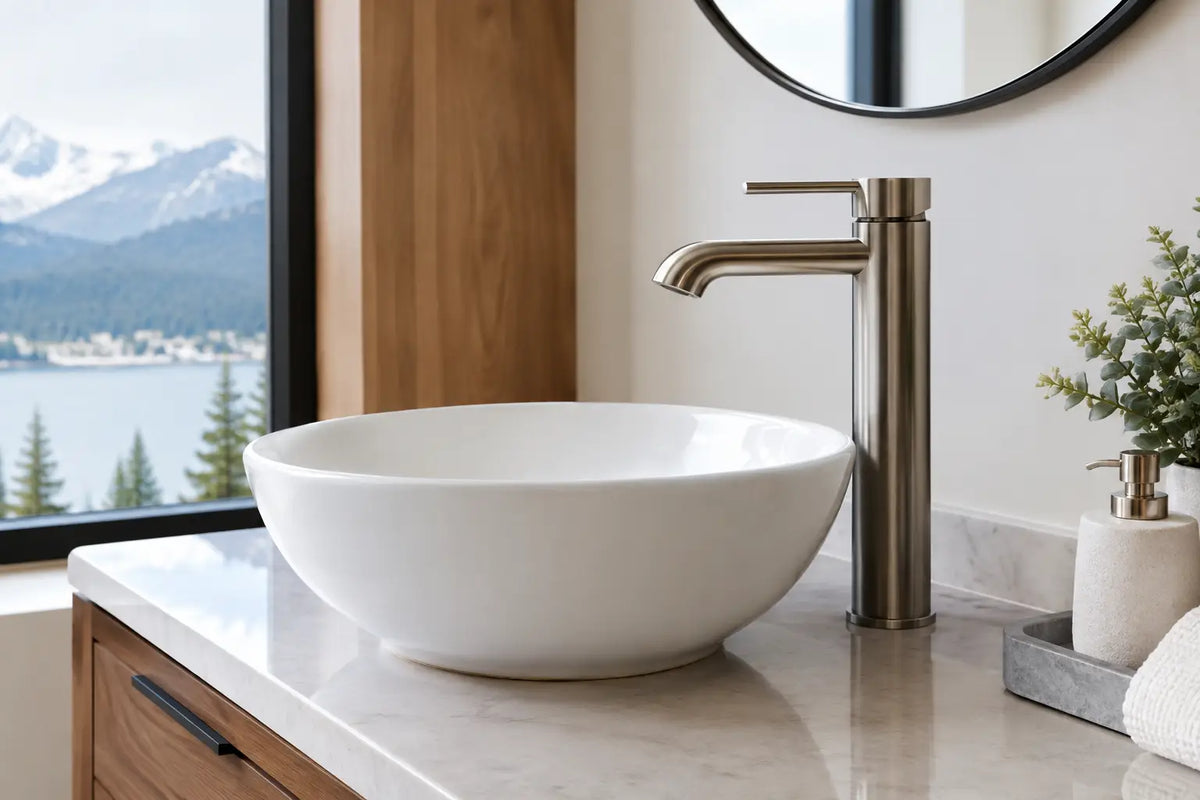
A vessel sink can turn an ordinary vanity into the focal point of a bathroom, but the faucet has to be selected with the sink, counter, and user in mind. The best vessel faucets are not simply the tallest or most decorative models. They provide adequate clearance, place water where it belongs in the basin, and suit the mounting conditions already planned for the vanity or wall.
For Canadian renovations, this decision should be made before countertop drilling, backsplash installation, and final plumbing rough-in. A well-matched vessel faucet improves daily use and protects the vanity top from unnecessary splashing. A poorly matched one can look impressive in a product photo while creating a wet, awkward sink area at home.
What Makes the Best Vessel Faucets Work
Vessel faucets are built to serve sinks that sit above the countertop rather than dropping into it. That raises the rim of the basin, so a standard low-profile lavatory faucet often will not clear it. A vessel faucet needs enough height for comfortable handwashing, but excessive height can make water hit the basin too forcefully and rebound onto the counter.
The relationship between faucet height and spout reach matters more than either measurement alone. Height is measured from the mounting surface to the aerator, while reach measures how far the outlet projects over the sink. Ideally, the stream lands close to the drain or slightly behind it, rather than against the rear wall, front rim, or shallow edge of the basin.
Look closely at the sink manufacturer's dimensions before choosing a faucet. Basin depth, rim height, drain placement, and interior shape all affect where the water will land. A deep, round vessel sink is more forgiving than a wide, shallow rectangular model. If the faucet uses a higher-flow configuration or has a very open spout, correct positioning becomes even more important.
Start With Sink Height and Countertop Layout
The finished height of the vanity is the first practical measurement. A typical bathroom vanity may be comfortable at one height with an undermount sink, but adding a vessel basin raises the handwashing surface significantly. Taller users may appreciate the result, while a high vanity plus a tall vessel sink can be inconvenient for children, guests, or accessibility-focused spaces.
Measure from the finished floor to the countertop, then add the vessel sink height. This gives you the actual rim height. Next, confirm the faucet's spout height above the counter. There should be enough room to wash hands without striking the spout, but the outlet should not sit so high that it creates splashback.
Countertop depth also affects selection. On a narrow vanity, the faucet hole and sink may compete for limited space. Some vessel sinks are designed for rear placement with a deck-mounted faucet, while others work best with a wall-mounted configuration. Always allow room behind the basin for the faucet body, handle movement, supply connections, and required clearances from the backsplash.
Deck-Mounted or Wall-Mounted Vessel Faucets
A tall deck-mounted vessel faucet is the most familiar choice for many residential renovations. It mounts through the countertop or vanity deck and is available in single-hole designs, as well as selected widespread configurations. This style is efficient when the counter has adequate space behind the vessel sink and the plumbing is already arranged for a conventional vanity faucet.
Single-handle models are often the practical choice for a primary bathroom or powder room. Temperature and flow can be adjusted with one hand, and the compact installation keeps the countertop cleaner visually. Two-handle options can better suit traditional interiors, but they require more drilling and a wider mounting area.
Wall-mounted vessel faucets create a cleaner countertop and can be especially effective with shallow basins. They also make wipe-down easier around the sink base. The trade-off is planning: the valve and spout rough-in must be installed inside the wall at the correct height and projection. Once tile, stone, or a finished backsplash is in place, correcting an inaccurate rough-in can be costly.
For wall-mounted installations, verify the spout reach against the exact basin location, not just the vanity centreline. A few centimetres can determine whether the water lands near the drain or on the front slope of the sink. Confirm whether the trim requires a compatible rough-in valve, as these components are not always included together.
Match the Faucet Style to Daily Use
A powder room may allow more freedom for a sculptural spout, open-channel design, or distinctive finish because use is lighter and the sink is often part of the room's visual impact. In a busy ensuite or family bathroom, ease of operation and cleaning usually deserve more weight in the decision.
An open spout can create a visible ribbon of water that suits contemporary vessel sinks, but it may show mineral deposits sooner in hard-water areas. A conventional aerated outlet typically offers a more controlled stream and can be easier to maintain. The right choice depends on the finish, local water conditions, and how much routine cleaning the space will receive.
Handle placement also deserves attention. With a deck-mounted faucet, a rear lever may conflict with a backsplash or leave little hand clearance. Side-handle configurations can help in tighter layouts, although they change the visual balance. For a commercial or high-traffic setting, prioritize durable construction, serviceable cartridges, and familiar operation over decorative details.
Choose a Finish That Supports the Whole Bathroom
Chrome remains a dependable option for vessel faucets because it works with a wide range of accessories, reflects light well, and is generally straightforward to coordinate. Brushed nickel and stainless-look finishes offer a softer appearance that can better hide water spotting and fingerprints. Matte black gives a strong modern contrast, particularly with white ceramic or stone basins, but it benefits from regular cleaning to prevent visible residue.
Brushed gold, champagne, and other warm metallic finishes can bring a more tailored look to a vanity area. They work best when the finish family is repeated intentionally across lighting, cabinet hardware, shower trim, or accessories. Exact colour matching between manufacturers is not guaranteed, even when finishes have similar names. Compare samples or product photography carefully if fixtures will sit close together.
Finish should never override faucet geometry. A faucet that perfectly matches the mirror frame but throws water onto the countertop is not the right fixture. Select the proper height, reach, mounting style, and valve requirements first, then narrow the range by finish and design.
Check These Specifications Before Ordering
Before finalizing a vessel faucet, confirm four details with the sink and vanity drawings:
- The faucet's spout height clears the vessel rim with comfortable working space.
- The spout reach directs water near the sink drain, based on the basin's actual interior shape.
- The countertop hole configuration matches the faucet, or the wall has the required valve rough-in.
- The faucet includes, or is compatible with, the required drain, supply connections, and any separate rough-in components.
Installation Details That Protect the Finished Space
Even premium faucets need correct installation to perform properly. The mounting surface must be level and adequately supported, especially when the faucet is mounted through natural stone or a thick solid-surface counter. Use the manufacturer's hole-size requirements rather than assuming all single-hole faucets fit the same opening.
Do not tighten the faucet body excessively against a fragile ceramic basin or delicate countertop. Follow the supplied instructions and use an experienced plumber when wall-mounted valves, concealed connections, or new supply lines are involved. After installation, test the faucet at normal flow and observe where the stream lands. If the water hits the basin poorly, address alignment before the vanity area is put into regular service.
For renovations that combine a vessel sink with premium shower fixtures, toilets, accessories, or replacement parts, Plumbing Market offers a broad selection of bathroom products from recognized brands in one place. That makes it easier to compare faucet styles while keeping the rest of the project aligned.
The right vessel faucet should feel intentional every time the tap is opened: easy to reach, controlled in its water delivery, and proportioned to the sink rather than competing with it. Start with the measurements, confirm the technical requirements, and let the finish be the final decision that completes the room.


