

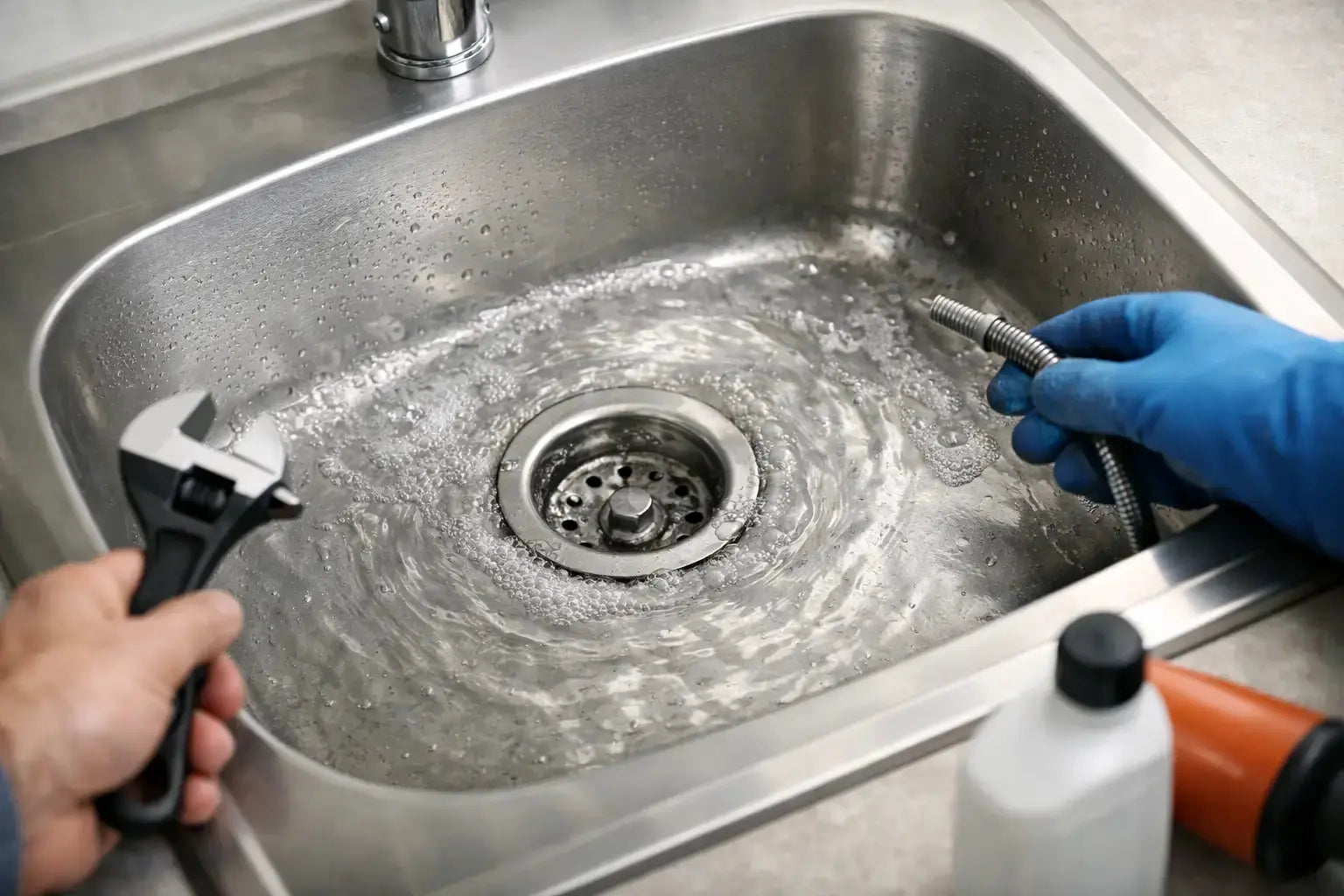
A sink that takes an extra minute to empty is more than a small annoyance. Standing water leaves soap residue behind, makes daily clean-up harder, and can be an early warning that a blockage is building in the drain line. If you are asking, “why is my sink draining slowly,” the answer is usually close to the fixture - but the type of sink, the symptoms, and the age of the plumbing all matter.
A kitchen sink with a garbage disposer has different likely causes than a bathroom basin with a pop-up drain. A slow sink in one room also calls for a different response than several slow fixtures throughout a home or commercial washroom. Start with what you can see and access safely before assuming the problem requires major drain work.
Why Is My Sink Draining Slowly? Start With the Pattern
First, run the tap and observe the drain. If only one sink is slow while nearby fixtures drain normally, the restriction is likely in the stopper, strainer, P-trap, or the short branch line serving that sink. This is the most common and most manageable situation.
If the sink gurgles, backs up when another fixture drains, or multiple fixtures are slow, the issue may be farther down the plumbing system. A partial blockage in a shared drain, a venting issue, or a problem with the building sewer can affect more than one fixture. In that case, repeatedly treating the sink itself will not solve the underlying cause.
Pay attention to odour as well. A musty or sewer-like smell can come from organic buildup in the trap or overflow channel. It can also signal a dry or compromised trap, particularly in rarely used basement, utility, or commercial washroom sinks.
Common Causes of a Slow-Draining Sink
Hair, soap, and toothpaste in bathroom sinks
Bathroom sinks typically slow down because debris catches around the pop-up stopper and drain opening. Hair binds with soap scum, toothpaste, skin oils, and cosmetics to form a sticky mat. The drain may still appear open from above, while the underside of the stopper is heavily coated.
Hard water can make this buildup more persistent. In many Canadian areas, mineral deposits combine with soap residue and reduce the effective diameter of the drain over time. The result is gradual slowing rather than a sudden, complete blockage.
Food residue and grease in kitchen sinks
Kitchen drains collect a different type of material. Cooking grease, oil, coffee grounds, starchy foods, and food scraps can adhere to the inside of pipes. Grease may look liquid when it goes down the drain, but it cools and congeals farther along the line.
Garbage disposers are designed for small amounts of appropriate food waste, not as a catch-all for scraps. Fibrous vegetables, eggshells, pasta, rice, flour-based mixtures, and fat can create a dense blockage in the disposer outlet, trap, or drain arm. A basket strainer that is missing, damaged, or routinely bypassed also allows more debris into the plumbing.
A blocked P-trap or drain arm
The P-trap is the curved pipe below the sink. It holds water to block sewer gases, but it also catches objects and sediment before they move farther into the drainage system. Rings, small utensils, packaging tabs, and accumulated debris often settle here.
If the trap is clear, the restriction may be in the horizontal drain arm that runs from the trap into the wall. This section can collect buildup, particularly where older piping has rough interior surfaces or where the pipe slope is incorrect.
Mineral scale or corroded older pipes
Older homes may have galvanized steel drain components or original metal piping with internal corrosion. As these pipes age, the interior becomes rough and narrowed. Mineral scale and debris catch more easily, so cleaning may provide only temporary improvement.
Replacing visibly corroded trap assemblies, drain arms, or worn sink drains is often a better long-term decision than repeatedly clearing the same section. Match replacement parts to the existing pipe diameter and connection style, and choose durable materials appropriate for the sink location.
A venting or main-drain problem
Drainage plumbing needs air movement to allow wastewater to flow freely. When a vent is blocked or incorrectly configured, water may drain slowly and produce gurgling sounds. This is not normally a DIY roof-level repair.
A shared line or main drain issue is more likely when a kitchen sink backs up while the dishwasher runs, a bathroom sink reacts when a toilet flushes, or lower-level fixtures are affected first. These symptoms call for a qualified plumber, especially in multi-unit properties and commercial facilities.
Safe First Steps for a Slow Sink Drain
Begin by removing visible debris from the sink strainer or stopper. In a bathroom sink, lift out the stopper if the design allows it and clean the stem thoroughly. Some pop-up assemblies require loosening the pivot rod below the basin before the stopper can be removed. Place a small container under the drain area first, as residual water may spill.
Flush the drain with hot tap water after removing debris. For kitchen sinks, use hot water only if the plumbing and manufacturer guidance permit it. Very hot or boiling water can damage certain plastic components, seals, and older piping. A modest amount of dish soap followed by hot tap water can help move fresh grease residue, but it will not remove a substantial clog.
A sink plunger can be effective for a partial blockage. Cover the overflow opening in a bathroom sink with a wet cloth, add enough water to cover the plunger cup, and use short, firm strokes. For a double-bowl kitchen sink, seal the second drain opening before plunging. If there is a garbage disposer, ensure it is switched off at the power source before working around the sink drain.
If the sink remains slow, clean the P-trap. Put a bucket and towels underneath, loosen the slip nuts carefully, and empty the trap into the bucket. Inspect the trap and the drain arm for debris, then rinse and reinstall the components without over-tightening plastic fittings. Check the washers are seated properly before testing for leaks.
A hand-crank drain auger can reach beyond the trap into the branch line. Feed it gently rather than forcing it, especially with older metal pipes or delicate drain assemblies. If the cable meets heavy resistance, withdraw it slowly and reassess. Excessive force can damage pipe joints or leave the cable stuck in the line.
What Not to Put Down the Drain
Chemical drain cleaners are rarely the best first response. Strong caustic or acidic products can harm finishes, weaken older pipes, damage rubber seals, and create a safety hazard when a trap needs to be opened later. They are especially risky if mixed with another cleaner or used after an unsuccessful product application.
Avoid sending grease, oil, coffee grounds, paint, plaster, paper towels, wipes, and food scraps down a sink. Products described as flushable do not belong in sink drainage. In a renovation setting, keep grout, drywall compound, adhesive, and construction dust out of all plumbing fixtures. These materials can harden in traps and branch lines, creating a blockage that ordinary plunging will not clear.
When a Plumber Is the Right Next Step
Call a plumber when DIY cleaning does not restore normal flow, when water backs up into another fixture, or when there are repeated clogs in the same location. Leaks at corroded drain pipes, persistent sewer odours, gurgling across multiple fixtures, and slow drains in a commercial washroom also warrant professional diagnosis.
A plumber can inspect the line with a drain camera, clear deeper obstructions using appropriate equipment, and identify whether a damaged or undersized pipe is contributing to the issue. This is particularly valuable before a kitchen or bathroom renovation. Replacing a sink, faucet, vanity, or disposer without addressing a failing drain connection can create unnecessary rework later.
Choose Components That Support Easier Maintenance
When replacing a sink or updating a vanity, consider service access as part of the purchase decision. A properly sized basket strainer, quality pop-up drain, accessible trap assembly, and compatible tailpiece make future cleaning simpler. For kitchen installations, confirm the sink drain location and depth work with the cabinet layout, disposer, dishwasher connection, and available trap clearance.
For bathroom projects, select a drain that matches the basin’s overflow configuration. A vessel sink, for example, may require a different drain arrangement than a standard lavatory basin. Commercial installations should also account for fixture volume, user traffic, code requirements, and the availability of replacement parts.
A slow sink is often resolved with a clean stopper or trap, but recurring symptoms deserve a closer look. Addressing the source early protects your cabinetry, keeps fixtures working as intended, and helps you choose replacement plumbing components with confidence.


