

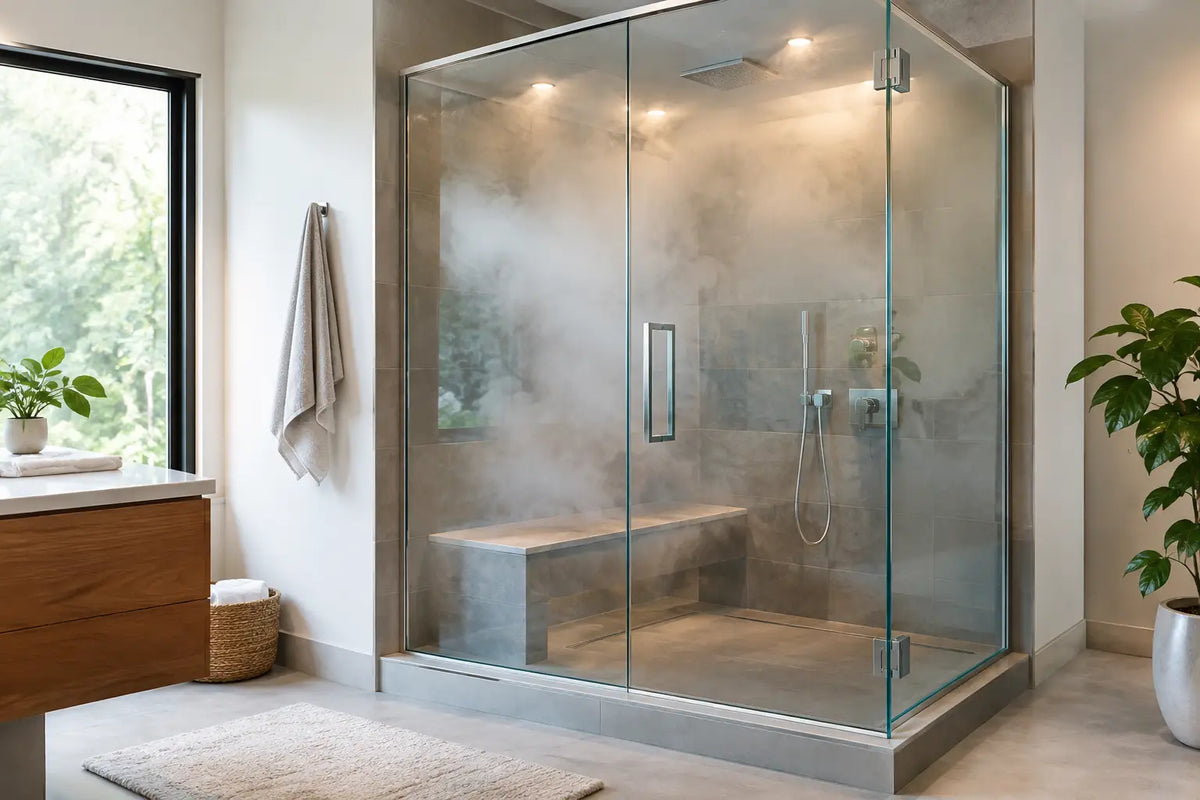
A steam shower can turn a standard daily routine into a dedicated recovery and relaxation space, but it is not a simple fixture swap. This steam shower review looks beyond the finished enclosure to the decisions that determine whether the investment performs well: room size, generator output, waterproofing, ventilation, electrical capacity and service access.
For Canadian homeowners and renovators, the best result usually comes from planning the steam function early. A well-specified system can add lasting value and comfort. A poorly planned one can create moisture problems, electrical changes and difficult repairs behind finished walls.
Steam Shower Review: What You Are Actually Buying
A steam shower heats water in a generator, then sends steam into a sealed shower enclosure through a steam head. The generator is normally installed outside the shower, often in a vanity, closet, basement or mechanical area. A control inside the shower sets temperature and duration, while a temperature sensor helps regulate the experience.
This is different from a conventional shower with a rain head, body jets or a hand shower. Those features use pressurized water directly. A steam system relies on an enclosed, vapour-resistant room that holds heat and moisture long enough to create the intended environment.
Buyers generally choose between a purpose-built steam shower cabin and a custom tiled steam shower with a separate generator. A cabin can simplify the fixture selection and provide an all-in-one look, often with integrated shower functions, lighting, seating and controls. A custom build offers greater freedom in tile, bench design, ceiling shape, door style and overall footprint. It also requires more coordination between the renovator, plumber, electrician and tile installer.
The right option depends on the project. For a fast renovation with a defined footprint, a prefabricated unit may be practical. For a primary ensuite or high-end custom bathroom, a built-in steam room usually gives a more tailored and durable result when constructed correctly.
The Details That Determine Performance
Generator size is not a guess
Generator capacity must match the enclosure volume and the room's heat loss. A compact acrylic shower enclosure requires far less output than a large tiled room with exterior walls, a glass wall, stone surfaces or a high ceiling. Natural stone and dense tile absorb heat, so they can increase the generator capacity required.
Do not size a generator from floor area alone. Calculate the shower's length, width and height, then account for construction materials and room conditions. A supplier or manufacturer sizing tool can provide a starting point, but the final specification should reflect the actual design. An undersized unit may struggle to reach temperature. An oversized model can add unnecessary purchase and operating cost.
Ceiling height deserves special attention. Steam rises, and a tall ceiling increases the volume that must be heated. Many steam-room designs use a gently sloped ceiling to direct condensation toward the walls rather than allowing cold water droplets to fall from directly overhead.
Waterproofing must handle vapour, not only water
Every shower requires waterproofing. A steam shower requires a complete vapour-management assembly behind the finished surface. Ordinary shower waterproofing methods may not be enough if they are not rated for continuous steam exposure.
The wall board, membrane, seams, fasteners, penetrations and drain connection all need to work as one system. The installer must follow the selected membrane manufacturer's steam-room requirements, including overlap details and approved sealants. This is one area where choosing compatible components is more valuable than mixing products based only on price.
Tile and grout are finish materials, not the waterproof layer. Porcelain tile is a common choice because it is durable and low-absorption. Natural stone can create a premium appearance, but it may need sealing and may affect generator sizing. Large-format tile can reduce grout lines, although it also demands a very flat substrate and careful installation.
The enclosure needs to be properly sealed
A steam shower door should fit closely enough to retain steam while still operating safely and comfortably. Frameless glass can look clean, but the door layout, transom, seals and clearances should be selected for steam use rather than copied from a standard open shower design.
The ceiling, walls and door must form a contained enclosure. Open shower concepts and large gaps above glass panels work well for conventional bathing, but they let steam escape quickly. That reduces comfort and sends excess moisture into the bathroom.
Plumbing, Electrical and Ventilation Requirements
Steam generators need a cold-water supply, a drain arrangement and electrical power. Depending on the unit, the electrical requirement may be substantial enough to need a dedicated circuit and service-panel capacity review. A qualified electrician should confirm voltage, breaker size, wire size, disconnect requirements and local code compliance before the walls are closed.
The plumbing connection also needs planning. Water quality can affect maintenance, particularly in hard-water areas. Some generators include automated flushing or draining features that help reduce mineral buildup. These features are worth comparing, but they do not eliminate the need to follow the manufacturer's cleaning and maintenance schedule.
Ventilation is equally important. The bathroom exhaust fan should clear residual humidity after the session ends. It should not be expected to run during the steam cycle if that defeats the enclosed-room design. A properly sized, correctly ducted fan and a practical post-steam drying routine protect finishes, cabinetry and adjacent spaces.
Locate the generator where it can be inspected and serviced. It may be hidden from view, but it should not be buried behind permanent tile or inaccessible cabinetry. Access panels, clearances and shutoff locations are small planning details that make future maintenance far easier.
Controls, Comfort Features and Daily Use
Basic controls allow users to set temperature and session length. Higher-spec systems may add digital displays, remote start capability, lighting controls, audio integration, aromatherapy reservoirs or multiple user presets. These features can improve the experience, but they also add components that may eventually require replacement.
For most households, reliable controls, a properly located steam head and a comfortable bench matter more than a long feature list. The steam head should be placed away from seating and the main entry point because it becomes hot during operation. A built-in bench should be comfortable, easy to clean and finished with an appropriate slope so water does not collect.
Think about who will use the shower. A larger bench, grab-bar blocking installed behind the wall, a hand shower and a low curb can make the room more practical over time. These choices are particularly relevant for homeowners planning to age in place or for multi-generational homes.
Cost and Value: Where the Budget Goes
The steam generator is only one part of the total budget. The larger costs can be electrical upgrades, framing changes, vapour-rated waterproofing, tile labour, glass, ventilation and custom millwork. A prefabricated cabin may have a clearer product price, yet the room still needs suitable plumbing, drainage, electrical service and installation access.
A custom steam shower is usually most cost-effective when included in a full bathroom renovation. Opening a completed bathroom later to add electrical circuits, waterproofing layers and a generator drain can be disruptive and expensive.
Operating cost depends on generator size, session duration, electricity rates and how often the system is used. Steam sessions typically use less water than filling a large bathtub, but electricity consumption remains part of the ownership equation. Buyers should weigh the ongoing cost against expected use rather than choosing a system only for resale appeal.
When a Steam Shower Makes Sense
A steam shower is a strong fit for homeowners who regularly use wellness features, want a private recovery space or are already rebuilding an ensuite from the studs out. It can also suit premium rental, hospitality and fitness applications when maintenance access and commercial-use requirements are considered from the beginning.
It may be less suitable for a lightly used guest bathroom, a room with limited electrical capacity, or a renovation where the existing enclosure cannot be fully rebuilt for vapour control. In those cases, a high-quality thermostatic shower system, body sprays, a rain shower or a freestanding tub may provide more visible value with fewer construction demands.
Before ordering, confirm the finished room dimensions, wall and ceiling assembly, generator location, electrical supply, water and drain connections, ventilation plan and door details. Plumbing Market can help buyers compare the fixture, shower system and technical components needed to support a coordinated bathroom project.
A steam shower should feel effortless once it is complete. The path to that result is careful specification before construction begins, with every concealed component selected as deliberately as the tile and glass you see every day.


