

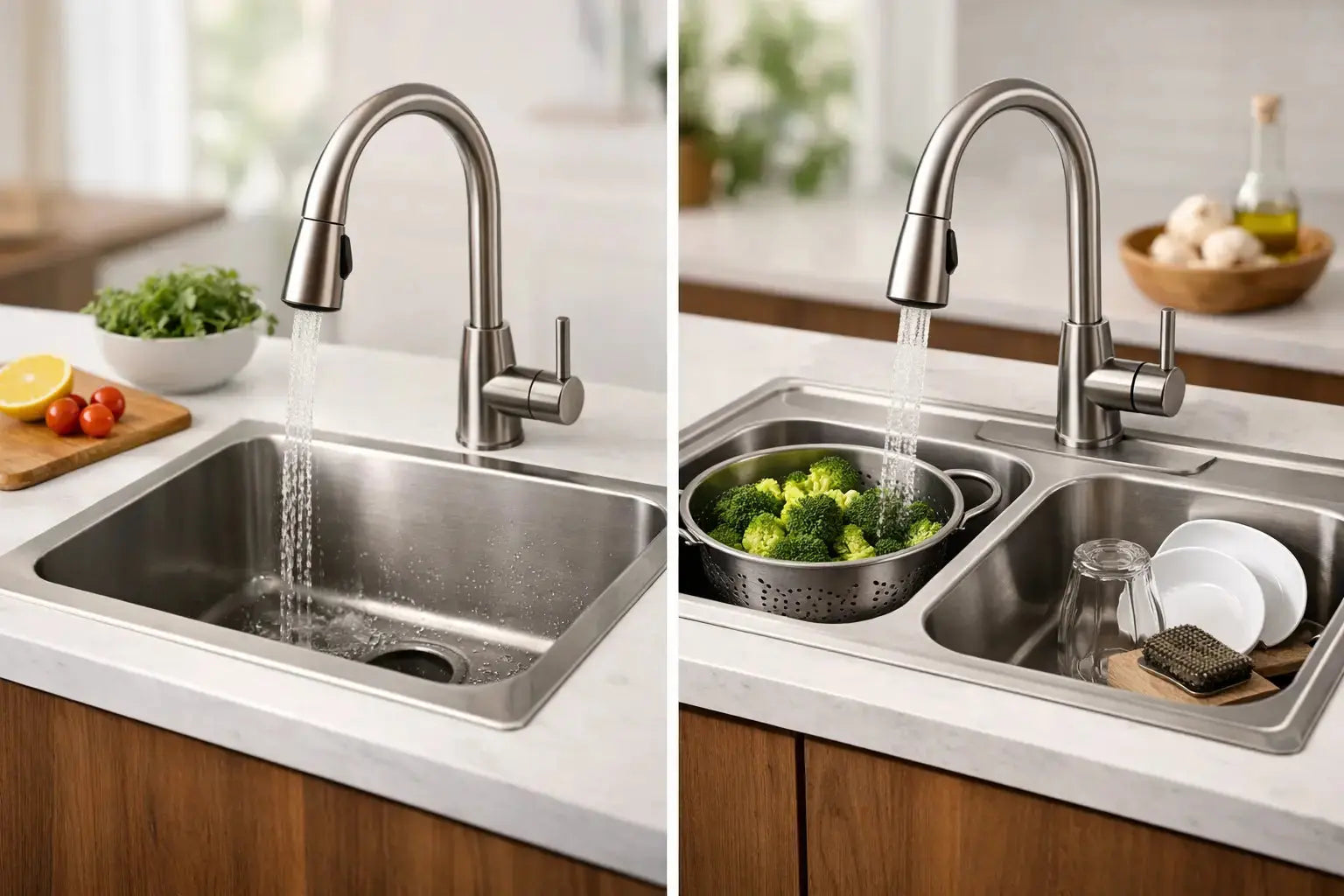
A 33-inch kitchen sink can look generous on a spec sheet yet feel restrictive once a roasting pan, cutting board, and stack of dishes are competing for space. Choosing a single bowl or double bowl sink is therefore less about appearance alone and more about how the kitchen works on an ordinary weeknight, during entertaining, and when cleanup is less than tidy.
The right choice depends on your available cabinet width, countertop layout, dishwasher habits, cookware size, and whether you prefer one large uninterrupted workspace or two dedicated zones. Both configurations are practical, widely available in stainless steel, granite composite, fireclay, and other materials, and can suit everything from compact condo kitchens to large family renovation projects.
Single bowl or double bowl sink: the practical difference
A single bowl sink has one full-size basin with no centre divider. Its main advantage is usable capacity. Large stock pots, oven racks, baking sheets, air fryer baskets, and oversized serving platters can sit flat in the basin instead of being angled awkwardly across a divider.
A double bowl sink divides the sink into two basins. The split may be equal, such as 50/50, or offset, such as 60/40 or 70/30. This creates separation for washing and rinsing, food preparation and cleanup, or clean dishes and soiled cookware. For households that hand-wash dishes regularly, that division can make the kitchen feel more organized.
Neither design is automatically better. A single bowl favours capacity and flexibility. A double bowl favours task separation. The better purchase is the one that matches the kitchen's daily workflow rather than an idealized version of it.
When a single bowl sink is the stronger choice
A large single bowl is often the best fit for homeowners who cook with bulky cookware or use a dishwasher for most daily cleanup. With the dishwasher handling plates and cutlery, the sink is more likely to be used for rinsing produce, filling pots, washing sheet pans, and managing occasional larger items. One deep basin handles these jobs easily.
Single bowl models are particularly effective in smaller kitchens. A narrower sink base cabinet does not leave much room for two useful bowls, so a single basin can provide more functional space within a 24-, 27-, or 30-inch cabinet. This is common in condos, galley kitchens, secondary suites, and compact renovation layouts where every inch of counter space matters.
They also work well with workstation sink accessories. Many modern single bowl designs include or accommodate fitted cutting boards, colanders, drying racks, and bottom grids. These accessories can turn the sink into an active prep station, which is useful where counter space is limited.
Depth needs careful consideration. A deep single bowl, often around 9 to 10 inches, offers excellent capacity but may be less comfortable for a shorter user who frequently washes dishes by hand. Pairing a deep basin with a pull-down or pull-out kitchen faucet can improve reach and make rinsing the full basin easier.
When a double bowl sink makes more sense
A double bowl sink suits households that prefer to keep kitchen tasks separate. One side can hold soapy water while the other is available for rinsing. You can soak a pot in one bowl without losing all access to the sink, or keep produce away from greasy cookware during meal preparation.
This configuration can be especially helpful where a dishwasher is absent, undersized, or not used for every load. It is also a practical option in busy family kitchens where several people may be preparing food and cleaning at once. A second basin gives the kitchen more than one working zone without needing a larger countertop footprint.
The split ratio matters as much as the number of bowls. An equal 50/50 split provides two similarly sized work areas and is a sensible choice for regular hand-washing. A 60/40 or 70/30 design gives one larger bowl for cookware and one smaller bowl for rinsing, prep, or draining. For many Canadian households, an offset double bowl offers the best compromise between separation and capacity.
The trade-off is clear when washing larger items. Even a wide double bowl may not comfortably fit a commercial-size baking tray, a large wok, or a roasting pan. Before ordering, measure the cookware you use most often and compare it with the internal bowl dimensions, not only the overall sink width.
Cabinet, counter, and plumbing requirements
Sink selection starts below the countertop. Every sink has a minimum cabinet size, and that requirement should be confirmed before choosing a model. The exterior sink dimensions do not tell the full story, particularly for undermount installations where mounting hardware and surrounding counter support need space.
A single bowl sink may fit more efficiently in a smaller base cabinet. A double bowl sink usually needs a wider cabinet to provide two practical basins, although compact versions are available. If you are replacing an existing sink, measure the current cutout as well as the cabinet interior. A new sink with a different shape, corner radius, or overall size may require countertop modification.
Drain placement affects cabinet storage and installation planning. Rear-positioned drains can create more room below the sink for garbage bins, water filtration systems, and cleaning products. Centre drains are common and practical, but can occupy the middle of the cabinet where storage is often needed. Double bowl sinks also require two drains or a shared drain assembly with a connection between bowls, making the under-sink plumbing more involved than a standard single bowl setup.
For an undermount sink, consider the countertop material and fabricator requirements early in the project. Quartz, granite, marble, and solid-surface counters can create a clean, easy-to-wipe transition into an undermount sink. Top-mount sinks are often more straightforward for replacements and work with a broad range of countertop materials. Farmhouse or apron-front sinks require their own cabinet and support planning, whether you choose one bowl or two.
Choose the configuration around your faucet
The sink and faucet should be selected as a working pair. A larger single bowl benefits from a faucet with sufficient spout reach to cover the full basin. In a double bowl model, the faucet needs to reach both bowls comfortably, particularly if the divider is wide or the basins are unequal.
Pull-down faucets are popular for both layouts because the spray head makes it easier to rinse corners, direct water around dishes, and clean the basin. Consider the faucet's required number of mounting holes, overall height, and handle clearance. If there is a window behind the sink, a high arc faucet may not fit even though it looks ideal in a showroom image.
Accessories should also match the configuration. A bottom grid protects the sink surface from cookware, while a basket strainer helps capture food debris. For a double bowl setup, confirm whether accessories are supplied for both bowls or only the larger one. These details are small, but they affect everyday cleaning and long-term convenience.
Material and finish still matter
The bowl configuration is only one part of the purchase. Stainless steel remains a dependable choice for its broad style compatibility, practical maintenance, and availability across price points. Look for a suitable gauge and sound-dampening features if reducing noise is a priority.
Granite composite sinks provide a matte, design-forward look and are available in colours that coordinate with black, brass, stainless, or chrome faucets. They can be an excellent choice for contemporary kitchens, although dark finishes may show mineral deposits in areas with hard water. Fireclay offers a classic, substantial appearance, particularly for apron-front installations, but its weight and installation requirements should be planned carefully.
For all materials, review the manufacturer care instructions before purchase. Abrasive cleaners, standing water, and harsh chemicals can affect finishes differently. A sink that suits your cleaning routine will continue to look better over time.
A quick buying check before you order
Before finalizing a kitchen sink, confirm these practical details:
- The minimum base cabinet width and the available interior cabinet space.
- The countertop cutout, mounting style, and clearance for an undermount or apron-front installation.
- The internal bowl dimensions against your largest pots, trays, and cookware.
- The drain location and required plumbing parts, including disposal compatibility if applicable.
- The faucet reach, mounting-hole requirements, and clearance below windows or upper cabinets.


