

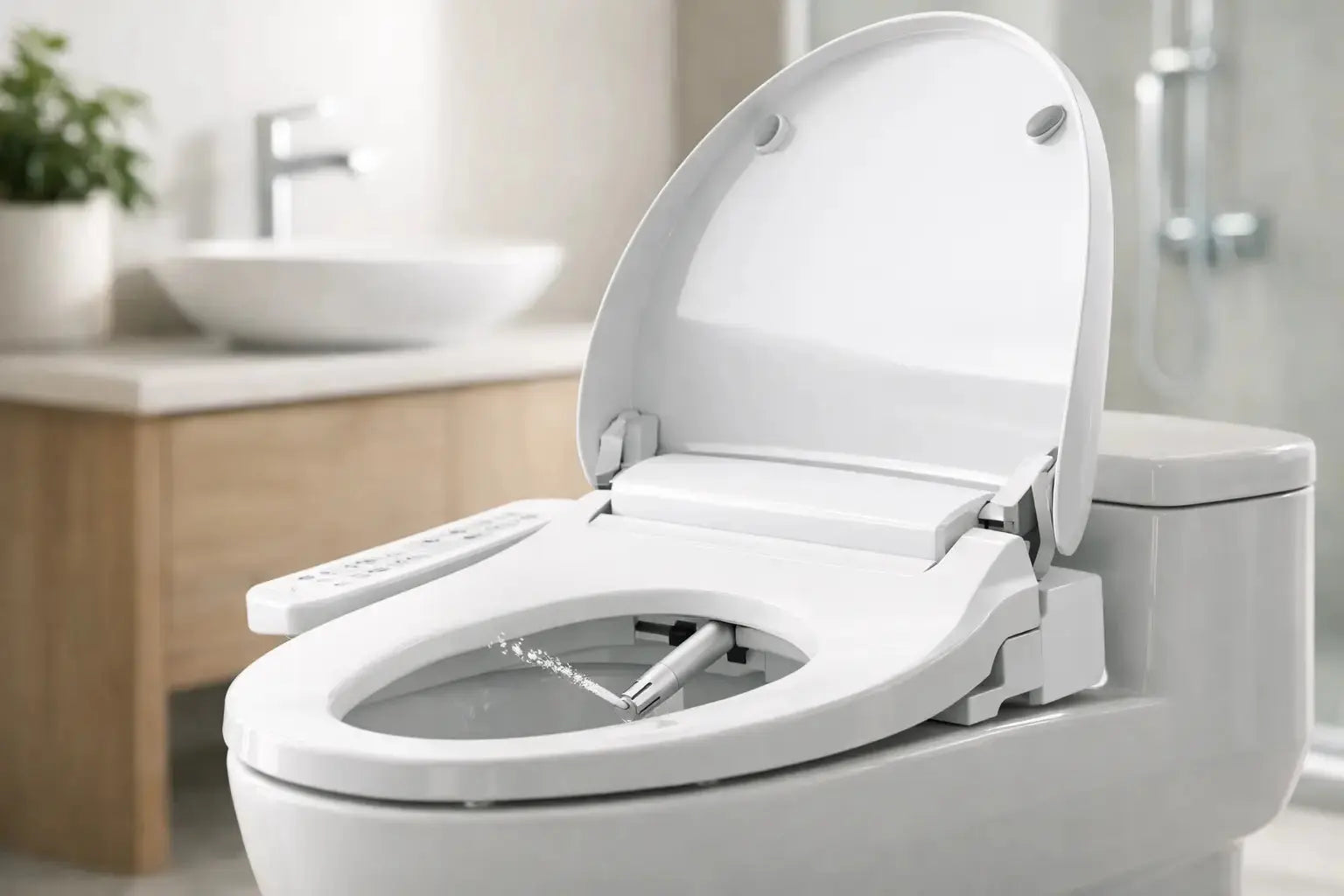
A bathroom upgrade does not always require replacing the entire toilet. If you are asking what is a bidet seat, the straightforward answer is that it is a replacement toilet seat with a built-in water-washing function. It mounts to a compatible toilet bowl, connects to the water supply, and washes with an adjustable spray after using the toilet.
For homeowners, renovators, and property managers, a bidet seat can add a more hygienic, comfortable washroom experience without the footprint or plumbing work of a separate bidet fixture. Models range from simple non-electric seats with manual controls to premium electronic units with heated water, warm-air drying, automatic lids, night lights, and user presets.
What Is a Bidet Seat and How Does It Work?
A bidet seat replaces your existing toilet seat and lid. Beneath the rear portion of the seat is a retractable nozzle or wand. When activated, the nozzle extends and directs a controlled stream of water for rear cleansing. Many models also include a front-wash setting designed for feminine hygiene.
The seat connects to the toilet's clean water supply, typically through a T-fitting installed at the fill valve. The fitting allows the toilet tank and bidet seat to share the same supply line. Electronic models also need access to a properly installed electrical outlet, commonly a GFCI-protected outlet near the toilet.
After use, the nozzle retracts into a protected housing. On many better-equipped models, it rinses itself before and after each wash cycle. The purpose is not to spray the toilet bowl indiscriminately. It is a targeted cleansing system with adjustable water direction, pressure, and, depending on the model, temperature.
A bidet seat differs from a bidet attachment. An attachment is installed beneath an existing toilet seat and generally has a slim control panel beside the bowl. It can be a cost-effective option, but the existing seat may sit slightly higher or fit less cleanly. A bidet seat is a complete seat-and-lid assembly, usually offering a more integrated appearance and a wider selection of comfort features.
Types of Bidet Toilet Seats
The right type depends on the bathroom layout, electrical access, desired features, and the toilet already in place. The main distinction is between non-electric and electric bidet seats.
Non-electric bidet seats
Non-electric models use household water pressure and operate with a dial, lever, or manual control. They do not require an outlet, which makes them practical for powder rooms, rental properties, and bathrooms where adding electrical service is not part of the project scope.
These seats are generally more affordable and mechanically simple. Because they use the incoming water supply, however, the water temperature is usually cold. Some models can be connected to a nearby hot-water source, but this adds installation complexity and is not possible in every bathroom.
Non-electric seats are well suited to buyers who want basic water cleansing, prefer fewer electronic components, or need a bidet solution in a location without nearby power.
Electric bidet seats
Electric bidet seats offer a broader range of controls and comfort functions. Typical features include heated water, a heated seat, variable spray pressure, adjustable nozzle position, warm-air drying, deodorizing, and a remote control or side panel.
Water heating varies by model. Tank-style seats store and heat a limited amount of water, while tankless models heat water as it flows. Tankless systems can provide longer warm-water washes, although the initial purchase price is often higher. Performance also depends on incoming water temperature, electrical capacity, and the selected spray setting.
Premium electronic seats may include programmable user settings, motion-activated lids, automatic flushing when paired with compatible toilet systems, and gentle wash modes. These features are convenient, but they should be chosen for a clear reason rather than simply because they are available. A simple, well-fitting seat with reliable controls is often the better long-term purchase than a feature-heavy model that does not suit the household's needs.
Why Choose a Bidet Seat?
The main benefit is water-based cleansing. Many users find it more thorough and gentler than relying on toilet paper alone. This can be particularly useful for people with sensitive skin, mobility limitations, post-surgical needs, or conditions that make conventional wiping uncomfortable.
A bidet seat can also reduce toilet paper use. It will not eliminate the need for paper in every household, since some users still prefer to dry with a small amount of tissue, but a warm-air dryer can reduce it further. For busy households, the benefit is usually convenience and personal comfort rather than a promise of zero paper consumption.
From a renovation perspective, the key advantage is efficiency. A standalone bidet requires floor space, a dedicated fixture, water connections, drainage, and more extensive planning. A bidet seat uses the existing toilet location. That makes it a practical option for condo bathrooms, ensuites, and compact main-floor washrooms where every inch matters.
There are trade-offs. Electronic models require electricity, and most project plans should include the cost of adding a suitable outlet if one is not already available. The seat body is also larger at the back than a standard toilet seat, so it may change the visual profile of the toilet. Buyers should compare dimensions instead of assuming every seat will fit every bowl.
Choosing the Right Bidet Seat for Your Toilet
Fit is the first purchasing decision. Most bidet seats are designed for either elongated or round-front toilets. An elongated bowl is typically oval and longer from the mounting holes to the front edge, while a round bowl has a shorter profile. A seat made for one shape may technically install on the other, but the result can look awkward, leave an overhang, or interfere with the lid.
Before ordering, measure from the centre of the mounting holes to the front of the bowl, measure the bowl at its widest point, and check the distance from the mounting holes to the tank or wall. This rear clearance is especially important because the bidet seat housing needs room behind the hinges.
One-piece toilets, skirted toilets, and designer toilet profiles may need additional attention. Some have limited access to the mounting hardware, a curved rear deck, or unusual dimensions. In these cases, review the toilet manufacturer's measurements and the bidet seat's compatibility requirements before purchase.
For electric models, confirm that an electrical outlet is within reach of the unit's cord and is positioned appropriately for the installation. Avoid relying on extension cords in a bathroom. If an outlet needs to be added, arrange for a qualified electrician and plan that work before the final installation date.
Water-supply compatibility also matters. Most residential toilets use common connection sizes, but older homes and unusual shutoff valves may require an adapter or a replacement supply component. Renovators working on a full bathroom update should consider the shutoff valve, supply line, toilet condition, and electrical access together instead of treating the bidet seat as an afterthought.
Features Worth Comparing
Feature lists can become long quickly. Start with functions that affect daily use: wash quality, controls, fit, water temperature, and nozzle hygiene. Then decide whether comfort upgrades such as a heated seat or dryer justify the added cost.
Water pressure adjustment is useful for households with different preferences. Adjustable nozzle position matters because users vary in height and body shape. A self-rinsing nozzle is a sensible baseline feature, while stainless-steel nozzles are common on many premium models and are valued for durability and easy cleaning.
Side controls are simple and accessible, especially for guest bathrooms. Remote controls can provide a cleaner seat profile and more detailed settings, but the remote needs a convenient mounting location. A soft-close lid reduces noise and wear, while an illuminated night light can be genuinely useful in an ensuite or frequently used family bathroom.
Warm-air drying is convenient, but it is not always a fast substitute for paper. Expect a drying cycle to take longer than a quick wipe, and recognize that results vary by model and user preference. Likewise, heated seats are welcome in Canadian winters for many buyers, but they add electrical dependence and should be selected from a trusted brand with clear warranty support.
Installation and Ongoing Care
Many bidet seats are designed for straightforward installation on a compatible toilet. The basic process involves removing the old seat, mounting the new bracket, connecting the supplied T-fitting to the water supply, attaching the bidet hose, checking for leaks, and plugging in an electric model where applicable.
If the existing shutoff valve is stiff, corroded, or unreliable, replace it before installing the seat. If plumbing access is limited, the toilet is unusually shaped, or electrical work is required, professional installation is the practical choice. Contractors should also confirm that any required backflow protection is included or addressed according to the product instructions and local requirements.
Cleaning is simple but should be consistent. Wipe the seat exterior with a soft cloth and non-abrasive cleaner approved by the manufacturer. Avoid harsh chemicals and abrasive pads that can damage plastics, controls, or finishes. Use the nozzle-cleaning function if provided, and periodically inspect the supply connection for moisture or seepage.
For a renovation that needs both design flexibility and technical compatibility, Plumbing Market can help buyers compare toilets, bidet seats, shutoff valves, supply components, and other washroom essentials in one product category structure.
A bidet seat is most successful when it fits the toilet, suits the users, and has the right water and electrical connections in place. Choose the features you will use every day, confirm the measurements before ordering, and the upgrade can feel like a natural part of the bathroom rather than an add-on.


