

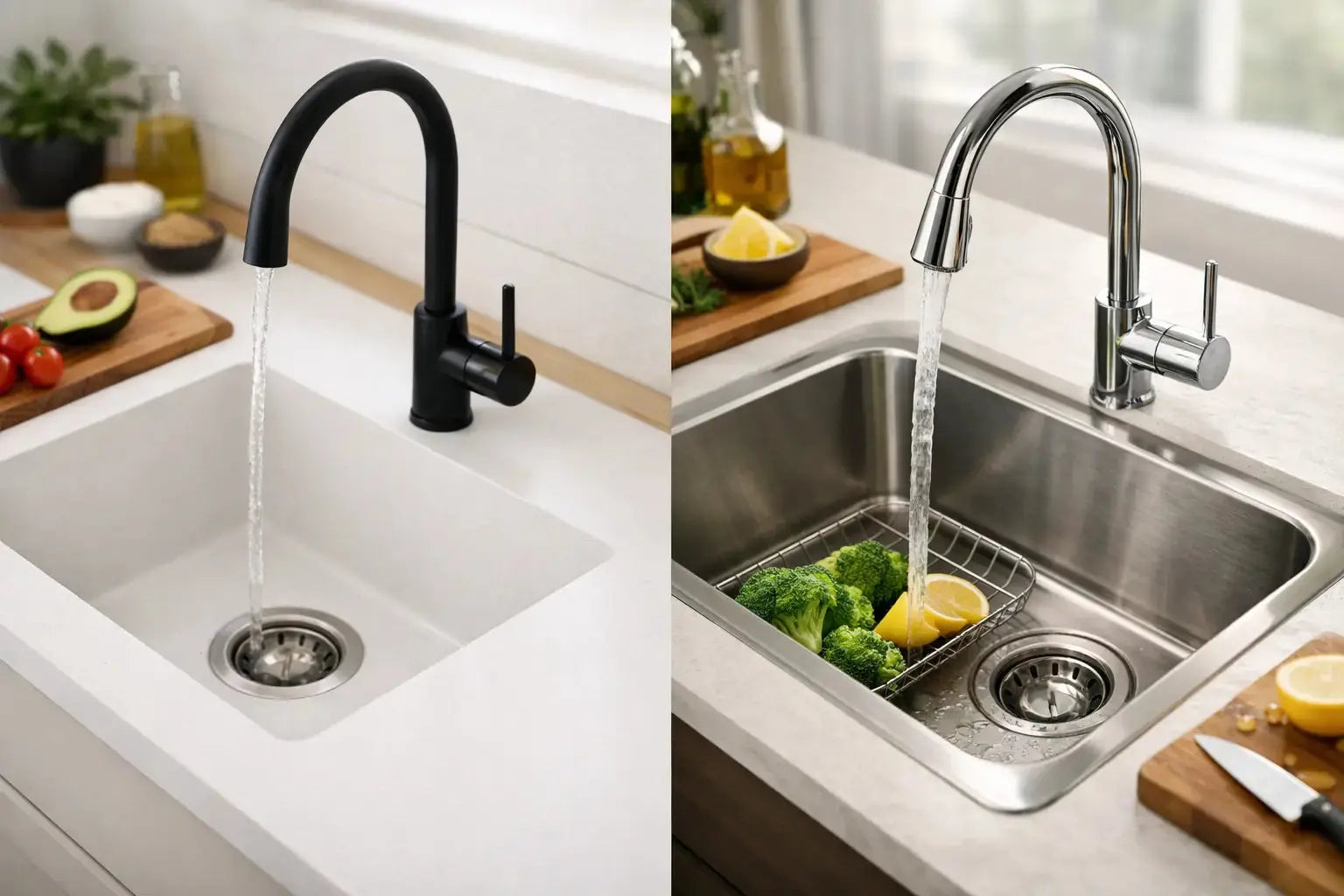
A kitchen sink is one of the hardest-working surfaces in the home. It handles hot cookware, heavy pots, food preparation, daily washing, and the occasional dropped pan. In the quartz sink vs stainless steel decision, the right choice depends less on which material is objectively better and more on your kitchen style, cabinetry, budget, and cleaning expectations.
For many Canadian renovations, stainless steel remains the practical default because it is familiar, versatile, and easy to replace. Quartz composite sinks offer a more tailored, design-forward finish with deep colour options and a quieter feel. Both can be excellent long-term choices when the gauge, construction, mounting method, and cabinet fit are selected correctly.
Quartz Sink vs Stainless Steel: The Main Differences
A quartz sink is usually a composite product rather than solid quartz. Manufacturers combine crushed natural quartz or granite particles with acrylic resin and pigments, then mould the material into a finished basin. The result is a dense sink with a matte, stone-like appearance. Colours commonly include black, charcoal, white, beige, grey, and brown, allowing the sink to coordinate closely with countertops and cabinetry.
Stainless steel sinks are formed from corrosion-resistant steel, commonly in 18/8 or 18/10 grades. They are available in a broad range of configurations, from compact bar sinks to large workstation models with integrated ledges for colanders, cutting boards, and drying racks. Brushed or satin finishes are especially common because they soften the appearance of water marks and light scratches.
The visual difference is immediate. A composite quartz sink reads as a deliberate design element, while stainless steel has a clean, professional appearance that works with nearly every faucet finish and countertop material. For contractors and property owners making selections across several units, stainless is also easier to standardize and source in varied sizes.
Durability Under Daily Kitchen Use
Both materials are durable, but they respond differently to impact, heat, and abrasion.
Quartz composite is highly resistant to everyday scratches and staining. Its colour runs through the material, so minor surface wear is less noticeable than it can be on a metallic finish. It also absorbs sound well. Washing dishes in a composite sink generally produces less clatter, which can matter in open-concept kitchens.
That said, composite sinks can chip or crack if a heavy cast-iron pot strikes an edge or corner with enough force. They can also be affected by thermal shock. Do not place a very hot pan directly into a cold or partially frozen sink, and avoid pouring rapidly boiling water into a basin that has been chilled by ice or cold water. This is particularly relevant in cottages, seasonal properties, and unfinished homes during colder Canadian months.
Stainless steel will not crack, and it handles hot pots exceptionally well. A dropped pan may dent a thinner sink, but a quality model with a heavier gauge is much more resistant to impact. Stainless can scratch, especially in the first few weeks of use, although fine scratches generally blend into the brushed finish over time. For busy family kitchens, rental properties, and commercial-style work areas, that ability to take abuse without structural damage is a major advantage.
Gauge Matters for Stainless Steel
When comparing stainless sinks, do not focus on appearance alone. Gauge indicates the thickness of the steel, and lower gauge numbers mean thicker material. An 18-gauge sink is a strong choice for most residential kitchens, while 16-gauge models provide additional rigidity and dent resistance for heavier use.
Also look for sound-deadening pads and a protective coating on the underside. These features reduce vibration, limit noise from running water, and help manage condensation inside the sink cabinet. A low-priced, thin stainless sink can feel noticeably louder and less stable than a better-built model.
Cleaning and Maintenance Requirements
Stainless steel is simple to maintain. Regular cleaning with mild dish soap, warm water, and a soft cloth will remove most residue. Drying the basin after use reduces water spotting, especially in areas with hard water. For tougher marks, use a cleaner suitable for stainless steel and follow the grain of the finish.
Avoid steel wool, harsh scouring powders, and leaving wet cans, cast-iron cookware, or rubber mats in the basin for long periods. These can contribute to surface marks or localized rust staining. Rust-coloured marks on stainless steel are often transferred particles from another metal rather than corrosion of the sink itself, but they should still be removed promptly.
Quartz composite requires similarly straightforward care, but it benefits from more consistent rinsing. Light-coloured basins can show tea, coffee, mineral buildup, and food residue if they are not cleaned regularly. Dark finishes may show hard-water deposits more clearly. A non-abrasive cleaner and soft sponge are usually sufficient, followed by a thorough rinse and dry.
Check the manufacturer’s care instructions before using bleach, drain cleaners, or aggressive descaling products. Some chemical products can dull a composite finish or discolour it if left sitting in the bowl. Neither sink type should be treated as a cutting board or a place to store harsh chemicals.
Appearance, Colour, and Kitchen Design
Choose quartz composite when the sink should contribute to a cohesive material palette. A black or anthracite composite basin can ground a white quartz countertop, while a warm grey or beige option can suit natural wood cabinetry and softer stone finishes. Because the finish is non-metallic and low-sheen, it can make a large sink feel less visually dominant.
Choose stainless steel when flexibility is the priority. It works well with polished chrome, brushed nickel, stainless, matte black, and many mixed-metal kitchen details. It also pairs naturally with stainless appliances, though matching every metal surface exactly is not required. In a modern, transitional, or utility-focused kitchen, stainless is difficult to date.
Consider the faucet and accessories at the same time. Pull-down faucets, soap dispensers, air gaps, filtered-water taps, and workstation accessories all require space around the sink deck or countertop. A large single-bowl sink may look appealing, but the cabinet must accommodate its width, depth, plumbing connections, and any required disposal unit.
Installation and Cabinet Considerations
Quartz composite sinks are heavier than comparable stainless models. Before purchasing, confirm that the base cabinet is sized correctly and that the countertop installation team can support the selected mounting style. Undermount composite sinks need reliable support beneath the counter. A large bowl filled with water and cookware adds substantial load.
Stainless steel is lighter and available in more drop-in and undermount formats. Drop-in models are often practical for laminate counters because the sink rim covers the cutout edge. Undermount models create a clean countertop transition and make it easier to sweep crumbs into the bowl, but they require a solid-surface counter such as quartz, granite, or certain composite materials.
Measure the existing cabinet rather than relying on the outside dimensions of the old sink. Interior cabinet width, drawer clearance, faucet hole placement, drain location, and sink depth all affect compatibility. Deep sinks are useful for large cookware, but they can reduce space for a garbage bin, water filtration system, or pull-out storage below.
Cost and Value for Canadian Renovations
Entry-level stainless steel sinks are generally less expensive than quartz composite models, making them a strong value for cost-conscious renovations and replacement projects. Prices rise with thicker gauge steel, larger bowls, workstation ledges, sound insulation, premium finishes, and accessories.
Quartz composite sinks often carry a higher upfront price, particularly in popular colours and oversized configurations. Their value lies in their finish, sound control, and resistance to visible daily wear. They can be a worthwhile selection for a kitchen where the sink is highly visible and used frequently, provided the household is comfortable following the recommended care practices.
Do not judge value by material alone. A well-made 18-gauge stainless sink with sound pads and proper installation can outperform a lower-quality composite option. Likewise, a reputable quartz composite sink can offer better colour consistency and long-term finish performance than a bargain model with limited technical information.
Which Sink Is Right for Your Kitchen?
Stainless steel is usually the better fit for homeowners and trade buyers who want maximum versatility, high heat tolerance, straightforward replacement options, and a broad choice of sizes. It is particularly practical for busy kitchens, secondary suites, rental properties, laundry areas, and projects where durability and budget control take priority.
Quartz composite is a strong option when colour coordination, a quieter workspace, and a stone-inspired finish are central to the design. It suits homeowners who want the sink to feel integrated with their countertop and cabinetry rather than purely functional. It is also appealing for households that prefer a deeper, more muted look than reflective metal provides.
Before ordering, confirm the sink material, bowl configuration, minimum cabinet width, mounting type, drain size, included accessories, and care requirements. Selecting the right sink is easier when it is evaluated alongside the faucet, countertop, cabinet layout, and daily workload - not as an isolated finish decision.


