

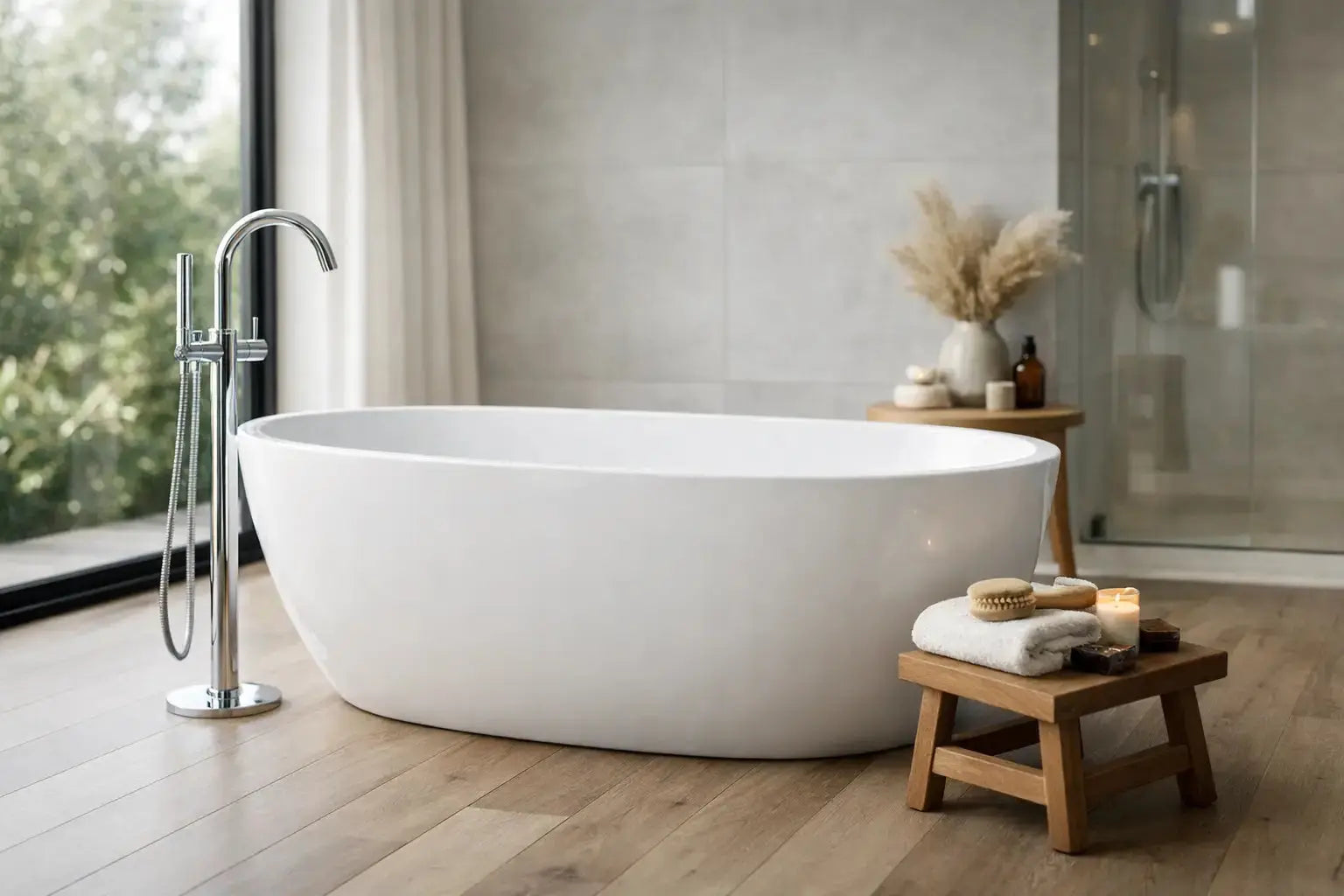
A freestanding tub can make a bathroom look finished before the rest of the room is even installed. It also tends to be one of the most expensive and space-sensitive fixture decisions in the project. This freestanding bathtub buying guide is built for that exact point in the process - when you want the look, but you also need the dimensions, plumbing requirements, and material differences to make sense.
What matters most in a freestanding bathtub buying guide
Most buying mistakes happen because shoppers lead with shape and forget installation limits. A tub may look right in a product photo and still be wrong for the room, the floor structure, or the way the bathroom is actually used.
Start with four practical questions. How much floor space do you really have once clearances are accounted for? Who will be using the tub, and how often? Are you replacing an existing alcove or corner unit, or planning around a new layout? And do you already know where the drain and faucet supply lines will land?
Those answers will narrow the field faster than style alone. Once the basics are set, it becomes much easier to compare materials, profiles, and brand tiers without wasting time on tubs that will not work on site.
Size, clearance, and bathroom layout
Freestanding tubs need visual space, but they also need functional space. In a compact ensuite, a tub that is technically installable may still leave the room feeling crowded or make cleaning awkward. In a larger primary bath, the issue is often the opposite - a small tub can look undersized and disconnected from the rest of the design.
Most freestanding tubs fall into a familiar range, but the details matter. Overall length, width, height, soaking depth, and interior base dimensions all affect comfort. Two tubs with the same outside length can feel very different inside depending on wall thickness and backrest angle.
Typical sizing ranges
A compact freestanding tub often starts around 55 to 59 inches long. Standard options commonly sit in the 60 to 67 inch range. Larger models can extend to 70 inches or more, which is often better for taller users or bathrooms with more open floor area.
Width usually lands between 27 and 32 inches. Height varies as well, especially with deep soaking designs. If you are planning around a window, niche, or sloped ceiling line, tub height deserves as much attention as length.
Clearance around the tub
Leave enough room to walk around the fixture and clean around the base. You also need to think about how the tub relates to adjacent vanities, shower glass, doors, and toilet placement. A freestanding installation should feel intentional, not squeezed in.
If the tub is replacing an alcove model, do not assume the old footprint will translate neatly. Freestanding tubs often require different drain positioning and more surrounding clearance than built-in options.
Choosing the right material
Material affects price, heat retention, maintenance, weight, and finish quality. There is no single best choice for every bathroom. The right one depends on budget, expected use, and installation constraints.
Acrylic is one of the most common options because it is relatively lightweight, easier to install, and available across a wide range of shapes and price points. It also holds colour well and is generally easier on flooring loads than heavier materials. For many residential renovations, acrylic is the most practical place to start.
For acrylic examples from a Quebec maker, see our Oceania Banook vs Mystic guide.
Solid surface tubs offer a more substantial feel and a matte, design-forward appearance that suits contemporary bathrooms. They tend to retain heat well and deliver a premium look, but they are heavier and usually come at a higher price. If the project prioritizes finish quality and a more architectural presence, solid surface is often worth considering.
Cast iron is durable and excellent for heat retention, but it is extremely heavy and far less forgiving on upper-floor installations. It can be the right fit in some homes, especially where a classic look is part of the brief, but structural planning matters.
Fibreglass and lighter composite options can help on tighter budgets, though they may not offer the same long-term finish performance or premium feel as acrylic or solid surface. For high-use primary bathrooms, many buyers prefer to step up in material quality.
Style should match the room, not fight it
Freestanding tubs cover a wide design range. Some are clean and minimal. Others reference traditional slipper, pedestal, or clawfoot silhouettes. The best choice usually comes from the rest of the bathroom, not from the tub in isolation.
A modern space with slim-profile vanities, wall-mounted faucets, and simple tile lines typically works best with a sculptural oval or rectangular tub in acrylic or solid surface. A more traditional bathroom may suit a slipper or rolled-rim profile, especially when paired with classic trim finishes.
This is where proportions matter. A dramatic tub can anchor the room, but if every fixture competes for attention, the space starts to feel overworked. In many bathrooms, the strongest result comes from one statement element supported by quieter surrounding selections.
Drain placement and plumbing rough-in
This is the part many shoppers leave too late. Freestanding tubs do not all share the same drain location, and the rough-in needs to match the model you choose. Centre drain and end drain layouts affect both installation and bathing comfort, especially for one-person versus two-person use.
A centre drain is common in symmetrical tubs and can work well when both ends are intended as backrests. An end drain is more typical in directional designs where one side offers a more pronounced reclining angle.
Floor-mounted waste and overflow kits, exposed plumbing elements, and underfloor access may also come into play depending on the tub and the building conditions. In renovations, existing plumbing locations can limit your options unless you are prepared to open the floor and relocate lines.
Before purchase, confirm the exact rough-in specifications, drain assembly compatibility, and whether your installer will need any brand-specific parts. That step can prevent expensive delays once the tub arrives.
Faucet options are part of the tub decision
A freestanding tub is not a complete selection until the faucet plan is clear. Some shoppers assume they can decide that later, but faucet type affects placement, supply routing, and how much room the tub needs around it.
The main faucet configurations
Floor-mounted tub fillers create the classic freestanding look and work well when the tub sits away from the wall. They also require careful rough-in and enough surrounding space to avoid crowding the fixture.
Wall-mounted tub fillers can save floor space if the tub is positioned near a wall. Deck-mounted options are only available on tubs designed with an integrated ledge or mounting surface, which is less common among minimalist freestanding models.
Match the faucet reach to the tub design. A filler that is too short or poorly positioned can splash awkwardly or interfere with comfortable entry and exit.
Weight, water capacity, and real-world use
A tub is not just the empty shell weight listed on the spec sheet. Once filled, it adds water weight plus bather weight, which can be significant. This matters most for second-floor bathrooms, older homes, and heavier materials.
Water capacity also affects day-to-day satisfaction. Deep soaking tubs look appealing, but they may require more hot water than your current tank or tankless setup can reliably deliver. If the household wants long, full soaks, make sure the water heater can keep up.
Comfort is equally practical. Check soaking depth, lumbar support, rim height, and the slope of the backrest. A tub that looks impressive in a showroom image may not be the most comfortable after twenty minutes of use.
Maintenance and cleaning expectations
Freestanding tubs expose more surface area than alcove units, so cleaning access matters. A tight gap between the tub and wall may look fine on paper but become frustrating in daily maintenance.
Gloss acrylic is typically straightforward to clean with non-abrasive products. Matte solid surface finishes can look refined, but they may show marks differently and require product-specific care. Dark finishes and exterior colour accents can also change the maintenance profile.
If the bathroom is intended for family use rather than occasional soaking, choose a finish and shape that are easy to wipe down and keep looking good without special effort.
Budgeting beyond the tub itself
The tub price is only part of the purchase. Freestanding installations often involve a matching drain kit, tub filler, rough-in valve, possible plumbing relocation, and delivery planning for a large fixture. Depending on the material and the site, labour can vary substantially.
That is why good comparison shopping should include the full fixture package, not just the tub shell. A lower-priced tub can become a more expensive installation if the rough-in is complicated or the required accessories are not included.
For many buyers, the best value sits in the middle - a quality acrylic model from a recognized brand with clear specifications, dependable finish consistency, and easier install conditions. If the project calls for a premium statement piece, moving into higher-end solid surface options may be justified, but it should be a deliberate upgrade, not an impulse decision.
To see how this plays out with real models, our best freestanding bathtubs in Canada by budget and brand roundup compares 15 tubs from Maax, Neptune, Mirolin, Zitta, Liro, Kube Bath and Victoria + Albert by CAD price, size, drain position, capacity and weight, including what each one needs in drains and fillers.
Final checks before you buy
Before placing the order, confirm the dimensions, drain location, faucet compatibility, material, weight, and required accessories. Check that the tub can physically get into the home and through the bathroom door path. If you are coordinating a larger renovation, make sure the tub lead time fits the install schedule.
Plumbing Market shoppers often compare tubs the same way they compare valves, faucets, and rough-in parts - by fit, compatibility, and long-term value, not just appearance. That is the right approach here too. The best freestanding tub is the one that suits the room, the plumbing plan, and the way the bathroom will actually be used every week, not just the one that photographs best.


