

A tub can look right on the plan and still feel wrong once the faucet goes in. The best tub filler faucet is not only about finish or brand name. It has to match the tub style, deliver enough flow, fit the rough-in requirements, and hold up under daily use.
For homeowners, renovators, and trade professionals, that usually means balancing design with installation reality. A sleek freestanding filler may be the right visual choice for a centrepiece soaker tub, but it is not always the best option if floor-mounted rough-ins are not part of the build. A wall-mount filler can save floor space and sharpen the look of the room, but only if the plumbing layout supports it. Getting this choice right early saves time, labour, and return headaches later.
How to choose the best tub filler faucet
Start with the tub, not the faucet. The shape, placement, deck width, overflow location, and surrounding wall or floor structure will narrow the field quickly. Once that is clear, the buying decision becomes more practical.
A freestanding tub in an open layout usually points to a floor-mounted tub filler. It creates a clean, furniture-like presentation and works well in larger bathrooms where the tub is meant to stand out. The trade-off is installation complexity. Floor-mounted rough-ins need to be planned carefully, especially on concrete slabs or finished floors where access is limited.
An alcove or drop-in tub often works better with a deck-mounted or wall-mounted filler. These options can be easier to service later, and in many renovations they align better with existing plumbing locations. For tighter footprints, they also keep the room from feeling visually crowded.
The best tub filler faucet is the one that suits the tub configuration first and the design style second. When those priorities get reversed, problems usually follow.
Main tub filler faucet types
Freestanding tub fillers
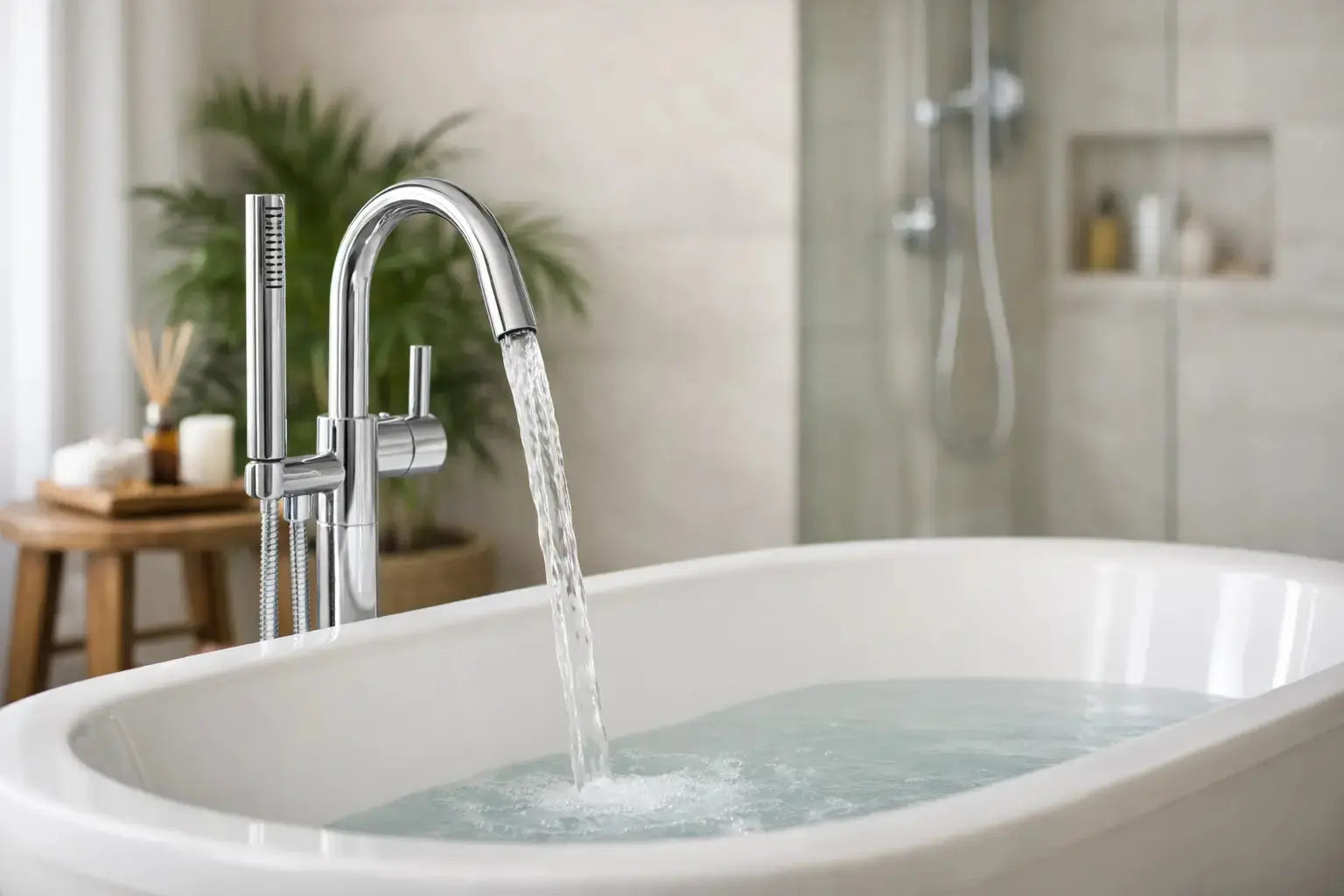
Freestanding models are the most requested option for modern ensuite bathrooms and design-led renovations. They pair naturally with standalone tubs and create a premium look. Many include a hand shower, which adds convenience for rinsing the tub, washing hair, or cleaning.
What matters most here is stability, valve compatibility, and spout reach. A floor-mounted filler needs to position the water stream properly over the tub without crowding the bathing area. Poor placement can make a high-end fixture feel awkward fast.
Wall-mounted tub fillers
Wall-mount fillers offer a streamlined look and keep the floor around the tub clear. They are a strong fit for built-in tubs and some freestanding tubs installed near a wall. They also simplify cleaning around the tub base.
The limitation is planning. Wall depth, valve placement, and spout projection all need to line up. If the spout is too short, water may not land cleanly in the tub. If the valve system is not selected correctly, trim and rough-in compatibility can become an issue.
Deck-mounted tub fillers
Deck-mounted fillers remain a practical option for drop-in and deck-surround tub installations. They can look traditional or contemporary depending on the collection, and they often make service access more straightforward than floor-mount alternatives.
This style depends on available deck space. Some tubs simply do not offer enough room for proper installation, especially when a hand shower is included. In those cases, forcing a deck-mount setup usually leads to cramped placement and a weaker final result.
What separates a good faucet from the best tub filler faucet
Flow rate is one of the biggest differences. A tub filler should fill the tub efficiently. If the flow is too low, large soaking tubs take too long to fill, which affects the overall experience. This is especially relevant in primary bathrooms where deeper tubs are common.
At the same time, higher flow should not come at the expense of control. Handle operation should feel solid, temperature adjustment should be predictable, and the diverter, if included, should switch cleanly between tub spout and hand shower. Premium brands tend to perform better here because the internal components are built for repeated use.
Material quality also matters. Solid brass construction is a strong baseline for durability. Better finishes resist water spotting, corrosion, and wear more effectively, which is important in high-use bathrooms and in homes where hard water is a factor.
The best tub filler faucet should also feel proportionate. An oversized filler can overpower a compact tub, while an undersized one can look out of place beside a sculptural freestanding model. Scale is not just aesthetic. It affects reach, usability, and how the fixture interacts with the space around it.
Finish and style choices that age well
Chrome remains a safe and practical choice for many Canadian homes. It is widely available, easy to coordinate with other fittings, and usually offers strong value. For contemporary bathrooms, matte black and brushed nickel continue to perform well. Polished nickel, brushed gold, and other warmer finishes are often chosen in more tailored or luxury-focused spaces.
The right finish depends on the broader fixture schedule. If the bathroom includes matching shower trim, accessories, and sink faucets, consistency usually delivers the strongest result. Mixing finishes can work, but it requires intention. Random combinations tend to read as supply issues rather than design choices.
Style should follow the architecture of the room. Minimal cylindrical forms suit modern spaces. More detailed handles and softer curves align better with transitional or classic bathrooms. The best tub filler faucet should support the room rather than compete with it.
Installation details buyers should check before ordering
This is where many purchasing mistakes happen. A tub filler can look perfect online and still be the wrong product if the rough-in, mounting method, or valve requirements do not match the project.
For freestanding models, confirm whether the rough-in is included and whether the flooring and subfloor conditions are suitable. For wall-mount setups, check in-wall valve requirements, finished wall depth, and spout reach. For deck-mounted fillers, verify hole count, drilling specifications, and deck thickness.
Hand showers add another layer. They improve flexibility, but they also require hose management, diverter function, and enough space for practical use. In some installations, the hand shower is worth having. In others, it adds complexity without much real benefit.
Contractors and plumbers typically look at these details first because they know a fixture is only as good as its install conditions. Homeowners benefit from taking the same approach before narrowing down a finish or shape.
Brand quality and long-term value
Recognized brands matter in this category because replacement parts, cartridge support, and finish consistency become more important over time. A tub filler is not just a decorative purchase. It is a working plumbing fixture that needs reliable internal components and serviceable parts.
Brands such as Riobel and TOTO are often considered for bathroom projects where performance and finish quality both matter. The right choice depends on the design direction, the valve platform, and the level of refinement expected in the space. Some collections lean minimalist, while others are better suited to more traditional or statement-oriented bathrooms.
From a value perspective, the lowest upfront price is not always the best buy. If a less expensive filler lacks support parts or uses lighter construction, replacement can come sooner than expected. For renovators and property owners thinking beyond the initial install, that is rarely the economical path.
Finding the best tub filler faucet for your project
The strongest choice usually comes from a simple sequence. Match the faucet type to the tub installation. Confirm rough-in and valve requirements. Compare flow rate, reach, and included features. Then choose the finish and collection that fit the room.
For a primary ensuite with a freestanding soaker tub, a floor-mounted filler with a hand shower often makes sense if the plumbing has been planned from the start. For a renovation with an alcove or platform tub, a wall-mount or deck-mount option may be more efficient and just as attractive. For contractors sourcing on timeline, availability and brand support can matter as much as style.
A broad category selection helps because not every bathroom needs the same answer. Plumbing Market serves customers who need both design-forward fixtures and the technical parts behind them, which is often the difference between browsing and actually completing a project.
The best tub filler faucet is the one that looks right, installs properly, and performs without compromise. If you choose with the plumbing conditions in mind, the finished bathroom tends to work better from day one and keep working long after the renovation dust is gone.


