

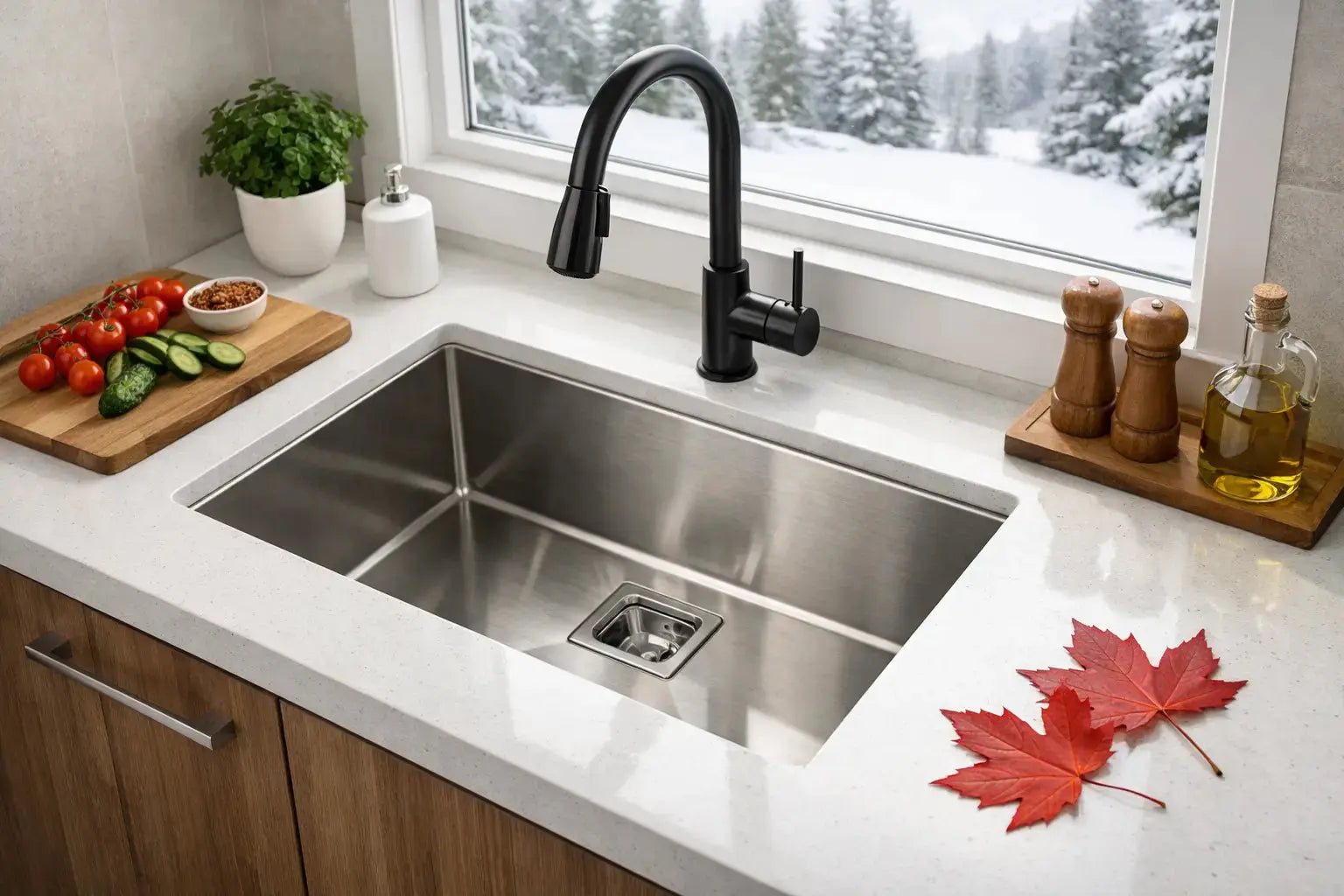
A sink can look perfect in a showroom and still become the most frustrating part of a kitchen once large pots, sheet pans and daily cleanup enter the picture. The best undermount kitchen sinks are not simply the deepest or most expensive models. They match the cabinet, countertop, faucet, cooking habits and installation method of the kitchen they serve.
For Canadian homeowners and trade professionals, an undermount sink is often the preferred choice for quartz, granite and solid-surface countertops. It creates a clean counter-to-sink transition, makes crumb cleanup easier and supports the streamlined look expected in a modern renovation. The right selection starts with fit and material, then moves to bowl configuration, accessories and plumbing requirements.
What Makes an Undermount Sink a Better Fit?
Unlike a drop-in sink, an undermount model is fixed beneath the countertop opening. The countertop edge remains visible, and there is no raised sink rim collecting residue around the perimeter. Wiping water or food scraps from the counter directly into the basin is one of its most practical advantages.
This installation also puts the countertop material on display. A crisp polished granite edge, a square quartz cutout or a softer eased profile can become part of the overall kitchen design. That said, undermount installation is not suitable for every counter. Laminate generally lacks the exposed, water-resistant substrate needed around the cutout. It is most commonly specified with stone, solid surface and other non-porous countertop materials.
The installation must be properly supported. A sink should be mounted with an appropriate rail, brackets or manufacturer-approved hardware, rather than relying only on adhesive. This matters particularly for large single-bowl models and heavy cast iron sinks. Confirming the sink weight, cabinet dimensions and countertop fabricator's cutout requirements before ordering prevents expensive adjustments later.
Best Undermount Kitchen Sink Materials
Material affects appearance, maintenance, noise, weight and long-term wear. There is no universal winner, but stainless steel and granite composite are the leading choices for most residential projects.
Stainless Steel: The Practical All-Rounder
Stainless steel remains a strong choice for busy kitchens because it is lightweight, heat-resistant, easy to sanitize and compatible with almost any cabinet or countertop finish. Look for a quality gauge appropriate to the sink size. Lower gauge numbers indicate thicker steel, so 16-gauge steel is generally more substantial than 18-gauge.
A better stainless sink should also include sound-deadening pads and an undercoating to reduce vibration and water noise. Brushed or satin finishes tend to hide fine scratches and water spotting better than mirror-polished surfaces. Stainless does show wear over time, especially in hardworking kitchens, but that patina is usually far less noticeable than chips or cracks in more brittle materials.
Granite Composite: Colour and Everyday Durability
Granite composite sinks blend natural stone particles with resin to create a dense, matte surface. They are available in black, charcoal, brown, white and neutral tones that can coordinate with quartz counters, cabinetry and kitchen hardware. Their solid feel and sound absorption make them appealing for open-concept homes.
Composite sinks resist many everyday scratches and stains, but they require sensible care. Avoid prolonged exposure to highly concentrated chemicals, and do not shock the basin with extreme temperature changes. Lighter colours can also need more regular cleaning when exposed to coffee, tea or strongly coloured foods. For a homeowner prioritizing a coordinated colour palette, granite composite can be the better choice.
Fireclay and Cast Iron: Statement Materials With Trade-Offs
Fireclay offers a classic, substantial look and is especially suited to farmhouse-inspired kitchens. It is hard, heat-resistant and available in clean white finishes, but it is heavy and can chip if struck by cookware. Dimensions may also vary slightly between pieces, making coordination with the countertop fabricator essential.
Enameled cast iron provides a similar visual presence with excellent durability, but its weight demands reliable cabinet support. Both materials are better chosen early in a renovation, not as a late fixture replacement after counters have already been templated.
Choose the Bowl Layout Before the Finish
A sink's bowl configuration has a bigger effect on daily use than its colour. Start by thinking about what happens at the sink during the busiest part of the day.
A large single-bowl sink is the most flexible option for washing stockpots, roasting pans and baking sheets. It is particularly useful when paired with a compact dishwasher, because the sink becomes the main cleaning zone for oversized cookware. A workstation-style single bowl with a ledge for colanders, cutting boards or drying racks can add useful prep space without increasing the countertop footprint.
Double-bowl sinks offer separation. One side can hold soaking dishes while the other remains open for rinsing or food preparation. A 60/40 configuration often provides more flexibility than two equal bowls, as the larger bowl still accommodates larger cookware. Equal double bowls suit households that routinely wash by hand or prefer clearly divided tasks.
Do not assume deeper is always better. A 9- or 10-inch bowl is common and practical, but an exceptionally deep sink can be uncomfortable for shorter users or for anyone who spends extended time washing dishes. Consider the finished counter height, the primary user's reach and whether the faucet has enough clearance for tall pots.
Size, Cabinet Width and Drain Position
The advertised sink width is only one dimension to check. Review the exterior dimensions, interior bowl dimensions, minimum cabinet width, sink depth and drain placement. The cabinet requirement is especially important: a 30-inch sink does not always fit a 30-inch base cabinet once mounting space and cabinet walls are considered.
Measure the inside width of the sink cabinet, not just the nominal cabinet size shown on plans. Account for garbage pull-outs, water filtration systems, hot water dispensers and other components that may occupy space below. A rear-offset drain can create more usable room under the sink for a garbage container or plumbing connections, while a centre drain can be more familiar for standard rough-in locations.
For replacement projects, inspect the existing drain location and countertop cutout before selecting a new model. A new undermount sink may require changes to drain piping, the garbage disposer connection or the counter opening. These are manageable details when planned early, but they can add cost when discovered on installation day.
Details That Separate Good Sinks From Better Ones
When comparing the best undermount kitchen sinks, look beyond the main product photo. The corners, bottom slope, included accessories and mounting information tell you far more about how the sink will perform.
Tight-radius or zero-radius corners create a sharp, contemporary appearance and maximize bowl capacity. They also need more deliberate cleaning because residue can settle in the corners. Gently rounded corners are easier to maintain and better suited to kitchens where convenience matters more than a highly architectural look.
A properly sloped basin directs water toward the drain instead of leaving puddles after use. For stainless steel sinks, check for a protective grid that keeps cookware slightly above the basin floor. A basket strainer, colander, roll-up drying rack and fitted cutting board can also be worthwhile when they are designed specifically for the sink dimensions.
Faucet planning belongs in the same conversation. Most undermount sinks do not include a faucet deck, so the faucet, soap dispenser, filtered-water tap or air switch must be installed through the countertop or wall. Confirm the number of holes required and leave enough space behind the sink for the faucet body and handle movement.
Installation Questions to Resolve Before Ordering
A successful undermount installation depends on coordination between the sink supplier, countertop fabricator, installer and plumber. Confirm whether the fabricator will use the sink's supplied template or create a custom cutout from the physical sink. A reveal can be positive, negative or flush, and each option affects the visible countertop edge and cleaning experience.
A positive reveal leaves a small portion of the sink rim visible beneath the counter. A zero reveal aligns the countertop edge with the basin wall. A negative reveal slightly overhangs the sink edge and can make wiping debris into the basin easier, although the overhang must be finished carefully to avoid hidden buildup. There is no single correct choice, but it should be specified before fabrication.
Also verify what is included. Drain assemblies, strainers, mounting clips, grids and accessories vary by model. Matching the finish of visible strainers and accessories to the faucet can create a more considered result, particularly in kitchens using matte black, brushed gold or polished nickel fixtures.
At Plumbing Market, homeowners and trade buyers can compare kitchen sink materials, sizes, configurations and coordinating plumbing components in one product-focused selection. Start with the cabinet and countertop constraints, then choose the bowl arrangement that will make everyday kitchen work easier. A well-planned undermount sink should disappear into the routine in the best possible way: easy to clean, sized for the work and built to support the kitchen for years.


