

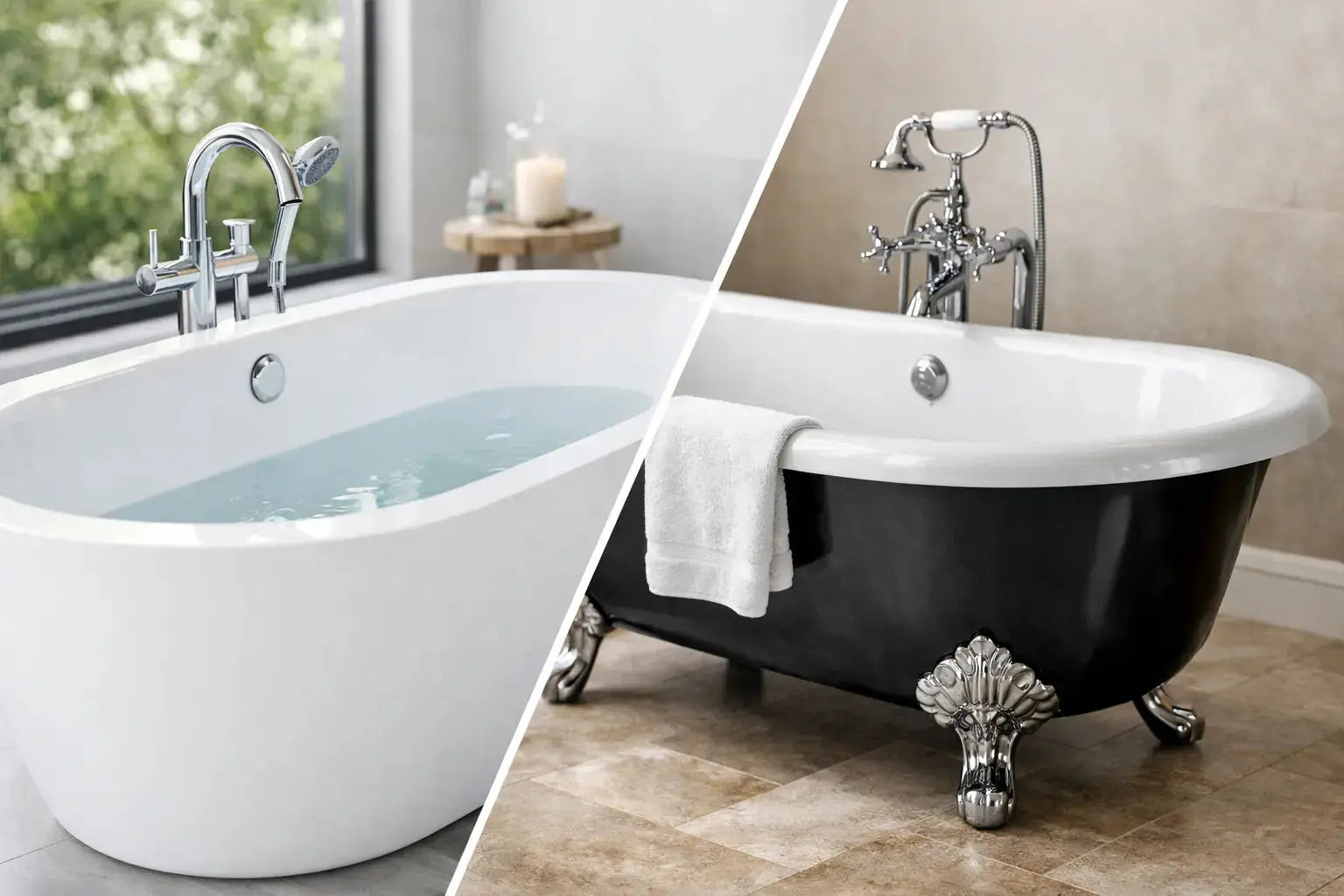
A tub can look right in a showroom and still be the wrong choice once it reaches a second-floor bathroom, a tight renovation schedule, or a family home that gets used hard. When weighing an acrylic tub vs cast iron tub, the decision comes down to more than appearance. Weight, heat, installation conditions, maintenance expectations, and the way you use the bathroom all matter.
Acrylic is the flexible, practical option for many modern renovations. Cast iron is the heavyweight, long-term material known for its substantial feel and enamel finish. Neither is automatically better. The right tub is the one that suits the room, the structure, and the expected level of daily use.
Acrylic Tub vs Cast Iron Tub: The Practical Difference
An acrylic bathtub is typically formed from vacuum-moulded acrylic sheeting and reinforced underneath with fibreglass or composite material. It is relatively light, warm to the touch, and available in an extensive range of alcove, drop-in, undermount, skirted, and freestanding designs. This variety makes acrylic a common choice for renovations where dimensions, access, and design flexibility are priorities.
A cast iron tub is made by pouring molten iron into a mould, then coating the surface with porcelain enamel. The result is a dense, rigid fixture with a glossy finish and considerable weight. Cast iron is often associated with traditional clawfoot tubs, but it is also available in select alcove and freestanding formats for more tailored bathroom designs.
Material alone does not determine quality. A well-built acrylic tub with proper reinforcement and full support can perform reliably for years. Likewise, cast iron offers exceptional longevity, but its benefits only make sense when the home can accommodate its weight and the installer can bring it into the space safely.
Bathing Comfort and Heat Retention
Acrylic feels warmer at first contact
Acrylic does not draw heat from the body as quickly as cast iron, so it generally feels warmer when you step into an empty tub. That can be noticeable in Canadian homes during colder months, especially in bathrooms with tile floors, exterior walls, or lower ambient temperatures.
Acrylic also provides a slightly less rigid feel than cast iron. For many homeowners, that is not a drawback. A properly installed acrylic tub should feel stable, but it will not have the hard, dense sensation of enamelled iron beneath your feet.
Cast iron offers thermal mass
Cast iron takes longer to warm up because the material itself is cold and dense. Once the tub has absorbed heat from the water, however, it can help maintain a comfortable bath temperature. The difference will depend on water volume, bathroom temperature, insulation around the tub, and how long you soak.
For a quick shower or a short bath, acrylic's warmer surface often feels more immediately comfortable. For long, quiet baths, some buyers prefer the solid presence and heat-holding qualities of cast iron. If bathing comfort is your top priority, compare the tub's depth, backrest angle, lumbar shape, and interior dimensions alongside its material. Those details affect comfort just as much as heat retention.
Installation, Weight, and Access Requirements
Weight is the most decisive difference between these two materials. An acrylic tub is usually manageable for a renovation crew to carry through standard doorways, up stairs, and into a finished bathroom. It also places far less demand on the floor structure.
Cast iron is a different installation category. The tub can weigh several hundred pounds before water and the bather are added. A contractor may need to assess joists, subfloor condition, access routes, and whether reinforcement is required. This is especially relevant for upper-floor bathrooms, older homes, and condo renovations with restricted elevator or hallway access.
A heavy tub should never be selected on appearance alone. Confirm the product's shipping weight, filled weight, exact footprint, and installation instructions before ordering. Also measure all access points, including exterior entries, stair landings, bathroom doors, and turns in the hallway. A freestanding cast iron tub may fit beautifully in the room but still be difficult or costly to get there.
Acrylic installation has its own requirements. Many models need a level, continuous base or mortar support beneath the bottom of the tub. Skipping this step can lead to flexing, movement, noise, or stress cracks over time. The lighter weight of acrylic makes installation easier, but it does not eliminate the need for correct support and a properly located drain.
Durability and Everyday Maintenance
Cast iron is exceptionally resistant to flexing, and its porcelain enamel surface can retain a polished appearance for decades with sensible care. It is a strong option for homeowners who want a permanent fixture with a classic finish. The trade-off is that enamel can chip if struck by a heavy object. If the underlying iron is exposed and left untreated, rust can develop.
Small enamel damage can often be repaired, but colour matching and finish restoration are best handled carefully. Avoid dropping shower hardware, tools, or heavy glass containers into the tub. Non-abrasive cleaners and soft cloths will protect the gloss better than harsh scouring powders.
Acrylic is less likely to chip in the same way, but it can scratch from abrasive products, rough cleaning pads, or objects dragged across the surface. Minor surface marks can frequently be polished or repaired more easily than enamel chips. Higher-quality acrylic tubs with adequate reinforcement are more resistant to flexing and surface wear than thin, lightly constructed alternatives.
For both materials, use mild bathroom cleaners, rinse away soap residue, and avoid aggressive chemicals unless the tub manufacturer specifically approves them. Do not assume that a cleaner suitable for tile, grout, or a toilet is suitable for an acrylic or enamelled tub.
Design Choice, Size, and Configuration
Acrylic leads when the project calls for selection. It is available in compact alcove tubs for efficient bathrooms, deep soaking tubs, corner models, modern oval freestanding forms, and wider options suited to primary ensuite renovations. Many acrylic tubs are easier to manufacture in distinctive shapes, which creates more opportunity to match the tub to the vanity, shower system, and overall bathroom style.
Cast iron has a more limited range, but its visual impact is specific. It suits heritage homes, traditional bathrooms, and projects where the tub is intended to feel substantial rather than minimal. A white enamel interior paired with a finished exterior can create a focal point without relying on elaborate detailing.
Do not choose based only on outer dimensions. Compare the bathing well, water depth to overflow, shoulder room, and the location of the drain. Two tubs with the same nominal length can feel very different once installed. For an alcove replacement, verify the actual opening and whether the new tub requires an integrated apron, tile flange, or separate deck structure.
Cost Considerations Beyond the Purchase Price
Acrylic tubs generally offer a lower starting cost and a broader range of price points. They can also reduce labour costs because they are easier to transport and position. This makes acrylic a practical choice when the budget needs to cover other major bathroom components, such as a shower valve, faucet trim, toilet, vanity, lighting, and tile.
Cast iron usually costs more to purchase and may involve higher delivery, handling, structural, and installation costs. That investment can be worthwhile when durability, heritage character, and a premium finished feel are central to the project. It is less compelling when the renovation has difficult access or the floor requires expensive alterations simply to accommodate the tub.
When comparing products at Plumbing Market, review the full specification rather than the material label alone. Confirm included components, drain orientation, overflow requirements, installation method, and any compatible bath fillers or rough-in parts before finalizing the selection.
Which Material Makes Sense for Your Bathroom?
Choose acrylic when you need a lighter tub, a wide choice of shapes and sizes, easier handling, or a warmer surface underfoot. It is often the better fit for second-floor renovations, condos, contemporary freestanding designs, and projects with a defined installation budget.
Choose cast iron when the room can safely support it and you value a rigid, enduring fixture with a porcelain enamel surface. It is particularly well suited to main-floor bathrooms, heritage renovations, and long-term homes where the tub is intended to be a lasting design feature.
Before committing, treat the tub as part of a complete installation rather than an isolated purchase. Confirm structural capacity, measure the route into the bathroom, select the right drain and faucet configuration, and make sure the final model supports the way the space will actually be used. A well-matched tub will feel right every day, not just on installation day.


