

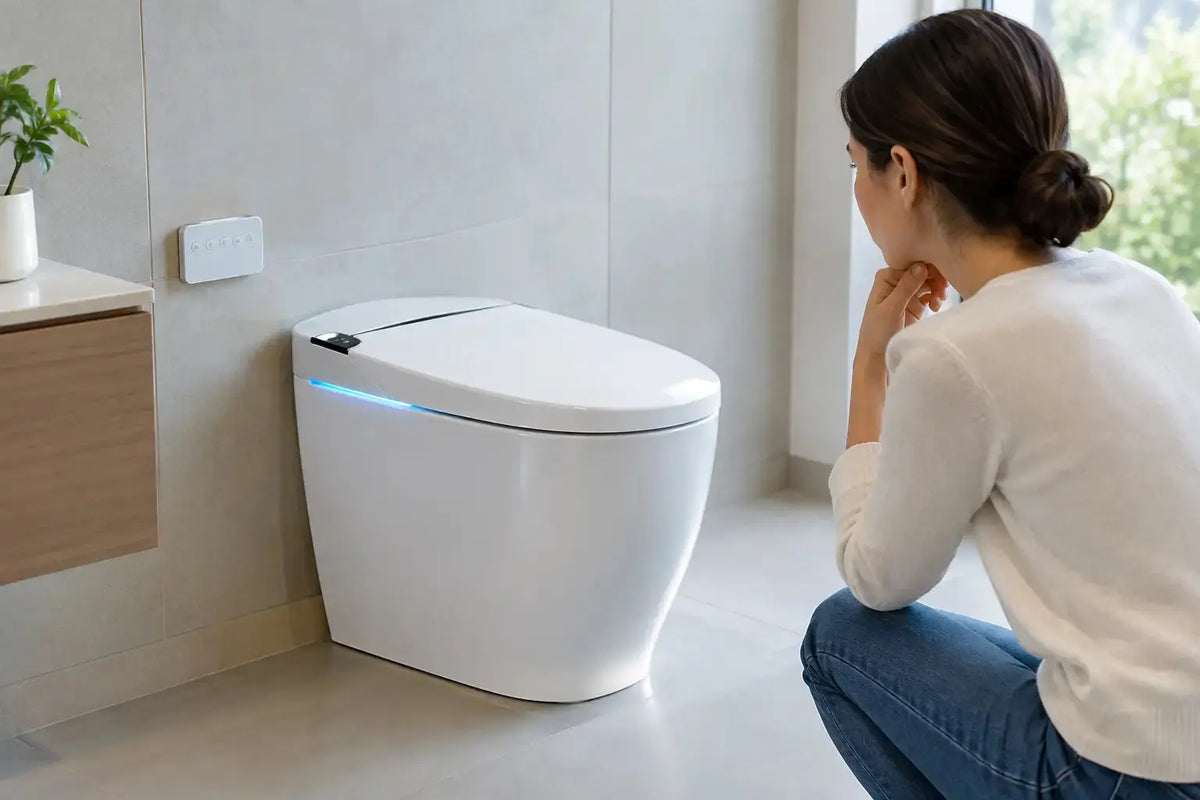
A bathroom upgrade can change the way a space feels, but few fixtures change the everyday experience as much as smart toilets. Combining a conventional toilet with integrated bidet washing, comfort settings and automated functions, they are increasingly specified for primary ensuites, accessible bathrooms, premium renovations and hospitality projects.
The right model is not simply the one with the longest feature list. It must suit the bathroom layout, rough-in, electrical access, user preferences and maintenance expectations. For homeowners and trade professionals, the best purchase starts with understanding which functions will be used, what the installation requires and where a smart toilet makes practical sense.
What Smart Toilets Actually Do
A smart toilet is an integrated fixture with electronically controlled functions. Most models include a bidet wand that provides rear cleansing and, on many units, front feminine washing. Water temperature, spray position, pressure and oscillation may be adjustable through a side control panel or remote.
Comfort features commonly include a heated seat, warm-air dryer, deodorizer and soft-close lid. Higher-spec models may add an automatic lid, motion-activated opening and closing, bowl misting, self-cleaning nozzle functions, night lighting and automatic flushing. Some offer user presets, allowing more than one person in a household to return to preferred wash settings.
Not every feature has equal value for every project. A heated seat and adjustable wash are useful in Canadian homes year-round. An automatic lid can be convenient in a frequently used ensuite, while a remote-control interface may be less practical in a rental, busy family bathroom or commercial environment where simplicity matters more than personalization.
Choosing Smart Toilets by Bathroom Type
The bathroom itself should guide the selection. In a compact powder room, the projection from the finished wall is often more important than extra automation. A shorter-profile one-piece unit can preserve clear floor space while still adding bidet functionality. Measure from the finished wall, not the framing, and account for door swing, vanity depth and the clearance needed for comfortable use.
For a primary ensuite, users often place greater value on water temperature control, dryer performance, night lights and customizable presets. A skirted smart toilet can also create a cleaner visual line and reduce the time spent wiping around exposed trapways and bolt caps. This is especially relevant in design-forward bathrooms where wall-hung vanities, large-format tile and minimal detailing are part of the plan.
Accessible or aging-in-place renovations call for a more individual assessment. Seat height, control placement, lid operation and ease of cleaning are all relevant. A comfort-height toilet may make standing easier for some users, but it is not automatically right for every person. Review the user’s mobility needs and confirm the fixture dimensions before rough-in work begins.
In commercial or shared washrooms, durability and operational simplicity should lead the decision. Fully integrated residential smart toilets may not be the best fit for every public setting. Where usage is high, commercial-grade fixtures, electronic flush valves and purpose-built washroom components can provide a more serviceable solution.
Installation Requirements to Confirm First
A smart toilet installation combines plumbing work with electrical planning. Leaving either until the final stages of a renovation can limit product choice or create costly rework.
Rough-in and physical dimensions
Many North American toilets use a 12-inch rough-in, measured from the finished wall to the centre of the closet flange. However, 10-inch and 14-inch rough-ins exist, and the stated rough-in should always be confirmed against the manufacturer’s specification sheet. A smart toilet may have a different footprint from the unit it replaces, even when both use the same rough-in.
Check the overall height, width and projection, as well as the location of the water connection and power cord. For wall-hung models, the in-wall carrier and frame must be selected and installed early. These systems offer a clean appearance and easier floor cleaning, but they require suitable wall construction, accurate carrier setup and access planning for service components.
Electrical supply
Most integrated smart toilets require a nearby grounded electrical receptacle, commonly protected by a ground fault circuit interrupter. The receptacle location must suit the selected model and remain appropriately protected from moisture. It should not be an afterthought hidden behind a fixture where it cannot be safely accessed.
Have a qualified electrician review the installation requirements and applicable Canadian electrical standards. Avoid extension cords and improvised connections. A properly located dedicated or suitable shared circuit, depending on the product requirements and local code, protects both the fixture and the renovation investment.
Water supply and shutoff access
Smart toilets need a cold-water supply, usually through a standard shutoff valve and flexible connector. The shutoff should remain accessible for maintenance. Because the bidet function uses the home’s water supply, quality installation and correct backflow protection are essential. Follow the manufacturer’s instructions and local plumbing requirements rather than assuming every integrated toilet connects like a basic two-piece model.
Features Worth Comparing Before You Buy
Bidet performance should be at the top of the comparison list. Look beyond whether a model simply has a wash function. Consider adjustable temperature and pressure, nozzle positioning, oscillating or pulsing spray options, self-rinsing nozzles and the quality of the control interface. These details affect daily comfort far more than a decorative feature that is rarely used.
Dryer functions are convenient, but expectations should be realistic. A warm-air dryer can reduce toilet paper use, yet it generally takes longer than towel drying and may not fully replace paper for every user. Similarly, automatic flushing is convenient, but a manual flush option remains useful during power interruptions or for guests unfamiliar with sensor operation.
Flushing performance matters as much as the electronic package. Review flush volume, bowl design and trapway performance. A dual-flush model can help reduce water use by offering separate full and reduced flush options, though actual savings depend on how the toilet is used. In households with older plumbing or persistent drain-line concerns, choose a proven flushing platform rather than prioritizing automation alone.
Cleaning features deserve close attention. Rimless bowl designs can simplify cleaning, while pre-misting, UV sanitation and deodorizing features can improve the user experience. They do not eliminate routine bathroom cleaning. Homeowners should still use cleaning products approved by the manufacturer, particularly around coated bowls, sensors, seats and electronic controls.
Integrated Smart Toilet or Bidet Seat?
An integrated smart toilet replaces the complete fixture. It provides the most coordinated appearance, with concealed components, a purpose-designed bowl and controls that work as one system. It is often the better choice for a full renovation, new build or bathroom where a clean, minimal finish is a priority.
A bidet seat is installed on a compatible existing toilet and can be a more economical route to heated seating and bidet washing. It may work well when the existing toilet is relatively new, the bowl shape is compatible and the homeowner does not need a full fixture replacement. However, the seat can add visual bulk, may not fit every bowl correctly and still requires nearby electrical service.
The decision usually comes down to project scope. If tile, flooring, plumbing and electrical are already being opened during a renovation, an integrated unit is often easier to plan properly. If the goal is to improve personal hygiene and comfort without replacing a functioning toilet, a quality bidet seat can be the more efficient choice.
Budgeting Beyond the Fixture Price
Smart toilet pricing varies widely based on brand, material quality, wash technology, automation and design. The fixture cost is only one part of the project budget. Electrical work, a new receptacle, plumbing adjustments, flange repair, flooring changes or wall-hung carrier installation can add to the final installed cost.
For a straightforward replacement with existing power and a standard rough-in, labour may be limited. In an older Canadian home with no suitable outlet near the toilet, budget for electrical work before choosing the fixture. For a complete ensuite renovation, coordinate the toilet selection with the vanity, shower system, tile layout and lighting plan so that outlet placement and clearances do not interfere with the finished design.
Trusted brands also matter when considering serviceability. Replacement seats, remotes, filters, valves and electronic components may be needed over the life of the fixture. Choosing a recognized manufacturer with established parts support can make ownership more practical than selecting a feature-heavy model with uncertain availability.
A Better Way to Make the Final Selection
Start with the non-negotiables: rough-in, bathroom dimensions, electrical access and the user’s comfort needs. Then compare wash settings, flushing technology, seat height, cleaning features and visual style. This order prevents a common mistake: selecting a striking fixture first, then finding out it conflicts with the room or installation requirements.
For renovation professionals, confirm the exact model before final electrical and plumbing rough-in. For homeowners, bring measurements, photos of the existing connection area and details about the current toilet to the product-selection stage. Plumbing Market offers the depth of fixture and installation categories needed to coordinate a smart toilet with the rest of a bathroom project.
A well-chosen smart toilet should feel like a practical improvement rather than a complicated appliance. Prioritize reliable daily functions, correct installation and long-term parts support, and the result can add comfort, hygiene and a more refined finish to the bathroom for years to come.


