

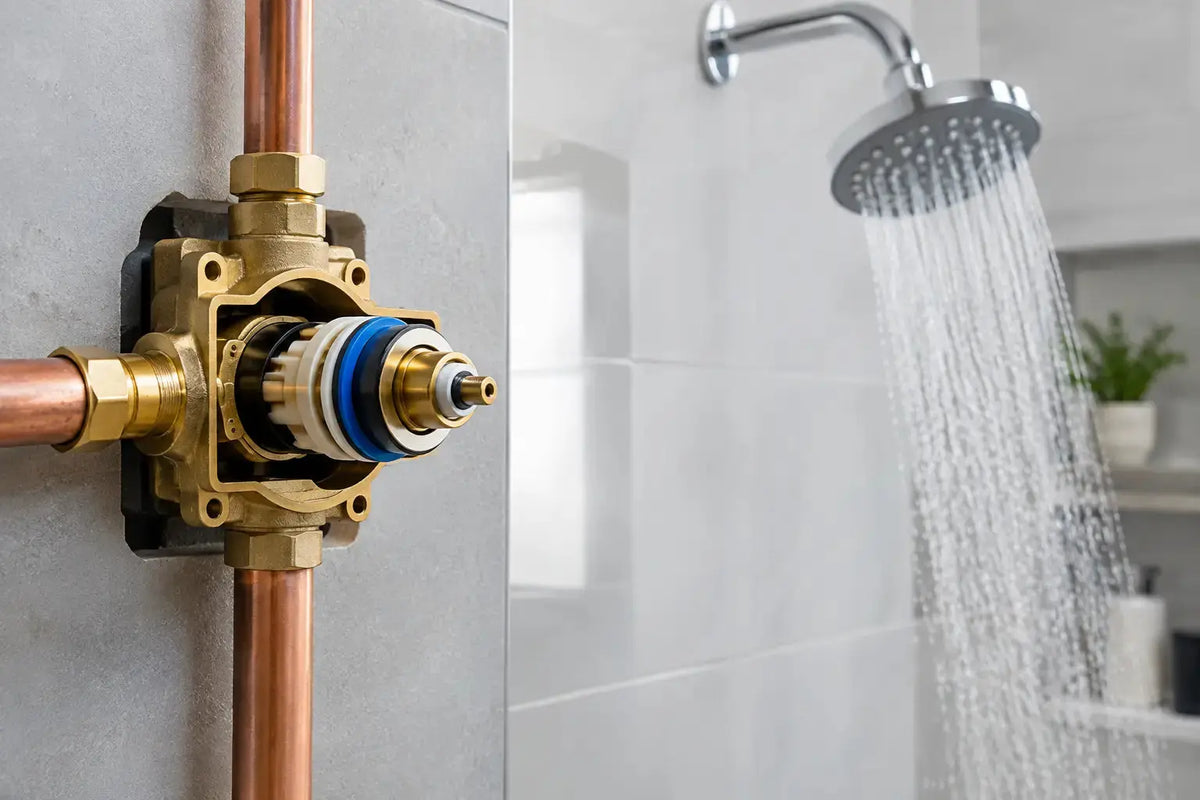
A shower can be set to a comfortable temperature one second and turn unexpectedly hot or cold the next when someone flushes a toilet, starts a washing machine, or opens another fixture. What is a pressure balance valve? It is a shower mixing valve designed to reduce that sudden temperature shift by responding to changes in hot or cold water pressure.
For homeowners, it is a practical safety component hidden behind the shower wall. For renovators and trade professionals, it is a key rough-in decision that affects trim compatibility, flow performance, service access, and code-conscious bathroom planning. The finish plate and handle may be what customers see, but the valve body is what determines how the shower performs every day.
What Is a Pressure Balance Valve and How Does It Work?
A pressure balance valve mixes hot and cold water, then uses an internal balancing spool or piston to monitor the relative pressure of each supply. When the pressure changes on one side, the mechanism adjusts the flow on the other side to keep the hot-to-cold ratio closer to the selected setting.
For example, if cold water pressure drops because a toilet is flushed, the valve restricts the hot-water side as well. The total shower flow may decrease briefly, but the water is less likely to become dangerously hot. If hot-water pressure drops, it similarly reduces the cold-water flow to limit a sudden blast of cold water.
This is the critical distinction: a pressure balance valve balances pressure, not temperature with precision. It helps maintain a reasonably consistent mix ratio during pressure fluctuations. It does not measure the outgoing water temperature and actively correct it in the same way as a thermostatic valve.
Most pressure balance shower valves also include an adjustable temperature limit stop. This is set during installation to restrict how far the handle can turn toward hot. Proper adjustment helps prevent scalding, particularly in homes with children, older adults, or higher hot-water tank settings.
Why a Pressure Balance Shower Valve Matters
The main value is anti-scald protection. Sudden pressure changes are common in households where several fixtures share the same plumbing system. A shower on an upper floor, an older home with variable supply pressure, or a busy family bathroom can all make the issue more noticeable.
A pressure balance valve also simplifies the user experience. With a single-handle shower control, the bather chooses a preferred temperature and flow position with one handle. That makes it a popular choice for standard tub and shower renovations, secondary bathrooms, rental properties, and projects where dependable performance matters more than highly customized control.
In many Canadian residential applications, pressure balancing is the expected baseline for a new or replacement shower valve. Local requirements can vary by province, municipality, building type, and project scope, so contractors should confirm the applicable plumbing code and product certifications before installation.
Pressure Balance vs. Thermostatic Valves
Both valve types are intended to improve shower safety and comfort, but they work differently and suit different projects.
A pressure balance valve reacts to a change in supply pressure. It is generally a cost-effective option for a conventional shower or tub/shower configuration and is widely available from major fixture brands. It may still allow a small temperature variation, especially if the incoming hot water itself changes temperature or the home has major pressure fluctuations.
A thermostatic valve uses a temperature-sensitive element to regulate the hot and cold mix based on actual outlet temperature. It can hold a chosen temperature more precisely, even when other fixtures are being used. Thermostatic systems are often selected for premium showers, multi-outlet systems, large rainheads, body sprays, and households where temperature consistency is a top priority.
The trade-off is system complexity. Thermostatic setups commonly use separate volume controls or diverters for each outlet, require compatible rough-in components, and can cost more than a standard pressure balance valve with matching trim. They are an excellent fit when the shower design calls for independent control, but they are not automatically necessary for every bathroom.
Choosing the Right Pressure Balance Valve
Start with the shower configuration. A straightforward tub/shower with one showerhead usually needs a valve that supports a tub spout and shower outlet. A shower-only installation may use a dedicated shower valve. If the project includes a handheld shower, a rain shower, or both, determine whether the valve includes a diverter or whether a separate diverter valve is required.
Next, select the rough-in valve and trim from the same compatible product platform. Trim is not universal. A handle, cartridge, escutcheon plate, and rough-in body must be designed to work together. Mixing components from different brands or valve series can lead to fit problems, incorrect operation, leaks behind the wall, or no ability to finish the installation properly.
Pay attention to the valve’s inlet and outlet connections. Common options include threaded, solder, PEX, and universal connection styles. The right choice depends on the existing piping, local installation practice, and whether the work is being completed during a full renovation or as a replacement in an opened wall.
Flow rate and shower performance
The valve is only one part of the shower’s water delivery. Showerhead flow rate, supply line sizing, available water pressure, diverter design, and the number of active outlets all affect actual performance.
A standard pressure balance valve works well for one outlet at a time. If a project is designed to run a rainhead and hand shower simultaneously, check the manufacturer’s flow specifications before purchasing. Some valves and diverters are built for shared or alternating functions, while higher-demand systems may require a thermostatic valve and separate volume controls.
Finish and trim selection
Once the technical rough-in is confirmed, choose the trim style and finish. This is where the visible design comes together with the showerhead, tub filler, accessories, and faucet finish. Popular options such as chrome, matte black, brushed nickel, and brushed gold can vary slightly between product lines, even within the same brand.
For a coordinated renovation, buying the valve trim, shower system, and related bathroom fixtures from a single compatible collection can reduce guesswork. Plumbing Market carries pressure balance rough-in valves, trim kits, cartridges, shower systems, and replacement components across recognized plumbing brands, making it easier to source both the technical and finished sides of the project.
Installation Considerations Before the Wall Is Closed
The rough-in valve should be installed at the manufacturer’s specified depth. This point matters more than many first-time renovators expect. If the body sits too far forward or too far back, the trim plate may not sit flush, the handle may not engage correctly, or the cartridge may be difficult to service.
The valve also needs to be oriented correctly, with hot on the left and cold on the right unless the manufacturer specifies otherwise. Installers should flush supply lines before inserting the cartridge or completing the trim, since debris can damage internal components or create low-flow problems.
Set the maximum temperature limit stop after the water heater is operating at its normal setting. Test the shower while another fixture is running to confirm the valve responds as expected. Before closing the wall, pressure-test all connections and keep the valve’s service instructions available for future cartridge replacement.
Access is another practical consideration. A pressure balance valve is serviceable from the front in many cases, but the exact process depends on the trim and cartridge design. Choosing a reputable brand with readily available replacement parts can make a future repair far easier than replacing an entire behind-the-wall valve body.
Common Signs of a Failing Pressure Balance Valve
A worn cartridge or balancing spool can affect both comfort and safety. Symptoms include inconsistent temperature, a handle that becomes stiff or difficult to turn, reduced flow, water that will not reach the expected temperature, or continued dripping after the valve is shut off.
Mineral buildup, sediment, age, and damaged seals are common causes. In many cases, replacing the cartridge restores normal operation. However, confirm the valve brand and series before ordering. Cartridges are highly specific, and a visually similar part is not necessarily compatible.
If the shower suddenly changes temperature only when another fixture runs, the pressure balance mechanism may need inspection. If the temperature is unstable even when no other water is being used, investigate the water heater, supply conditions, cartridge, and valve adjustment rather than assuming the valve alone is responsible.
A Practical Choice for Safer Shower Renovations
A pressure balance valve is often the right foundation for a reliable single-handle shower: it provides a familiar control style, helps manage pressure-related temperature swings, and is available in a broad range of compatible trims and shower configurations. The best result comes from choosing the valve early, matching every required component, and confirming the system supports the number of outlets you plan to use.
Before selecting the finish, make the behind-the-wall decision first. A well-matched, correctly installed valve gives the shower the safe, consistent performance that makes every visible fixture worth the investment.


