

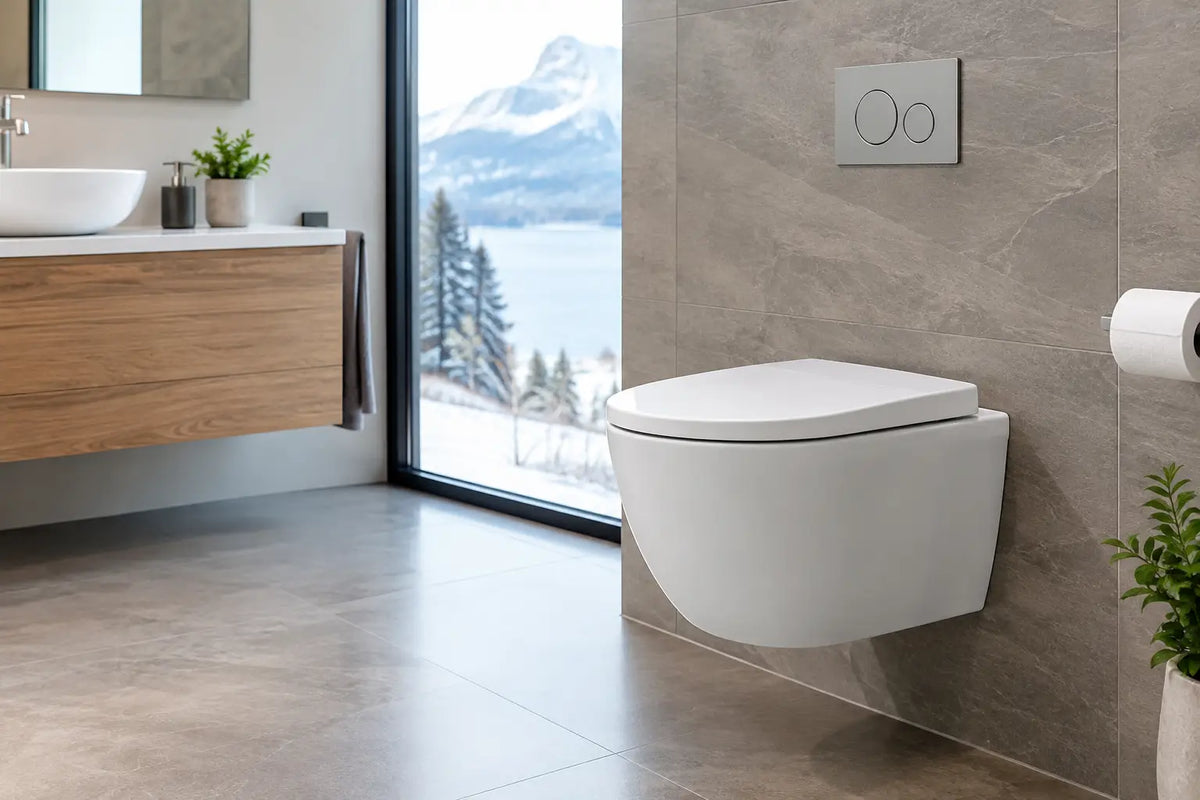
A wall-hung toilet can make a compact ensuite feel noticeably larger before any tile or lighting is changed. By moving the tank and structural support inside the wall, wall hung toilets leave the floor clear, create a clean architectural look, and make routine cleaning easier. They are a strong choice for contemporary renovations, but they require early planning around framing, plumbing, access, and finished wall depth.
Why Choose Wall Hung Toilets?
The main visual advantage is the open floor below the bowl. In smaller bathrooms, that uninterrupted floor line can reduce visual clutter and make layouts feel less crowded. It also simplifies cleaning around the toilet base, where dust and moisture often collect with a conventional floor-mounted unit.
Wall-hung models can also be installed at a chosen seat height within the carrier system's permitted range. This flexibility is useful when matching the toilet to a vanity height, meeting accessibility requirements, or simply creating a more comfortable finished bathroom. Standard-height and comfort-height installations are both possible, depending on the selected carrier and local requirements.
The concealed tank is another design benefit. Instead of a visible tank projecting into the room, the flush plate becomes the only exposed component above the bowl. Flush plates are available in finishes that can coordinate with faucets, shower trim, and bathroom accessories, from polished chrome to matte black and brushed metallic options.
There are trade-offs. A wall-hung installation is generally more involved than replacing a standard toilet, and it is best suited to a full renovation, new build, or a project where the wall is already open. Product cost can also be higher because the toilet bowl, in-wall carrier and tank, flush plate, and mounting components may be purchased as separate items.
The Parts Behind a Wall Hung Toilet
A complete system is more than the bowl. Understanding the product categories before ordering helps prevent missing components and installation delays.
The bowl
The visible bowl mounts to threaded studs on the carrier frame. Bowl shapes range from compact round-front options to elongated designs with additional seating room. Rimless bowls are popular because their open rim design reduces hidden areas where residue can accumulate. Consider projection carefully: a wall-hung toilet can save room, but bowl depth still varies by model.
The in-wall carrier and tank
The carrier is the structural frame that supports the toilet and houses the concealed cistern. It is fastened to the framing and floor according to the manufacturer's instructions. The carrier sets the drain connection, mounting height, and tank position, so it must be selected before drywall, tile, or finished wall panels are installed.
A quality carrier is designed to carry substantial weight when correctly installed. The support does not come from the finished wall surface. It comes from the frame secured behind it. This is why accurate framing and professional installation matter.
The flush plate
The flush plate activates the concealed tank and usually provides access to serviceable internal components. Dual-flush plates are common, offering a reduced flush for liquid waste and a full flush when required. The plate is not only a finishing detail. It should be compatible with the specific concealed tank system being used.
The seat and hardware
Many bowls include a seat, but not all do. Confirm whether the selected model includes a soft-close seat, quick-release hinges, mounting hardware, and decorative caps. These details affect the final cost and can be difficult to match later if they are overlooked during ordering.
Installation Planning Matters More Than the Bowl
Wall hung toilets are not ideal for a simple same-day toilet swap. Their installation requires a planned rough-in and coordination between the plumber, contractor, and tile installer.
Start by confirming the wall construction. A standard 2 x 4 stud wall may accommodate some carrier systems, while others require a deeper cavity or a furred-out wall to allow for the tank, drain fittings, water supply, and finished wall material. A deeper wall can slightly reduce room depth, which matters in narrow powder rooms.
The waste connection must also be positioned to suit the carrier. Unlike many floor-mounted toilets that work with a floor flange, wall-hung units generally connect to a horizontal outlet in the wall. The existing drain location, venting arrangement, and joist direction can influence labour requirements in a renovation.
Access is another practical consideration. Concealed tanks are designed so common service items, such as the fill valve or flush valve, can be reached through the flush-plate opening. Still, choose a recognized system with readily available replacement parts and verify that the installed flush plate provides the correct service access. This is particularly important for commercial properties, rental units, and high-use family bathrooms.
In Canada, permits and inspection requirements vary by municipality and scope of work. When moving drainage, altering venting, or opening structural walls, use a qualified plumbing professional and confirm applicable local code requirements before work begins.
How to Size a Wall Hung Toilet Correctly
Do not compare bowls only by width. Measure the entire installation zone, including the finished wall face, bowl projection, door swing, vanity clearance, shower enclosure, and the centreline required by local code. The distance from the finished wall to the front edge of the bowl is especially important in compact bathrooms.
The finished wall thickness needs attention as well. Tile, backer board, waterproofing, drywall, and decorative panels all add depth. Carrier settings must account for that final surface so the bowl mounts correctly and the flush plate sits flush rather than recessed or proud of the wall.
Seat height is measured from the finished floor to the top of the seat, not simply to the top of the ceramic bowl. A comfortable height for one household may not be right for another. Taller users may prefer a comfort-height arrangement, while a standard height can work better for children or a universally balanced family bathroom. Review the manufacturer's installation range before committing to the carrier height.
Flushing Performance and Water Use
Modern wall-hung systems commonly use dual-flush technology. Typical configurations provide a lower-volume flush and a higher-volume flush, helping reduce water use without compromising day-to-day performance. The precise flush volume, bowl wash pattern, and trapway design vary by model.
For reliable performance, prioritize a compatible bowl and tank combination from the same system family. A visually similar flush plate or bowl is not necessarily interchangeable with another brand's carrier. Leading brands such as TOTO and Kohler offer coordinated concealed installation systems, finishes, and replacement components, which can simplify specification for a renovation.
In a home with hard water, ask about serviceability and available replacement valves. In a commercial washroom, consider flush plate durability, vandal-resistant options where appropriate, and the availability of parts for future maintenance. The lowest purchase price is not always the lowest long-term cost if parts are difficult to source.
Selecting the Right Style and Features
Wall-hung bowls range from restrained rectangular forms to softer, rounded profiles. The best choice depends on the room's other fixtures. A squared bowl can complement a linear vanity and angular faucet, while a curved bowl often works well with rounded basins and freestanding tubs.
For cleaning, a skirted exterior and rimless interior are practical features worth considering. Soft-close seats reduce noise in busy households, and quick-release seats make detailed cleaning easier. If the bathroom is intended for aging in place or accessibility, review seat height, bowl projection, nearby grab-bar planning, and clear floor space as a complete layout rather than selecting the toilet in isolation.
Colour should be chosen with care. White remains the most flexible option for future updates and replacement parts. Matte black, grey, and other specialty finishes can create a distinctive design statement, but they may require more deliberate coordination with tile, flush plates, and hardware.
When a Floor-Mounted Toilet May Be Better
A conventional toilet remains the practical option when the project is a straightforward replacement, the wall cannot be opened, or the budget does not allow for carrier installation and finishing work. It may also be preferable in older homes where relocating a drain would involve significant structural changes.
Wall-hung models make the most sense when the bathroom is being rebuilt from the studs, when every inch of floor visibility matters, or when a clean, tailored fixture layout is part of the design goal. The decision is less about whether one type is universally better and more about whether the installation scope supports the system.
Before ordering, build the complete specification: bowl, carrier and concealed tank, compatible flush plate, seat, supply connections, and any required rough-in fittings. Plumbing Market's broad selection of bathroom fixtures and technical plumbing components can help keep those choices coordinated. A properly specified wall-hung toilet delivers more than a contemporary look - it gives the finished bathroom a cleaner floor line, a considered installation height, and a system that can be maintained for years.


