

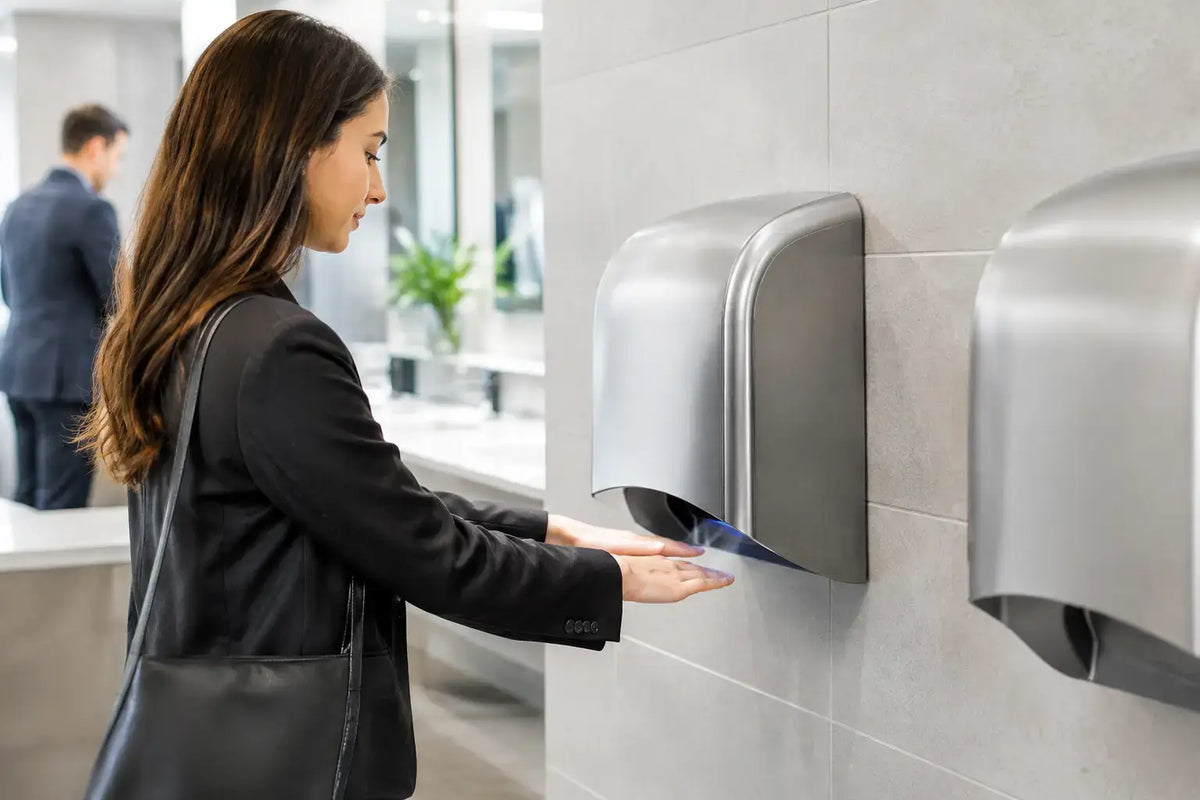
A hand dryer is a small fixture with an outsized effect on a commercial washroom. Slow drying creates queues, a loud unit changes the feel of a restaurant or clinic, and an underpowered installation can become an expensive correction. The best commercial hand dryers balance drying performance, operating cost, durability, and the realities of the room where they will be installed.
For Canadian facility managers, contractors, renovators, and business owners, the right choice is rarely just the fastest model on paper. Washroom traffic, electrical capacity, accessibility requirements, cleaning routines, and user expectations all matter. A compact, quiet dryer may suit a professional office, while a high-speed blade dryer may be the better fit for a stadium, school, or busy retail location.
What Makes the Best Commercial Hand Dryers?
Commercial hand dryers should be evaluated as part of the complete washroom system. The unit has to perform consistently through high use, fit the available wall space, and work with the building's electrical configuration. A lower purchase price can be less attractive if the dryer takes too long to dry hands or requires frequent service.
The strongest options generally deliver a practical combination of fast dry time, vandal-resistant construction, easy maintenance, and dependable manufacturer support. Premium finishes can also be relevant in hospitality, office, and design-led retail projects, where a dryer needs to coordinate with faucets, dispensers, partitions, and other washroom accessories.
There is no single winner for every application. The best unit for a small café may be a poor choice for an airport washroom. Start with how the room is used, then compare specifications that affect that use.
10 Features to Compare Before You Buy
1. Drying speed
Drying speed is the first performance metric most users notice. High-speed air dryers can dry hands in roughly 10 to 15 seconds under favourable conditions, while conventional warm-air units may take considerably longer. In a high-traffic washroom, that difference helps reduce congestion at the sink area.
Be cautious with headline dry-time claims. Test methods vary, and real-world drying depends on hand position, water volume, airflow, and user behaviour. Look for a unit designed for the volume of your facility rather than choosing only on the lowest advertised number.
2. Airflow design
Traditional dryers blow air downward or outward across the hands. Blade-style dryers use narrow, high-velocity air streams that strip water from both sides of the hands. The blade approach can be very fast, but it usually requires more clearance and includes a collection tray that needs routine cleaning.
A conventional high-speed model is often easier to place in a tight washroom. It can also be a better choice when wall conditions, maintenance preferences, or user familiarity make an open-air blade dryer less practical.
3. Noise level
Fast motors move more air, and more air movement often means more sound. This trade-off deserves attention in medical offices, libraries, hotels, upscale restaurants, and workplace washrooms close to meeting rooms. A dryer that performs well in a warehouse may feel disruptive in a quiet reception area.
Check the published decibel rating, but also consider where the dryer will be mounted. Hard surfaces such as tile, concrete, and glass can amplify perceived noise. Sound-reducing housings and adjustable motor settings can be worthwhile where acoustic comfort is part of the project brief.
4. Energy use per dry
Wattage alone does not tell the full energy story. A 1,800-watt dryer that runs for 30 seconds may use more electricity per visit than a higher-output unit that completes the job in 12 seconds. Heater settings, motor efficiency, sensor accuracy, and standby consumption all affect operating costs.
Many modern commercial dryers offer adjustable heat or motor settings. Reducing heat can lower energy use and may also reduce noise, although dry time can increase. For frequent-use washrooms, compare expected energy consumption per dry cycle instead of focusing on the maximum wattage printed on the specification sheet.
5. Hygiene and filtration
Touch-free activation removes one shared contact point from the washroom. It does not replace good cleaning practices, but it is a practical standard for public facilities. Sensor reliability matters here: a dryer that starts unintentionally wastes energy, while one that responds slowly frustrates users.
Some models include HEPA filtration or antimicrobial surface treatments. Filtration can be a useful consideration in healthcare, food service, and facilities with hygiene-sensitive users, provided the filter is maintained on schedule. A neglected filter is not a feature. Confirm replacement intervals, part availability, and the access required for service before specifying a filtered model.
6. Housing and durability
Commercial washrooms place hard demands on equipment. Look for impact-resistant covers, tamper-resistant fasteners, durable sensor components, and finishes that will tolerate regular cleaning. Stainless steel is a common choice for high-traffic and vandalism-prone locations, while white or metallic ABS housings can suit lower-risk interiors and design-specific applications.
The finish should match the cleaning chemicals used by the facility. Abrasive products and harsh cleaners can damage coatings, dull stainless surfaces, and shorten the appearance life of the fixture.
7. Water management
Every hand dryer moves water somewhere. With a conventional dryer, droplets may reach the floor or nearby wall surfaces if users shake their hands before drying. Blade dryers typically capture runoff in a reservoir, helping contain water but adding a cleaning task.
For facilities prioritizing floor safety, review the dryer layout alongside the sink location, paper-towel alternative, and floor finish. A strategically placed unit can reduce wet traffic paths and make housekeeping more manageable.
8. Accessibility and mounting location
A dryer must be positioned for practical use by all visitors, including people using mobility devices. Mounting height, forward reach, side reach, and protrusion from the wall can affect compliance and day-to-day usability. Requirements can vary by province, municipality, building type, and renovation scope.
Plan the dryer location early, especially in compact washrooms. It should not obstruct a circulation path, interfere with a door swing, or create a hazard for people with visual impairments. Confirm the applicable accessibility and building requirements with the project designer, authority having jurisdiction, or qualified contractor.
9. Electrical requirements
Before selecting a dryer, verify voltage, amperage, circuit capacity, and whether the product is hardwired or plug-in. Many commercial dryers are intended for a dedicated hardwired connection, and installation should be completed by a qualified electrician in accordance with applicable Canadian electrical requirements.
A retrofit can involve more than replacing the old unit. Opening a wall, extending wiring, upgrading a circuit, or repairing finished tile can add material and labour costs. Reviewing the electrical plan before ordering helps avoid delays once the washroom is already under renovation.
10. Service access and total cost
The purchase price is only one part of the decision. Consider warranty coverage, expected maintenance, replacement filters, cleaning time, and access to parts. A well-supported commercial unit can be a better long-term value than a lower-cost dryer with limited service options.
For multi-location businesses and property managers, standardizing on one or two models can simplify maintenance and spare-part purchasing. It also creates a more consistent washroom experience across the portfolio.
Choosing a Dryer by Facility Type
Offices, clinics, and hospitality spaces
Prioritize lower noise, a refined finish, dependable sensor activation, and a drying experience that feels comfortable rather than aggressive. Moderate traffic does not always require the highest-powered model. In these spaces, user comfort and appearance may justify selecting a quieter unit with adjustable settings.
Restaurants, retail, schools, and recreation facilities
These locations usually need faster drying and durable housings. High throughput reduces lineups and limits the temptation for users to leave with wet hands. Choose a model that the cleaning team can service easily, particularly if it includes a water tray or filtration system.
Industrial, transit, and high-abuse environments
Focus on rugged construction, tamper resistance, simple maintenance, and proven performance under heavy use. A stainless-steel enclosure and straightforward service access can matter more than premium finishes or extra features. Check that the installation location has adequate clearance for users carrying bags, equipment, or personal items.
Hand Dryers Versus Paper Towels
Paper towels remain useful in some settings, particularly where users need a towel for opening a door or wiping a spill. They also create recurring supply, storage, dispenser, and waste-management requirements. Hand dryers reduce consumable purchasing and can support a cleaner, more streamlined washroom layout.
The right answer may be a mixed approach. High-traffic facilities sometimes install dryers as the primary option while keeping a paper-towel dispenser for accessibility, user preference, and unexpected needs. Consider the operating model of the facility rather than treating either option as universally better.
Specify the Dryer Before Finishing the Washroom
The best time to choose a commercial hand dryer is before tile, millwork, electrical rough-in, and accessory locations are finalized. That gives the project team room to confirm clearances, circuit requirements, mounting height, and the relationship between the dryer and the sink area.
Plumbing Market can help buyers compare commercial washroom products alongside faucets, sinks, flush valves, accessories, and replacement components. Choose a dryer that suits the traffic, cleaning capacity, and finish level of the space, then install it where it will perform well for years rather than simply where an empty wall happens to be available.