

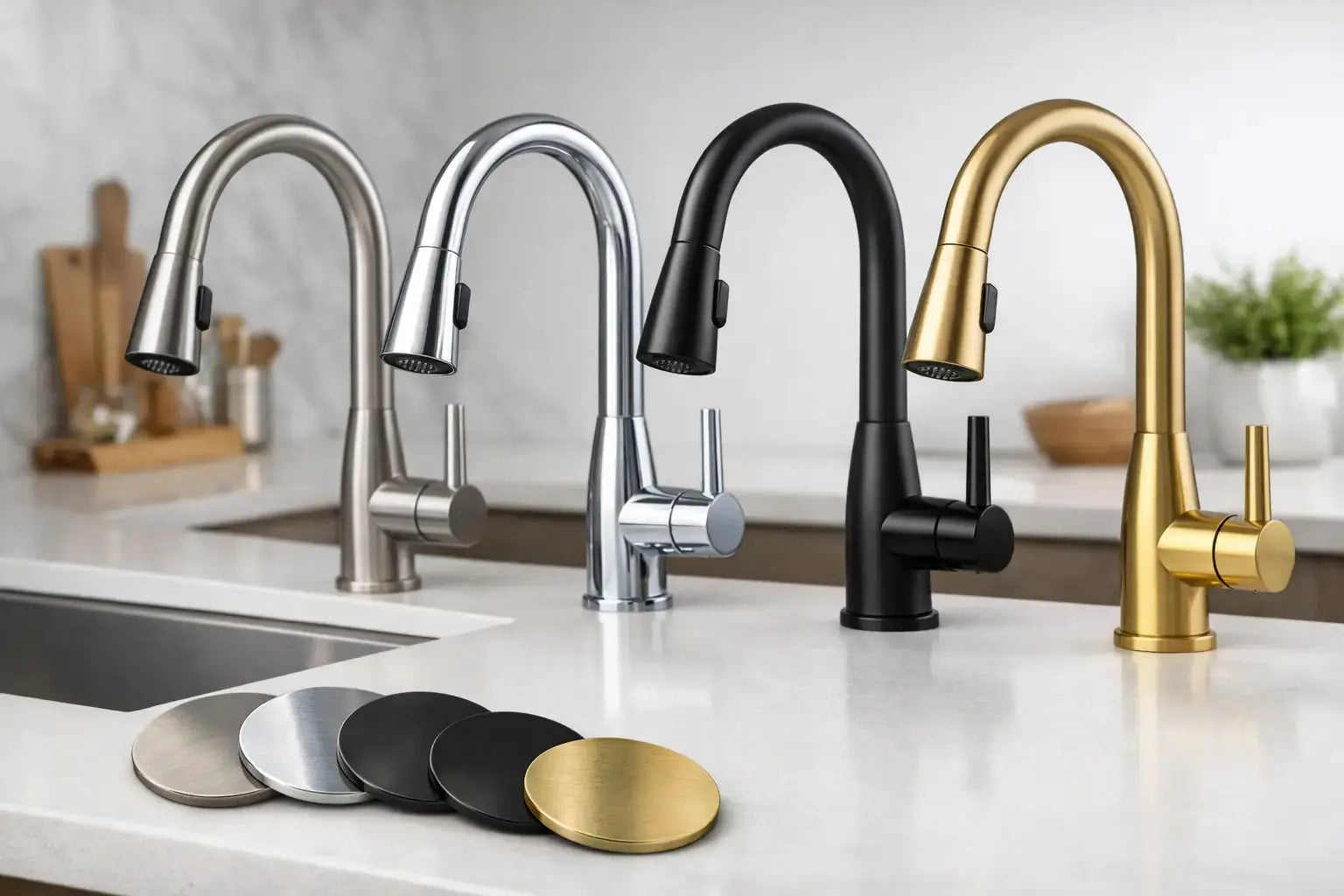
A kitchen faucet can look like a small detail until it is installed beside a sink, backsplash, cabinet pulls, and appliances. Then its finish becomes one of the most visible decisions in the room. Knowing how to choose kitchen faucet finish means looking beyond a colour swatch and considering daily cleaning, water quality, fixture durability, and the overall renovation plan.
The right finish does not need to match every metal in the kitchen exactly. It should, however, look intentional, suit the faucet style, and remain practical for the people using the sink every day.
Start With the Kitchen's Fixed Elements
Choose the faucet finish after reviewing the elements that are difficult or expensive to change. The sink, countertop, cabinet colour, appliance finish, backsplash, and lighting should lead the decision. Cabinet hardware is easier to replace later, so it should not always dictate the faucet selection.
A stainless steel sink gives you flexibility. Chrome, brushed nickel, stainless steel, matte black, and many warm metallic finishes can all work beside it. With a coloured composite sink, consider contrast more carefully. A black sink can support a black faucet for a coordinated look, while brushed gold or polished nickel can create a stronger focal point.
Countertops also influence the result. Cool grey marble-look quartz and white cabinetry often suit chrome, polished nickel, or brushed nickel. Warmer wood tones, cream cabinetry, and beige stone tend to work well with brushed gold, champagne bronze, or matte black. There are exceptions, especially in transitional kitchens, but the undertones should feel compatible rather than accidental.
How to Choose Kitchen Faucet Finish by Use
A faucet at a secondary bar sink gets far less handling than one at the main family kitchen sink. Before prioritizing appearance, consider what the faucet will handle: meal preparation, frequent dishwashing, filling pots, rinsing produce, or cleaning after young children and pets.
High-use kitchens benefit from finishes that disguise fingerprints and water marks. Brushed and matte finishes generally hide daily evidence better than highly polished surfaces. This does not mean polished finishes are difficult to maintain. It means they show spots sooner, particularly where water contains noticeable mineral content.
For Canadian households with hard water, the cleaning routine matters. Mineral deposits can be more visible on black and dark finishes, especially around the spout aerator and handle base. A soft cloth used regularly is usually enough for general care. Avoid abrasive pads, harsh powders, and aggressive chemical cleaners, which may damage the surface coating over time.
Compare the Most Common Faucet Finishes
Chrome
Chrome remains a practical choice for kitchens because it is bright, familiar, widely available, and easy to coordinate with stainless steel sinks and many appliance finishes. Its reflective surface suits contemporary, traditional, and transitional faucet designs.
The trade-off is visibility. Chrome can show fingerprints, water spots, and smudges more readily than brushed alternatives. It is an excellent fit for homeowners who prefer a crisp, polished look and do not mind quick wipe-downs.
Brushed Nickel and Stainless Steel
Brushed nickel offers a soft, warm silver tone with a less reflective surface than chrome. It works especially well with warm whites, natural wood cabinetry, and transitional kitchen designs. Its brushed texture helps reduce the appearance of fingerprints and minor water marks.
Stainless steel finishes often appear slightly cooler and can coordinate naturally with stainless appliances and sinks. Product names vary by manufacturer, so do not assume all brushed nickel or stainless finishes look identical. Compare finish samples, product photography, and nearby materials where possible. A warm brushed nickel may look noticeably different beside a cool stainless steel appliance handle.
Matte Black
Matte black creates contrast without requiring a highly decorative faucet shape. It suits modern kitchens, black-framed lighting, dark hardware, and spaces where the faucet is intended to stand out against a pale sink or countertop.
Its practical appeal depends on water and cleaning habits. Matte black usually hides fingerprints well, but dried mineral spots can be visible in hard-water areas. Select a quality finish from a recognized manufacturer and clean it with non-abrasive products. A lower-quality black coating may show wear more quickly at high-contact points such as the handle and pull-down spray head.
Brushed Gold, Champagne Bronze, and Warm Metallics
Warm metallic finishes bring depth to kitchens with oak, walnut, cream, taupe, or greige cabinetry. Brushed gold and champagne bronze are generally more forgiving than polished brass because the satin surface softens reflections and minor marks.
These finishes do not need to match every other metal exactly. In fact, trying to match a faucet, light fixture, cabinet pull, and appliance handle from different manufacturers can produce small but obvious variations. Instead, choose one dominant warm metal and repeat it in one or two nearby details, such as cabinet hardware or pendant lighting.
Polished Nickel
Polished nickel has a reflective appearance similar to chrome but usually carries a warmer, softer tone. It is often selected for traditional, classic, or elevated transitional kitchens. It pairs well with white cabinetry, natural stone, and details such as bridge faucets or decorative handles.
Because it is polished, it will require regular wiping to retain its shine. It is best for projects where the finish is part of the design statement rather than simply a low-maintenance utility choice.
Coordinate Metals Without Over-Matching
A kitchen can include more than one metal finish. The key is repetition and restraint. If the faucet is matte black, black cabinet pulls, window frames, or lighting accents can make the choice feel connected. If the faucet is brushed gold, use that tone again in hardware or lighting, but avoid adding several unrelated metallic colours in the same sightline.
Keep the faucet and sink relationship in mind. A black faucet over a stainless steel sink is a common intentional contrast. A brushed nickel faucet over a stainless sink is more understated. A warm metallic faucet over a white fireclay or composite sink can create a focal point. None of these combinations is inherently better; the right choice depends on whether the kitchen needs contrast or continuity.
Look Beyond Colour to Finish Quality
Two faucets labelled with the same finish can perform very differently. Manufacturer-specific finishing processes, coating thickness, and care requirements affect long-term appearance. Premium finishes may use technologies such as physical vapour deposition, often called PVD, which can improve resistance to tarnishing, scratching, and corrosion.
Review the manufacturer’s care guidance before purchasing. A finish warranty can also be useful, but it should be read alongside the cleaning instructions. Damage caused by abrasive cleaners or improper chemicals may not be covered.
This is also a good time to compare the faucet’s construction, spray-head function, handle position, and installation requirements. A finish should not be the reason to choose a faucet that does not suit the sink configuration or the household’s needs. Confirm the number of mounting holes, deck thickness limits, pull-down hose clearance, and whether a matching soap dispenser or air gap cover is required.
Use Samples and Lighting Before Making the Final Choice
Online images are useful for narrowing the selection, but finish tone can shift under different lighting. Brushed gold may look muted in daylight and richer under warm evening bulbs. Matte black can read soft charcoal in a bright room or nearly black against a white quartz counter.
If you are renovating, place cabinet, countertop, backsplash, and hardware samples together near the kitchen window and under the planned lighting. View them at different times of day. This simple check can prevent a cool-toned faucet from clashing with warm cabinet hardware or a polished finish from looking too reflective in a compact kitchen.
For homeowners and trade buyers comparing premium kitchen fixtures, Plumbing Market offers the breadth to evaluate faucet styles and finishes alongside sinks, accessories, and installation components. Choose a finish that supports the kitchen’s materials, stands up to its daily workload, and still looks right when the renovation excitement has settled into everyday use.


