

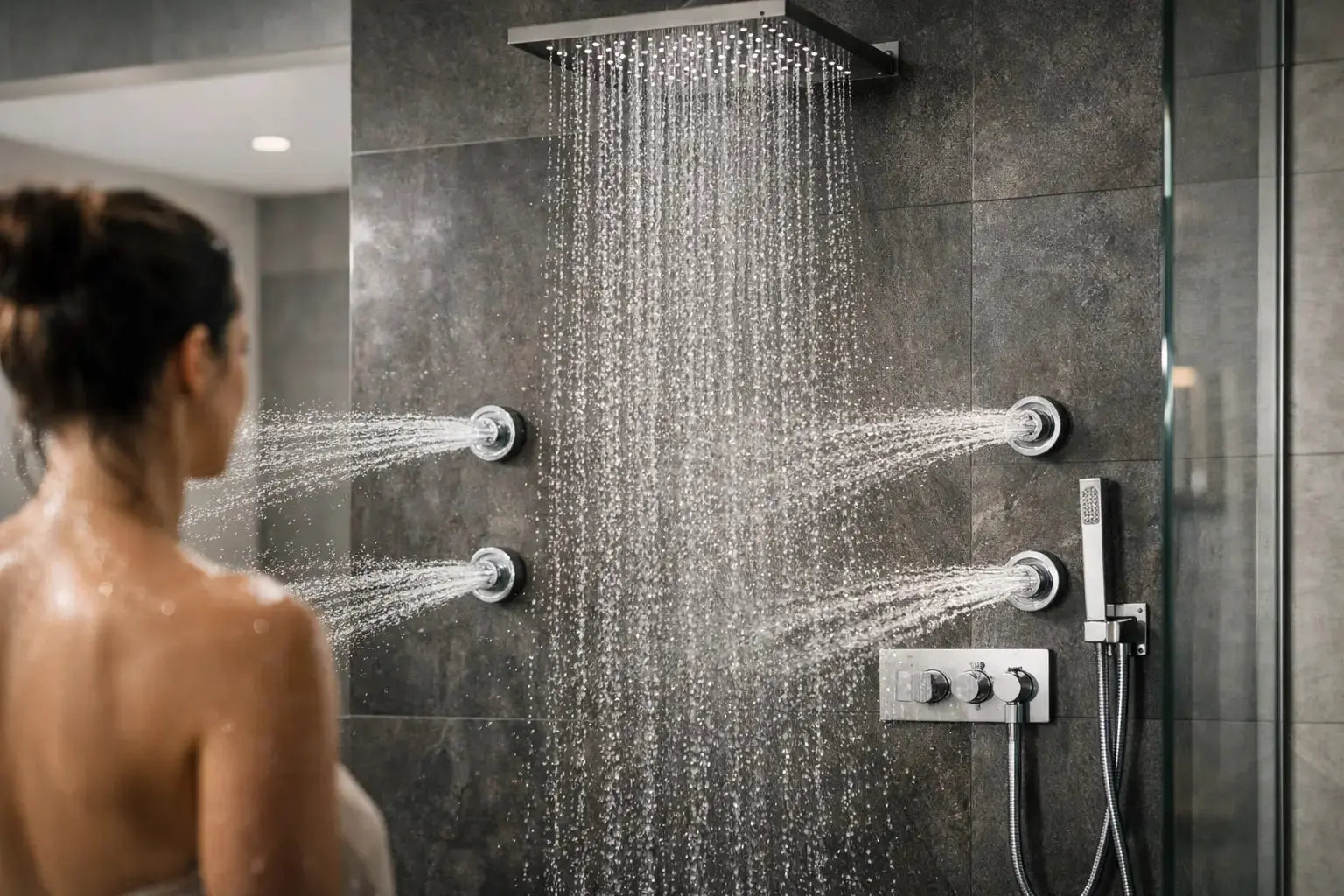
A standard shower gets the job done. A rain shower system with body jets changes how the whole space feels - and it also changes what you need behind the wall.
That is the part many buyers miss. The trim and spray pattern get most of the attention, but performance depends just as much on valve compatibility, water pressure, plumbing layout, and how many outlets you plan to run at once. If you are renovating a primary ensuite, upgrading a guest bath, or specifying fixtures for a higher-end build, it pays to treat the shower system as a complete package rather than a collection of attractive parts.
What a rain shower system with body jets includes
At its simplest, this type of system combines an overhead rain shower head with multiple body sprays installed on the wall. Many configurations also include a hand shower, a thermostatic or pressure-balance valve, diverters or volume controls, and the required rough-in components.
The key difference from a basic shower set is coverage. A rain head delivers a broad, top-down spray, while body jets direct water horizontally across the torso and back. When the system is designed properly, the experience feels more balanced and immersive. When it is not, you may end up with weak output, awkward spray placement, or controls that are harder to use than they should be.
For homeowners, the appeal is comfort and a more finished look. For contractors and renovators, the decision is usually about layout, compatibility, and whether the existing plumbing can support the system without expensive surprises.
Is a rain shower system with body jets right for your bathroom?
It depends on the room, the water supply, and your expectations.
If you are working with a compact tub-shower conversion or a very tight enclosure, body jets may be more visual than practical. They need enough wall area to be positioned correctly and enough standing room for the spray to hit the user rather than the glass, the door opening, or one narrow spot on the wall. In a larger walk-in shower, especially one built for daily use rather than occasional overflow guests, the added coverage makes more sense.
Ceiling height matters too. A rain head mounted too high can feel cold or diffuse, especially if the water pressure is modest. Mounted at a more appropriate height, it feels even and controlled. Body jets also need careful placement. Too low, and they miss the upper body. Too high, and shorter users may not benefit from them at all.
There is also the question of routine use. Some buyers want every outlet running every morning. Others mainly want the look of a spa-style shower with the option to use the body jets occasionally. That distinction matters because it affects valve selection, flow planning, and budget.
Performance starts with pressure and flow
This is where many purchase decisions should begin.
A rain shower system with body jets typically uses more water outlets than a standard shower system. Even with modern flow restrictions, running a rain head, hand shower, and multiple body sprays together requires enough incoming pressure and sufficient flow rate to deliver a satisfying result. If the home has marginal pressure, undersized supply lines, or older plumbing infrastructure, the shower may look impressive on paper but underperform in real use.
Thermostatic systems are often preferred for these setups because they provide more precise temperature control and make it easier to manage multiple functions. Pressure-balance valves can still work well in simpler installations, but once you start layering outlets, a thermostatic valve paired with separate volume controls or diverters often gives the user better control.
For trade professionals, this is standard planning. For homeowners, it is the point where product selection should slow down. Before choosing trim style or finish, confirm the rough-in requirements and the system's expected flow demands.
Layout and body jet placement
Body jets are not one-size-fits-all. The number of jets, their spacing, and whether they are arranged vertically or in opposing pairs all affect the final experience.
A common setup uses two to four body sprays. In many residential showers, that is enough. More jets can increase coverage, but they also increase plumbing complexity and water demand. In some cases, fewer well-placed sprays perform better than a larger number installed only for appearance.
Vertical alignment is common in narrower shower stalls. Opposing side-wall placement can create a more enveloping feel in wider enclosures. Adjustable body sprays add flexibility, especially in households where users vary in height. Fixed-position jets may offer a cleaner look, but they require more precise planning.
Wall construction also matters. Exterior walls, insulation depth, tile build-up, and stud spacing can affect where rough-ins can actually go. This is one of those categories where the design intent and the installation reality need to match early.
Style matters, but compatibility matters more
There is no shortage of premium finishes and modern profiles in this category. Round, square, ultra-thin, industrial, minimalist - all of it is available. Recognized brands such as Riobel and TOTO have strong appeal because buyers want the look to match the rest of the bathroom and the quality to hold up over time.
Still, trim style should come after system planning, not before it. A sleek panel of controls means little if the selected valve does not support the number of functions you want. The same goes for mixing components across collections or manufacturers. Some combinations work well. Others create fitment issues, finish mismatches, or warranty complications.
For a cleaner purchasing process, many buyers choose coordinated systems or stay within a single brand family for trim, valve, and showering components. That usually reduces guesswork and helps maintain a consistent finish across the room.
Installation factors buyers should not ignore
A rain shower system with body jets is usually easiest to install during a full renovation or new build. Retrofitting into an existing shower is possible, but access behind the wall, pipe routing, and waterproofing requirements can make the job much more involved.
Ceiling-mounted rain heads may require structural access above. Wall-mounted rain heads can simplify installation while still delivering the same overhead effect in many bathrooms. Body jets require multiple branch lines and accurate rough-in depth. If the wall finish is already complete, adding them later often means more demolition than expected.
Drainage and enclosure design deserve attention too. More spray angles can push water farther across the floor and toward openings. A system that works perfectly in a fully enclosed glass shower may not behave the same way in a partially open wet-room layout.
For Canadian buyers, another practical consideration is replacement support. Access to matching trim, cartridges, rough-ins, and repair parts matters, especially if the system is going into a primary bathroom where downtime is not convenient.
How to shop this category without wasting time
The fastest way to narrow the field is to start with the technical side, then move to finish and style.
First, determine how many outlets you actually want to use. A rain head plus hand shower is one level of complexity. Add body jets, and you need to confirm whether the valve system can operate them independently or simultaneously. Next, check whether your renovation scope includes opening walls and whether your plumbing infrastructure can support the plan.
After that, compare rough-in requirements, trim compatibility, and brand-specific configurations. Some systems are sold as more complete packages, while others require separate valves, diverters, and sprays. Neither approach is wrong, but the buying process is different. Complete systems simplify selection. Component-based builds allow more customization.
This is also where a broad category selection helps. Retailers with depth in both decorative shower systems and technical rough-in parts make it easier to source the visible trim and the behind-the-wall essentials in one order. For buyers trying to avoid backorders, mismatched finishes, or missing valves, that matters.
Common trade-offs to expect
The biggest advantage of a rain shower system with body jets is the experience. The biggest trade-off is planning.
These systems cost more than standard shower sets, take more coordination, and often require more involved installation. Cleaning can also be a factor, especially in hard water areas where mineral build-up affects spray outlets over time. And while the luxury feel is real, not every household uses every function every day.
That does not make the upgrade excessive. It just means the best choice is the one that fits the room and the user. In some bathrooms, a rain head with a hand shower is the smarter balance. In others, body jets are exactly what completes the space.
Choosing for long-term value
A good shower system should still make sense five years from now, not just in a showroom image or product thumbnail.
Look for solid brand support, dependable valve platforms, and finishes that match the rest of the bathroom hardware. Make sure the layout suits the actual users of the space. If the system is going into a resale-conscious renovation, choose a configuration that feels premium without becoming overbuilt for the room.
For homeowners and professionals alike, the best results come from treating the shower as a performance system first and a design feature second. Once those basics are right, the finished product tends to justify the investment every day you use it.
If you are considering a rain shower upgrade, take an extra minute to think past the spray face and handle design. The right system is the one that fits your plumbing, your layout, and the way the bathroom will actually be used.


