

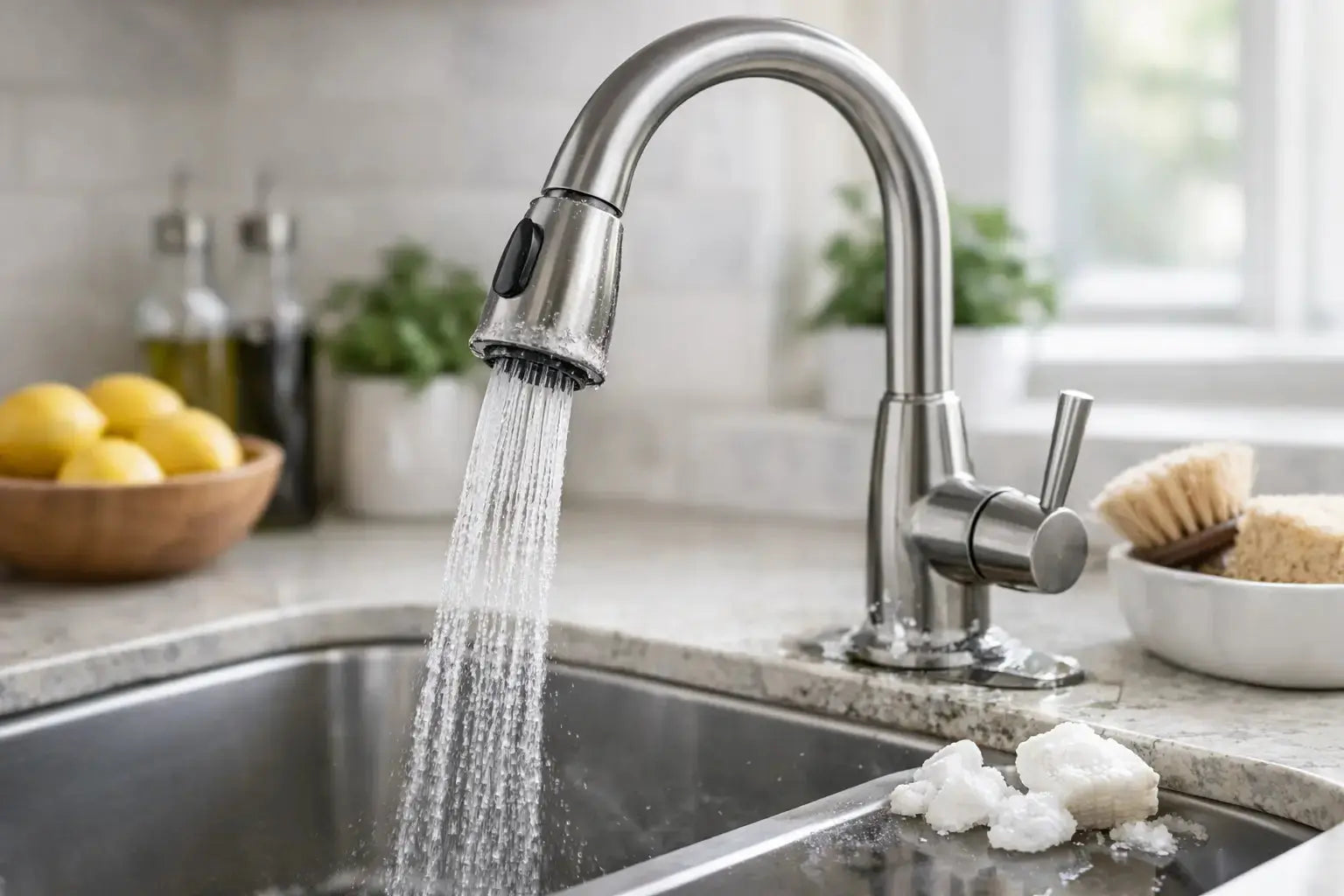
Hard water shows up fast in a kitchen. You see it as white spotting around the spout, stiffness in the handle, reduced spray performance, and a finish that starts looking older than it should. If you are shopping for the best kitchen faucet for hard water, the right choice is usually less about one miracle model and more about the right construction, finish, spray design, and serviceable parts.
In Canadian homes, hard water varies by region, but the buying logic is consistent. Mineral-heavy water puts extra stress on aerators, pull-down spray heads, cartridges, and surface finishes. A faucet that looks excellent on day one can become frustrating if it traps scale, is difficult to clean, or uses lower-grade internal components. That is why hard water calls for a more selective approach.
What makes the best kitchen faucet for hard water?
The first priority is internal durability. Faucets with ceramic disc cartridges generally perform better over time because they are more resistant to wear than older compression-style mechanisms. Hard water does not just leave visible residue - it can also affect moving parts. A dependable cartridge helps maintain smooth handle operation even when mineral deposits are part of daily use.
The second priority is surface maintenance. Some finishes hide spotting better than others. Chrome is common, durable, and easy to wipe clean, but it will show water marks more readily than brushed or matte finishes. Brushed nickel, stainless-look finishes, and certain PVD-treated finishes tend to be more forgiving in hard water areas because they disguise residue between cleanings.
The third priority is spray-face design. Rubber nozzles or soft-touch spray outlets are a practical advantage because scale can usually be rubbed off by hand. That may sound like a small feature, but it matters when buildup starts restricting flow. A faucet with a pull-down sprayer and easy-clean nozzles can save time and reduce maintenance frustration.
The materials and finishes that hold up better
Brass construction remains a strong choice for long-term reliability. A solid brass body is typically more durable than lighter, lower-cost alternatives, especially in kitchens where the faucet sees constant use. Stainless steel options can also perform well, particularly when the manufacturing quality is consistent and the internal components are built to match.
Finish selection deserves more attention than most buyers give it. If your water leaves visible mineral traces after nearly every use, polished finishes can become a chore. They are attractive, but they demand more frequent wiping. Brushed finishes usually make more sense in hard water conditions because they keep the faucet looking cleaner between maintenance cycles.
This does not mean chrome is a poor choice. It means there is a trade-off. Chrome can be durable and timeless, but in a hard water kitchen it often asks for more upkeep. If appearance after daily use matters as much as showroom appearance, brushed nickel, stainless, or similar low-glare finishes are usually the safer buy.
Features worth paying for - and features you can treat as secondary
A pull-down faucet is often the most practical format for hard water households because it gives you direct access to rinse the sink, clean around the faucet base, and manage dishes more efficiently. The key is to choose one with a spray head designed for easy descaling. If the nozzles are difficult to access or the face has too many crevices, maintenance becomes harder than it needs to be.
Magnetic docking can also be worthwhile. Hard water itself does not make docking worse, but any feature that keeps the spray head aligned and secure reduces unnecessary wear over time. This is especially relevant in busy kitchens where the faucet is used repeatedly throughout the day.
Touchless and touch-activated models can be a good fit, but they depend on the quality of the electronics and valve system. They are convenient because you touch the handle less, which can reduce visible residue in one area. At the same time, they introduce more complexity. For some homeowners and many trade buyers, a well-built manual pull-down faucet with serviceable parts is the better long-term decision.
Best kitchen faucet for hard water - what to avoid
Low-cost faucets with vague material specs are the easiest mistake to make. If the product description is unclear about cartridge quality, body material, or replacement part availability, that is usually a warning sign. Hard water exposes weak points quickly. A faucet that saves money upfront can cost more in maintenance trouble or premature replacement.
Highly detailed surfaces can also work against you. Decorative grooves, exposed seams, or intricate spray faces may look appealing, but they create more places for mineral buildup to settle. In hard water conditions, cleaner lines are usually better.
Another issue is non-standard parts. If an aerator, cartridge, or spray assembly is difficult to replace, a simple maintenance problem can turn into a full faucet replacement. Recognized brands with strong parts support generally make more sense, particularly for contractors, renovators, and property owners managing multiple spaces.
Brand quality matters more in hard water conditions
Hard water tends to separate premium faucet construction from entry-level construction very quickly. Better brands typically invest more in cartridge reliability, hose quality, finish durability, and replacement part availability. That becomes more than a branding issue when mineral exposure is constant.
For shoppers comparing higher-end kitchen faucets, brands such as Riobel stand out because they are known for stronger engineering, more refined finish options, and better support across product lines. The right model still depends on kitchen style, sink setup, and budget, but established brands usually provide more confidence where hard water is concerned.
That matters for trade professionals as well. If you are sourcing for a renovation or replacement job, a faucet with dependable manufacturer support is easier to stand behind. It simplifies future servicing and reduces the risk of callbacks related to cartridge issues, spray head performance, or finish complaints.
How to match the faucet to your kitchen setup
A hard water-friendly faucet still has to fit the sink and the way the kitchen is used. In a compact kitchen, a pull-out model may be more proportional than a tall commercial-style pull-down design. In a large family kitchen, higher arc clearance and a stronger spray function may be worth prioritizing.
Single-handle faucets are often the most practical choice because they are simple to operate and generally easier to keep clean around the control area. Two-handle designs can suit traditional kitchens, but they introduce more surfaces and moving points where residue can collect.
Mounting configuration also matters. If you are replacing an older faucet, check whether you need a single-hole model, a deck plate, or compatibility with an existing multi-hole sink layout. Choosing the right fit from the start avoids unnecessary modifications and helps streamline installation.
Maintenance should be part of the buying decision
Even the best kitchen faucet for hard water needs routine care. That is not a product flaw - it is part of living with mineral-rich water. What matters is how easy the faucet is to maintain. Can the aerator be accessed without a struggle? Can scale be cleared from the spray nozzles quickly? Are replacement cartridges and parts available if needed?
A faucet that supports straightforward maintenance often delivers better long-term value than one with a longer feature list. This is especially true in busy households, rental properties, and commercial-style applications where reliability tends to matter more than novelty.
Simple care habits help. Wiping the faucet dry reduces spotting. Periodic descaling of the aerator and spray face helps preserve flow. If hard water is severe, a broader water treatment solution may also be worth considering, but that does not replace the need for a faucet built to tolerate mineral exposure well.
The smart buying standard
For most buyers, the strongest choice is a single-handle pull-down kitchen faucet with a ceramic disc cartridge, easy-clean spray nozzles, a durable brass or stainless construction, and a brushed or low-glare finish. That combination covers the core issues hard water creates without overcomplicating the purchase.
If you want a design-forward fixture, you do not need to sacrifice practicality. You simply need to be more selective about finish, parts support, and maintenance access. A premium-looking faucet can still be a hard water-friendly faucet if the engineering is there.
At Plumbing Market, this is the kind of category where product depth matters. When you can compare finish options, spray configurations, installation types, and trusted brands in one place, it becomes much easier to buy for both appearance and long-term performance.
The best choice is the faucet that still feels smooth, cleans easily, and looks presentable after months of mineral exposure - not just the one that looks good in the product photo.


