

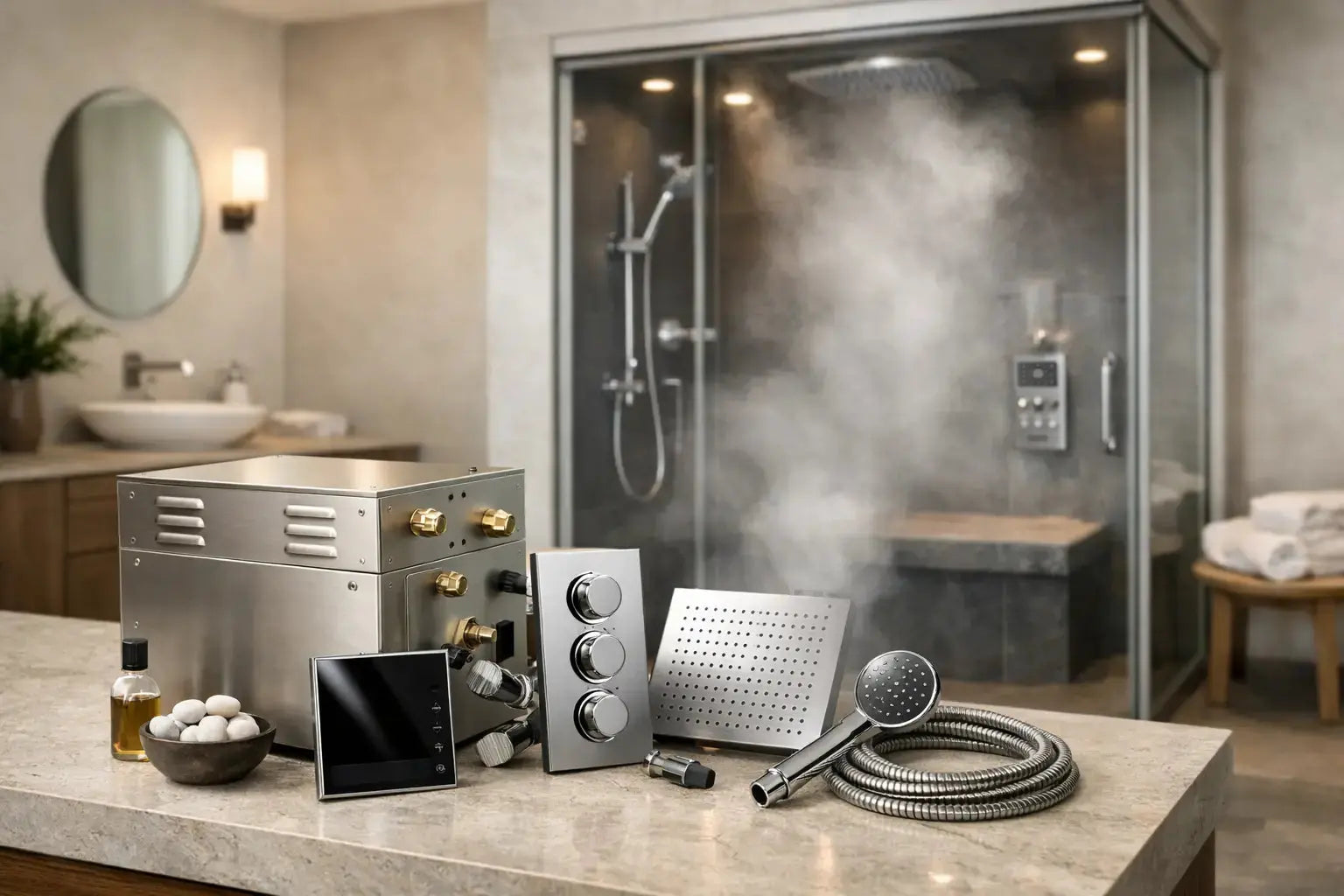
A steam shower kit for bathroom renovations can look straightforward on a product page, right up until you need to match generator size, enclosure type, control location, and electrical requirements. That is usually where a simple upgrade turns into a specification exercise. If you want the system to perform properly, the best buying decision starts with the room itself, not the finish trim.
What a steam shower kit for bathroom projects usually includes
Most steam shower kits are built around the same core components: a steam generator, a control interface, a steam head, and related connection parts. Some kits also include extras such as aromatherapy wells, auto-flush systems, steam linings, speakers, or upgraded digital controls. The exact package matters because two products with similar output can differ significantly in features, maintenance needs, and installation complexity.
For homeowners, the key question is not just whether the kit produces steam. It is whether the kit gives you a complete path from rough-in to daily use. For contractors and renovators, the bigger issue is compatibility. A generator may be properly sized, but if the control cable length, voltage, drain requirements, or accessory support do not suit the project, the installation becomes less efficient and more expensive.
Start with shower volume, not appearance
Steam performance depends on enclosed space. If the shower is too large for the generator, heat-up time suffers and the room may never feel fully saturated. If the generator is oversized, you can end up paying more than necessary and still need to manage the enclosure details carefully.
To estimate the correct generator range, calculate the interior volume of the steam shower by multiplying length, width, and height. Then account for materials. Natural stone, marble, and glass block absorb more heat than standard tile or acrylic surfaces, so many manufacturers recommend moving up in capacity when those finishes are present.
Ceiling height also matters. A steam enclosure should generally be fully enclosed and designed to retain heat effectively. Open transoms, oversized glass gaps, or an unsealed ceiling line can reduce performance even if the generator rating looks correct on paper.
Why enclosure design affects every steam kit
A steam system is not the same as a standard shower valve upgrade. The room becomes part of the product. Sloped ceilings help reduce dripping condensation. Proper insulation helps maintain temperature. Tight door seals and steam-rated materials support consistent performance.
This is one of the most common trade-offs in planning. Some buyers want the cleanest frameless look possible, but the more open the enclosure feels, the harder it is to hold steam efficiently. In many cases, the best result is a balanced design that still supports containment.
Generator sizing and power requirements
The generator is the working core of the system, and sizing errors are costly. Manufacturers typically rate units by cubic footage, but those ratings are not universal in practice because material choices and room shape can change the real heat load.
Canadian buyers should also pay attention to site power. Many steam generators require dedicated electrical service and specific voltage configurations. That makes coordination with an electrician essential before purchase, not after delivery. If the available service panel capacity is limited, that may influence which unit size is realistic.
Placement matters too. Generators are commonly installed in nearby vanities, closets, utility rooms, or other accessible service spaces. The unit should be close enough to meet manufacturer limits for steam line length and service access. A generator hidden too aggressively for aesthetic reasons can become a maintenance problem later.
Bigger is not always better
There is a tendency to size up for peace of mind. Sometimes that makes sense, especially with dense finish materials or colder room conditions. But oversizing without reason can increase electrical demands, purchase cost, and operating inefficiency. A properly matched generator with a well-built enclosure usually outperforms a larger unit installed in a room that leaks heat.
Controls, features, and what you will actually use
Digital steam controls now range from simple on-off interfaces with timers to more advanced systems that manage temperature presets, delayed start, lighting, audio, and aromatherapy. The right choice depends on the project type.
For a primary ensuite renovation, a more advanced control may be worth it if daily comfort and routine matter. For a secondary bath or guest space, a simpler package often makes more sense and keeps the installation cleaner. Contractors working on resale-oriented renovations also tend to favour controls that are intuitive and reliable over heavily layered features.
The practical questions are straightforward. Can the user set a preferred session temperature? Is the display easy to read? Can the control be mounted where it is convenient but still compliant with installation guidance? Does the system support accessories now or later?
Feature-heavy kits can be appealing, but they also introduce more variables. If the buyer wants a dependable steam experience and little else, a streamlined control package is often the better purchase.
Materials inside the steam enclosure
A steam shower places more demand on materials than a conventional shower. Tile selection, substrate preparation, waterproofing, and vapour management all need to be planned together. This is where product selection and installation quality overlap.
Porcelain and ceramic tile are common choices because they are durable, easy to maintain, and available across a wide range of styles. Natural stone can create a premium finish, but it generally requires more care and may affect generator sizing due to heat absorption. Acrylic or prefab enclosures may work in some applications, but not all are intended for continuous steam use.
The door and glazing details also need attention. A steam enclosure should be built to contain vapour effectively while still allowing safe operation and ventilation after use. Small design details, such as gasket choice and transom configuration, can have a real effect on comfort.
Installation planning is where most mistakes happen
A steam system involves plumbing, electrical, waterproofing, finish work, and ventilation. That makes early coordination essential. If the generator location, control routing, and drain provisions are not confirmed at rough-in, the correction work later can be expensive.
For many projects, the best sequence is to confirm room dimensions, choose finish materials, select the generator size, verify electrical availability, and only then finalize the kit and accessories. That order avoids one of the most common problems in renovations: choosing the visible trim first and discovering the infrastructure does not support it.
Ventilation still matters after the steam cycle
People sometimes assume steam replaces the need for proper bathroom ventilation. It does not. Once the steam session ends, the room still needs to dry out efficiently. An appropriate exhaust strategy helps protect finishes, reduce lingering moisture, and improve the long-term condition of the space.
That is especially important in Canadian homes where seasonal temperature differences can influence condensation behaviour in adjacent areas.
Maintenance and long-term ownership
Steam generators are not maintenance-free. Water quality affects performance over time, and scale buildup can reduce efficiency or shorten service life. Some kits offer auto-flush functions that help clear the tank after use, which can be a worthwhile feature depending on local water conditions.
Access for service is another practical issue that should not be ignored. If routine inspection or repair requires removing finished millwork or opening walls, ownership becomes more frustrating than it needs to be. A good installation leaves room for maintenance from the start.
Buyers should also review replacement part availability and brand support. In a category like steam, long-term product support matters as much as the initial specification. That is one reason many renovators and trade buyers prefer established brands with clear technical documentation and accessible parts channels.
How to shop more efficiently
When comparing a steam shower kit for bathroom use, it helps to narrow the decision through four filters: enclosure size, finish material, available power, and preferred control type. Once those are clear, the shortlist becomes much more manageable.
This product category rewards precise shopping. A broad assortment is useful only if you can compare output levels, accessory compatibility, installation requirements, and finish options without guessing. For buyers trying to coordinate valves, shower components, and technical rough-in items in the same project, that level of category depth saves time and reduces mismatches. Plumbing Market is well positioned for that kind of specification-led shopping because the surrounding bathroom and plumbing categories are already part of the same buying path.
A steam shower can be one of the most satisfying upgrades in a bathroom, but only when the kit matches the room, the infrastructure, and the expectations behind the project. Buy with the enclosure in mind, not just the trim, and the result will feel better every time the steam starts.


