

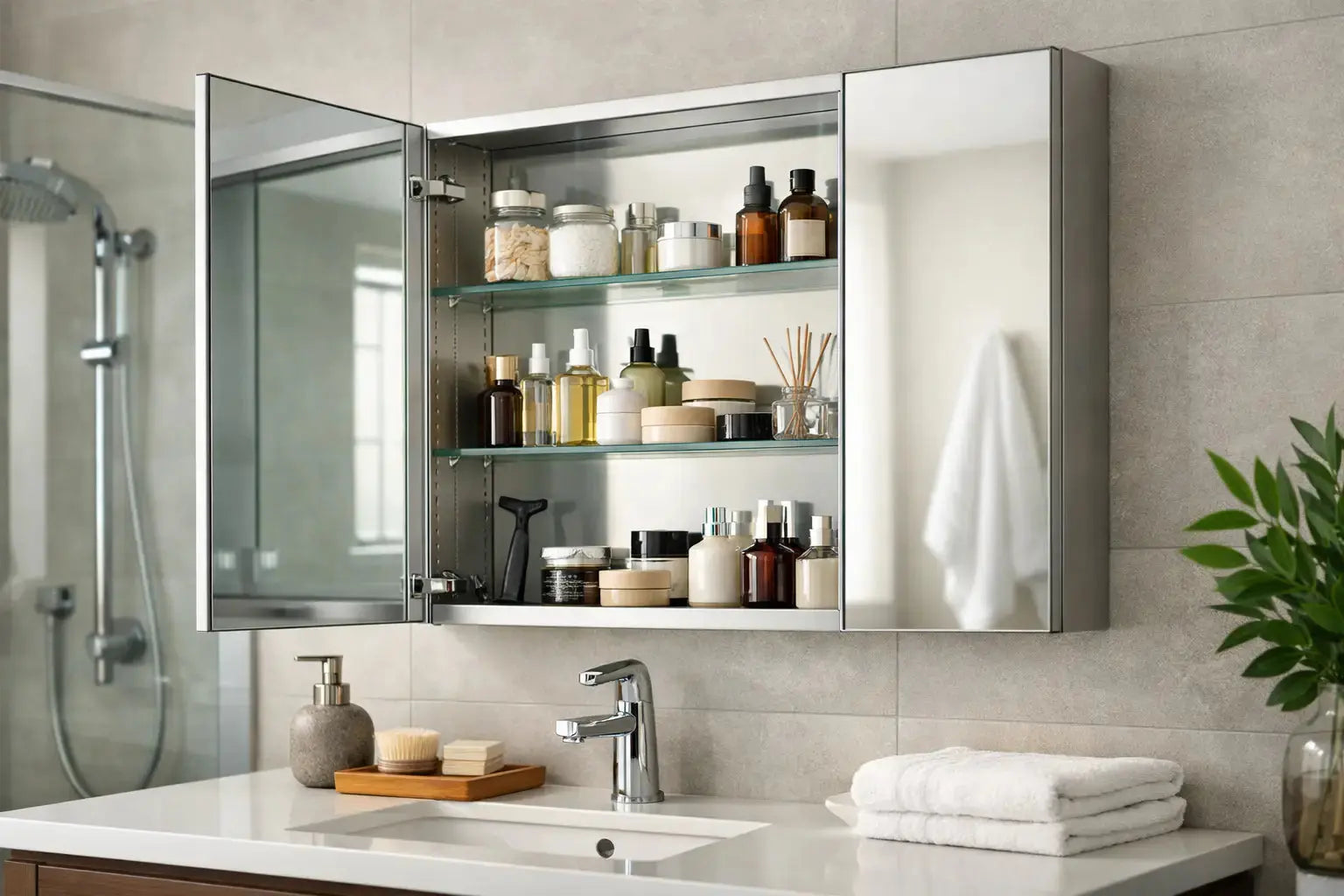
A medicine cabinet is often the first bathroom fixture used in the morning and the last one used at night. The best bathroom medicine cabinets do more than hold toiletries: they add concealed storage, improve the mirror area and help a vanity wall work harder without adding visual clutter. The right choice depends on your wall construction, vanity width, lighting plan and the products you want within easy reach.
How to Choose the Best Bathroom Medicine Cabinets
Start with the installation type. Recessed cabinets sit partly inside the wall cavity, creating a clean, built-in profile. Surface-mounted cabinets install directly on the finished wall and are usually the practical choice when opening the wall is not desirable. Both can look refined when the size, finish and mirror style suit the room.
For a new build or full renovation, a recessed medicine cabinet is worth considering early in the planning stage. It keeps the cabinet depth out of the room, which is especially useful in narrow powder rooms and compact ensuites. However, the wall must have adequate clear space between studs, and any plumbing, electrical wiring, insulation or vapour barrier behind the intended location needs to be assessed before framing or drywall is completed.
Surface-mounted models offer more flexibility for finished bathrooms, rental upgrades and faster refresh projects. They can provide deeper storage than recessed designs, but their projection needs to be considered near doors, shower glass and tight circulation paths. A slim-profile surface cabinet is often the sensible middle ground when wall depth is limited.
Match Cabinet Width to the Vanity
A medicine cabinet does not have to match the vanity width exactly. In many bathrooms, a single cabinet that is narrower than the vanity creates a balanced, centred composition. A wider cabinet can be effective over a double vanity, while two individual cabinets give each user dedicated storage and mirror space.
Leave enough visual breathing room at each side rather than filling every inch of wall. If sconces will sit beside the mirror, account for the fixture width and required clearance before choosing the cabinet. For a clean, coordinated result, use the vanity centreline, faucet placement and lighting layout together rather than selecting the cabinet in isolation.
Height matters as much as width. The mirror should serve the primary users comfortably, while the cabinet door must clear the faucet, backsplash and any wall-mounted accessories. Check the manufacturer's dimensions, door swing and mounting requirements before finalizing the location.
Recessed vs. Surface-Mounted Medicine Cabinets
Recessed and surface-mounted cabinets solve different installation problems. A recessed cabinet is generally the more architectural option, with only the frame and door visible. It works particularly well with floating vanities, modern bathrooms and spaces where a shallow visual profile is a priority.
The trade-off is planning. Standard stud spacing, structural framing and existing services can restrict available cabinet width and depth. Exterior walls may also present insulation and moisture-management considerations in Canadian homes. Do not assume a recessed opening can be cut without inspection. Confirm the wall conditions with a qualified renovator or contractor before ordering.
A surface-mounted cabinet avoids most of those wall-cavity concerns. It is easier to position, easier to replace and often offers more usable interior depth. This style can also become a deliberate design feature when paired with a framed mirror door, matte-black hardware or a finish that coordinates with faucets and vanity pulls.
Some cabinets are designed for either recessed or surface mounting. That flexibility can be useful when site conditions are uncertain, but verify that the trim kit, side panels or mounting hardware required for your preferred installation method are included or available.
Select the Mirror and Door Configuration
A mirrored door remains the most versatile option because it combines daily grooming function with storage. Frameless cabinets suit contemporary vanities and allow the surrounding tile or paint finish to carry the visual weight. Framed cabinets can introduce warmth, contrast or a more traditional furniture-like appearance.
For a single vanity, one door is typically straightforward and economical. Wider cabinets may use two or three doors, reducing the reach required to access items at each end. Multi-door models also let more than one person use the mirror at once, though the seams between panels are more visible.
Door operation deserves attention. Standard hinged doors are familiar and practical, but they need clear swing space. Reversible doors offer added layout flexibility where a nearby wall, shower panel or tall storage cabinet affects access. Soft-close hinges are a worthwhile detail in busy family bathrooms because they reduce slamming and give the cabinet a more finished feel.
Mirrored interiors are useful for grooming tasks and make it easier to see the back of the head or profile when the doors are open. They are not essential for every project, but they add day-to-day value in a primary ensuite or shared bathroom.
Plan Storage Around Real Bathroom Products
Cabinet capacity is not only about depth. Shelf adjustment, interior height and door design determine whether the space actually accommodates your routine. Adjustable glass shelves make it easier to store electric toothbrushes, skincare bottles, medication containers and grooming products without wasting vertical space.
A shallow cabinet keeps small items visible and prevents products from disappearing behind one another. A deeper cabinet accommodates larger containers but can become disorganized if shelves are not adjustable. For households with several users, look for a layout with clearly separated compartments or pair the cabinet with vanity drawers for bulkier supplies.
Keep medications, contact lens products and other sensitive items in a location appropriate for your household. Bathrooms can be humid, particularly in rooms with limited ventilation, so check product labels and consider whether certain items are better stored elsewhere.
Use This Measurement Check Before Ordering
Take final measurements after the vanity, backsplash and faucet placement are confirmed. Record these four details before choosing a cabinet:
- The available wall width, including space needed for sconces, switches and accessories.
- The distance from the countertop or backsplash to the proposed cabinet bottom.
- The door swing clearance around faucets, side walls, shower glass and tall cabinetry.
- The wall cavity depth and stud locations if considering a recessed installation.
Coordinate Finishes, Lighting and Electrical Features
A medicine cabinet should support the wider bathroom fixture selection. A frameless mirror cabinet is an easy match for chrome, brushed nickel, polished nickel and many modern faucet collections. A framed option can echo black shower hardware, warm brass lighting or the wood tone of the vanity.
Integrated lighting can reduce the need for separate vanity fixtures, but it must be planned as an electrical component rather than a simple mirror upgrade. Confirm the light output, colour temperature, switch location and electrical requirements. Installation should meet applicable provincial and local electrical requirements, with a qualified electrician involved where needed.
Defogging features are useful in high-use bathrooms, especially where a shower is close to the vanity. They add convenience, but require power and should be evaluated alongside the overall lighting and ventilation plan. For a simple guest bathroom, a conventional mirrored cabinet with well-positioned lighting may offer better value.
Choose for the Room, Not Just the Trend
The best choice for a small powder room may be a shallow surface-mounted cabinet with a clean mirror face. A primary ensuite may justify a wider recessed model with adjustable shelves, mirrored interiors and soft-close doors. In a commercial or multi-residential setting, durability, straightforward cleaning and reliable replacement availability can matter more than decorative details.
When selecting a medicine cabinet, prioritize fit before finish and storage before features. A cabinet that installs cleanly, opens without obstruction and holds the products you use every day will remain a useful part of the bathroom long after a passing style has changed.


