

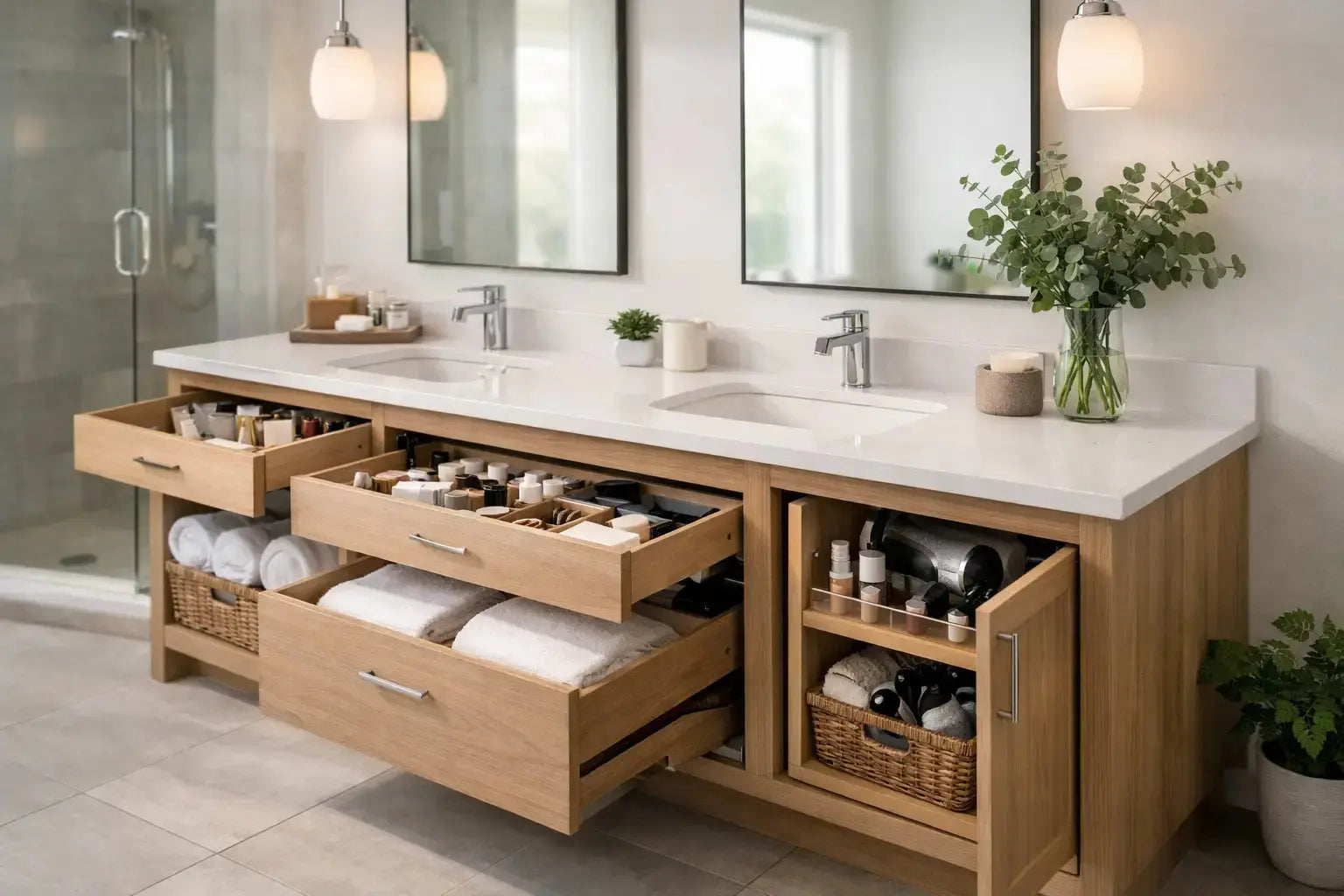
When the counter is crowded with hand soap, skincare, extra towels, and backup toilet paper, the right bathroom vanity stops being a style choice and becomes a storage fix. The best bathroom vanity with storage ideas solve two problems at once - they keep the room organized, and they make daily use easier for everyone sharing the space.
A good vanity should do more than hide plumbing. It should match how the bathroom is used, how much floor space is available, and what needs to be stored every day versus occasionally. That is where many renovation decisions go off track. A vanity can look right in a product photo and still fall short once hair tools, cleaning supplies, and personal care items need a proper home.
What makes a bathroom vanity storage setup work
The most effective storage starts with a simple question: what actually needs to go inside the vanity? In a powder room, the answer may be hand towels, soap refills, and a few cleaning items. In a primary ensuite, storage usually needs to handle much more, including cosmetics, grooming tools, spare toiletries, and shared essentials.
This is why drawer configuration matters as much as vanity width. Deep cabinets can hold larger items, but drawers often give better access to smaller products that tend to get lost at the back. For many homeowners, a combination of full-extension drawers and enclosed cabinet space offers the most practical balance.
The sink style also affects usable storage. An undermount or integrated sink can preserve cleaner lines inside the cabinet, while some basin shapes reduce the amount of available drawer depth. If storage is the priority, it helps to compare the interior layout rather than judging only by the exterior size.
Bathroom vanity with storage ideas by room size
Small bathrooms
In smaller bathrooms, every inch needs to earn its place. A compact vanity with built-in drawers can outperform a wider unit with only one open cabinet, especially when floor area is limited. Narrow-depth vanities are often the best fit in condo bathrooms, basement baths, and tighter secondary spaces where door clearance and walkway space matter.
Storage doesn't have to stop at the vanity. A medicine cabinet above it adds more, as in our Kube Bath medicine cabinets and LED mirrors guide.
Wall-mounted vanities are worth considering here. They free up visible floor space, make the room feel less crowded, and can still provide strong storage if the drawer design is efficient. The trade-off is capacity - you may gain visual openness but lose some internal volume compared with a full-depth freestanding model.
For a small bathroom, one of the most useful bathroom vanity with storage ideas is choosing drawers with divided sections instead of relying on one open cavity. It keeps daily items organized and reduces countertop spillover.
Medium bathrooms
A medium-size bathroom gives more flexibility. This is often the best size range for a 30-inch to 48-inch vanity with a mix of drawers and doors. If the room serves one person, drawer-heavy storage usually works well. If it serves a couple or a busy household, split storage can be more practical, with one side dedicated to each user and a central cabinet for shared items.
This is also where linen tower pairings can make sense if wall space allows. A vanity alone may handle personal care storage, while nearby vertical storage takes pressure off the base cabinet.
Large bathrooms
In larger bathrooms, bigger is not always better. A wide vanity with poorly planned interior space can still waste room. Double-sink vanities are popular in primary bathrooms, but they reduce central storage because of the second basin and plumbing. If two sinks are not essential, a single-sink vanity with additional drawers can be the smarter storage choice.
If a double vanity is the right fit, look for models that preserve drawer banks on the outer sides. That gives each user a more defined storage zone and avoids the common problem of one oversized cabinet becoming a catch-all.
Drawer-first or cabinet-first?
For most everyday bathrooms, drawer-first designs are easier to live with. Drawers bring stored items forward, which cuts down on bending, reaching, and forgotten products at the back of the cabinet. They are especially useful for makeup, electric trimmers, hair accessories, and backup toiletries.
Cabinet-first designs still have a place. They are better for taller bottles, bulk supplies, and plumbing layouts that limit drawer space. They can also be a better value in some size categories. The drawback is accessibility. Without organizers, cabinet interiors tend to become less efficient over time.
If the goal is practical long-term use, the strongest option is often a hybrid vanity - drawers for small and medium essentials, cabinet space for larger items and less frequently used supplies.
Material and finish choices affect storage performance
Storage is not only about layout. Materials matter because bathroom conditions are hard on cabinetry. Moisture, temperature changes, and daily cleaning can all shorten the life of a vanity if the construction is not suitable for the space.
Engineered wood and plywood-based construction are common in quality vanities, but finish quality, edge sealing, and hardware also deserve attention. Soft-close drawers and doors are not only a premium feature. They reduce wear over time, which matters in family bathrooms with constant use.
From a finish perspective, lighter colours can make a smaller room feel more open, while darker wood tones or matte black vanities create a stronger furniture look. In practical terms, mid-tone finishes often do the best job of hiding water spots, dust, and minor wear. Gloss finishes can brighten a room, but they may show fingerprints more easily.
Smart upgrades that improve vanity storage
Some of the best storage improvements come from small details rather than a larger vanity footprint. Interior drawer organizers can turn a standard drawer into a useful system for daily essentials. Built-in power access for grooming tools can reduce cord clutter if the vanity is designed for it. Tilt-out trays and shallow top drawers are also helpful for items used every morning and night.
Another overlooked detail is toe-kick versus open-leg design. Furniture-style vanities with open legs can look lighter, but they typically offer less enclosed storage. A full base gives more usable cabinet volume and hides dust and stored items more effectively.
Mirrored medicine cabinets can also support the vanity by moving smaller products off the counter. In many bathrooms, better storage comes from combining functions rather than expecting the vanity to do everything on its own.
Choosing the right vanity width and depth
Size should be based on clearance as much as storage needs. A vanity that fills the wall may look custom, but if it restricts movement or conflicts with the door swing, it will feel oversized in daily use. Standard depths work well in most full bathrooms, while reduced-depth models are often the better solution for tighter layouts.
Width should reflect both the room and the sink configuration. A 24-inch vanity may be enough for a powder room. A 36-inch or 48-inch model often suits a main bathroom better because it provides meaningful drawer and cabinet space without overwhelming the room. For larger ensuites, 60-inch and 72-inch vanities are common, but the internal layout should still be reviewed carefully.
This is where product selection matters. Broad assortments make it easier to compare not just finishes and styles, but storage formats, sink counts, hardware, and compatible accessories. For shoppers balancing design and function, that range can save time and reduce costly compromises.
Style should support function
Modern vanities with slab fronts and clean lines suit contemporary bathrooms and usually pair well with integrated storage. Traditional and transitional styles often include furniture details, decorative legs, or framed cabinets, which can work well if storage capacity remains strong.
The key is not to separate style from use. If a vanity looks refined but cannot hold daily essentials, the countertop will carry the burden. If storage works but the finish clashes with the rest of the bathroom, the room can feel pieced together. The best result is a vanity that handles both demands without forcing one to give way entirely.
For Canadian homeowners, renovators, and trade buyers comparing options, it makes sense to look at vanities the same way you would any plumbing fixture - by installation fit, internal function, finish durability, and long-term use. At Plumbing Market, that kind of comparison is often what separates a quick replacement from a better upgrade.
When custom storage expectations need a reality check
Not every bathroom can carry every storage feature. Plumbing placement, wall width, and budget all shape what is realistic. A compact vanity cannot perform like a full linen cabinet, and a double-sink unit will almost always sacrifice some storage for symmetry and convenience.
That does not mean settling. It means choosing priorities early. If drawer access matters most, favour that over an extra sink. If visual openness matters in a smaller room, a wall-mounted vanity may be the better choice even with slightly less capacity. If the bathroom handles heavy daily use, durability and hardware quality may matter more than decorative detailing.
The right vanity storage plan should feel intentional once the bathroom is in use, not just when the renovation is finished. Choose the layout that suits the room, the people using it, and the products that need a place to go - and the bathroom will stay easier to use long after the install is done.


