

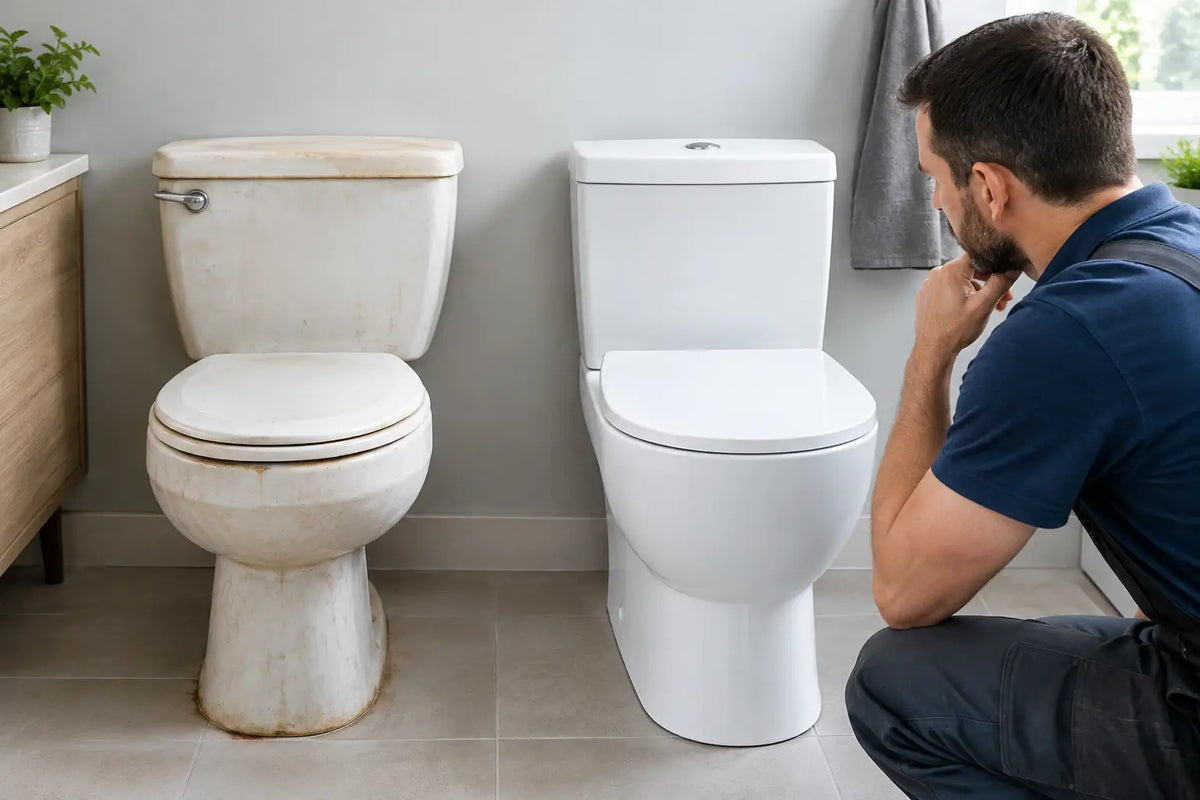
A toilet can look perfectly serviceable while quietly wasting water, demanding frequent repairs, or creating a risk of leaks below the finished floor. If you are asking when should you replace a toilet, the answer is rarely based on age alone. The condition of the porcelain, the reliability of the flush, the cost of recurring repairs, and the needs of the room all matter.
A well-maintained toilet may operate for decades, but its working parts do not last forever. Knowing the difference between a repairable issue and a fixture that has reached the end of its useful life helps homeowners, renovators, and facility managers make a practical purchase decision.
When Should You Replace a Toilet Instead of Repairing It?
Many toilet problems come from replaceable components inside the tank. A worn flapper, failing fill valve, loose handle, or deteriorated tank-to-bowl gasket is usually a straightforward repair. These parts are inexpensive compared with a new fixture, and replacing them can restore proper performance.
Replacement becomes the better choice when problems are structural, repeated, or expensive to resolve. A toilet that needs service every few months can cost more in parts, labour, water use, and inconvenience than a modern replacement. This is especially true during a bathroom renovation, when replacing an outdated fixture avoids reopening finished surfaces later.
A useful rule is to assess the whole fixture, not just the latest repair. If the bowl, tank, base, glazing, flush performance, or installation connection is compromised, a new toilet is usually the more dependable long-term option.
8 Signs It Is Time for a New Toilet
1. There Is a Crack in the Bowl or Tank
A hairline crack in porcelain is not always cosmetic. Cracks in the tank can lead to a sudden leak, while cracks in the bowl or near the base may allow water to reach the floor. This can damage flooring, subflooring, and adjacent rooms before the issue is obvious.
Inspect the fixture for dampness, water trails, or fine lines around the tank, bowl, and base. Replacing the toilet is the appropriate response to a confirmed crack. Porcelain repairs are not a reliable substitute for a structurally sound fixture.
2. It Rocks, Leaks, or Feels Unstable at the Base
A toilet should sit firmly on the floor. Movement when sitting down may indicate loose mounting hardware, an uneven floor, a failed wax ring, or damage at the flange beneath the toilet. Water around the base can point to the same installation area, although condensation or an external leak should be ruled out first.
In some cases, a plumber can reset the toilet with a new seal and correct the flange issue. If the toilet is old, chipped, difficult to clean, or already due for an upgrade, replacement during that repair often makes more sense. A new toilet also provides the opportunity to select the correct rough-in size and bowl height for the space.
3. It Clogs Regularly Despite Proper Use
An occasional clog happens. Frequent clogs are different. Older toilets may have narrow trapways or less effective flush designs that struggle with normal household use. Repeated plunging is a common sign that the fixture is no longer meeting the demands of the bathroom.
Before replacing it, confirm that the drain line is clear and that there is no broader plumbing blockage. If the drain is in good condition but the toilet still clogs often, a newer high-performance model can deliver more reliable waste removal without increasing water use.
4. The Toilet Runs After Flushing
A running toilet is often repairable. The flapper may not seal, the fill valve may be worn, or the water level may need adjustment. These are common maintenance items, particularly on toilets that are otherwise in good condition.
However, if you have replaced internal components more than once and the tank still runs, leaks, or fills inconsistently, replacement deserves consideration. Persistent running wastes water and can be particularly costly in multi-unit properties and commercial washrooms with high daily use.
5. Flushing Performance Is Weak or Inconsistent
A toilet that needs two flushes, leaves waste behind, or produces a weak swirl may have mineral buildup, a blocked rim jet, or a failing flush valve. Cleaning and component replacement can improve performance, but not every older design can be brought up to current expectations.
Modern toilets are engineered with improved bowl wash, trapway design, and flush technology. For a busy family bathroom, guest bath, rental property, or commercial setting, consistent performance is worth prioritizing. Choose a fixture with flushing capacity suited to the location rather than selecting only by appearance.
6. The Porcelain Is Stained, Rough, or Difficult to Keep Clean
Glazed porcelain should have a smooth, non-porous surface. Over time, harsh cleaners, mineral deposits, scratching, and wear can leave the bowl dull or rough. Once the surface no longer cleans easily, stains and odours can become harder to manage.
This is not usually an emergency replacement issue, but it is a sensible reason to upgrade during a renovation. A new bowl with quality glazing improves day-to-day maintenance and gives the bathroom a cleaner finished appearance.
7. It Uses More Water Than Necessary
Very old toilets can use considerably more water per flush than current efficient models. If a toilet dates from an earlier installation and is still operating with an older high-volume flush system, replacement may reduce water consumption over time.
Water efficiency should not mean accepting poor performance. Look for a toilet designed to flush effectively at its rated water use. Dual-flush options can be useful in residential settings, while single-flush high-performance models may be better suited to locations where simple, consistent operation is the priority.
8. Your Bathroom Layout or Accessibility Needs Have Changed
A toilet can be mechanically sound but no longer right for the room. Renovations often involve replacing a standard-height toilet with a comfort-height model, moving to an elongated bowl for added comfort, or choosing a compact round-front bowl for a tight powder room.
Accessibility, cleaning access, and design also influence the decision. A skirted toilet can simplify exterior cleaning, while wall-hung options can create a more open look and allow for floor cleaning beneath the bowl. These choices require careful planning for carrier systems, wall construction, rough-in dimensions, and service access.
Key Checks Before Buying a Replacement Toilet
The most attractive toilet is not necessarily the right fit. Start with the rough-in measurement: the distance from the finished wall behind the toilet to the centre of the floor drain bolts. A 12-inch rough-in is common, but 10-inch and 14-inch configurations also exist. Measure before ordering, and do not assume the existing toilet confirms the dimension.
Also consider bowl shape, seat height, overall projection, and clearance around the door, vanity, shower, or tub. An elongated bowl is often preferred for comfort, but a round-front bowl can preserve valuable floor space. For compact bathrooms, every inch matters.
Installation details are equally important. A replacement may require a new wax ring or alternative seal, closet bolts, a supply line, shutoff valve work, or flange repair. If the floor has been retiled, the flange height should be checked before the toilet is set. For smart toilets, bidet seats, and electronic models, plan for a suitable electrical connection and confirm the product's installation requirements.
Choosing the Right Type of Toilet for the Space
For straightforward replacements, a two-piece toilet remains a practical and widely available choice. The separate tank and bowl make handling easier, and replacement parts are familiar to most plumbers. One-piece toilets offer a clean profile with fewer exterior seams, making them popular in design-focused bathroom renovations.
Concealed-trapway and skirted models offer easier cleaning and a streamlined appearance, though their installation and service requirements vary by model. Wall-hung toilets are well suited to contemporary projects and commercial applications where floor access matters, but they require an in-wall carrier and should be planned before walls are closed.
For Canadian homeowners and trade buyers sourcing a replacement, Plumbing Market offers toilets, bidet solutions, installation components, and related bathroom fixtures across recognized brands. Matching the fixture type to the room, plumbing layout, and expected use is a better buying strategy than treating every toilet as interchangeable.
A toilet does not need to fail catastrophically before it is replaced. If it leaks, rocks, clogs repeatedly, wastes water, or no longer fits the room, acting before floor damage or a renovation delay gives you more options and a better finished result.


