

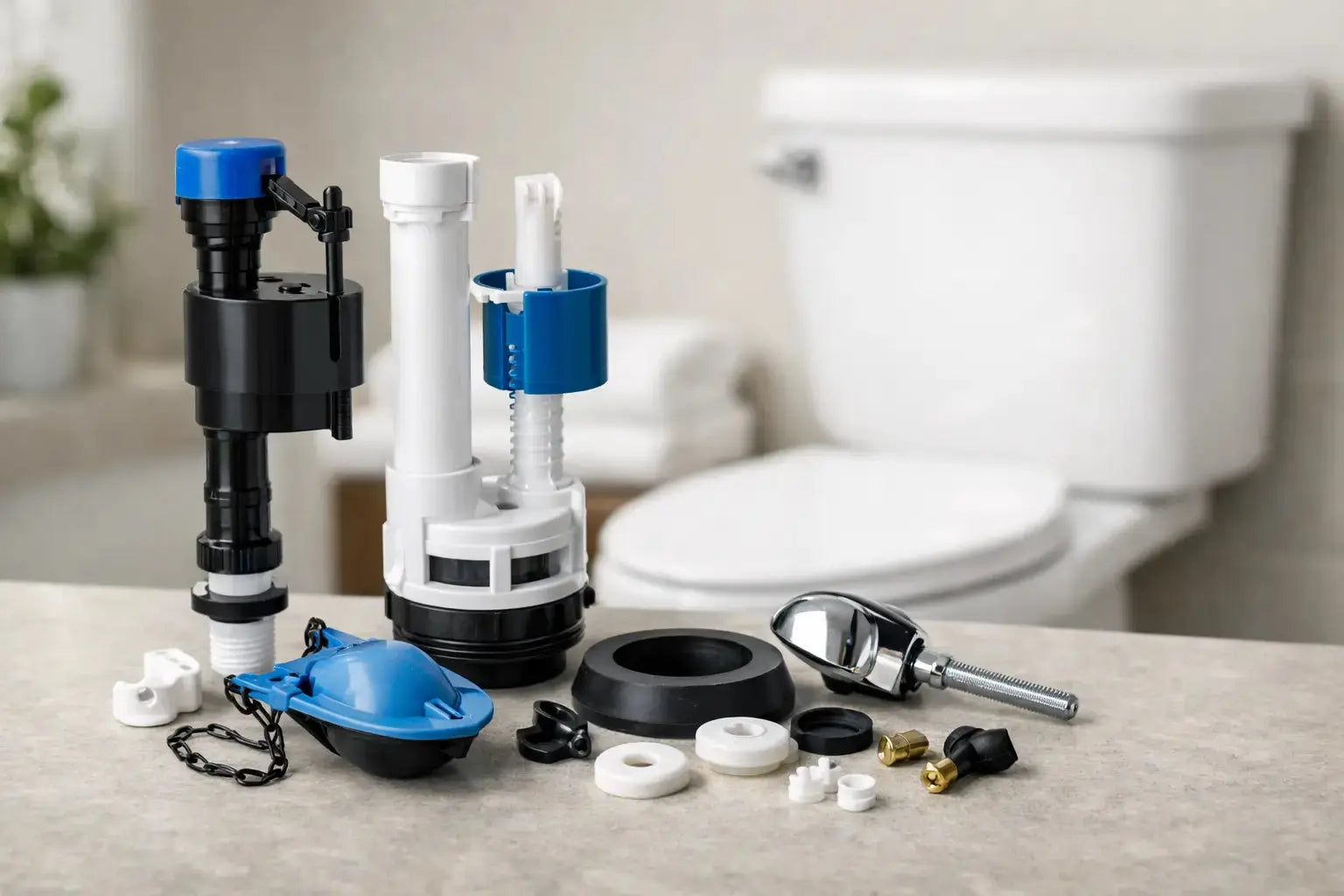
A toilet that runs all night, flushes weakly, or leaks at the base rarely needs to be replaced outright. In many cases, the right toilet replacement parts will restore performance quickly and at a much lower cost than a full fixture swap. The challenge is not deciding whether a part is needed. It is identifying which part has failed, whether it is universal or brand-specific, and what will actually fit your toilet the first time.
For homeowners, renovators, and trade buyers, that distinction matters. A generic flapper might solve one problem and create another if the size or material is wrong. A fill valve may look standard, but tank height, inlet connection, and brand tolerances can still affect the result. Buying toilet parts is less about guesswork and more about matching the repair to the toilet’s design.
Common toilet replacement parts and what they do
Most toilet repairs come back to a short list of internal components. Inside the tank, the fill valve controls how water refills after each flush. The flush valve releases water from the tank into the bowl. The flapper or tank seal closes that opening after the flush. The trip lever connects the handle to the flushing mechanism. The float regulates water level, and the supply line brings fresh water into the tank.
Outside the tank, you may also need closet bolts, bolt caps, a wax ring or wax-free seal, tank-to-bowl bolts, gaskets, or a new toilet seat. In commercial settings, the part list shifts slightly depending on whether the washroom uses exposed flush valves, concealed carriers, pressure-assist systems, or wall-hung bowls.
Not every toilet uses the same setup. Two-piece toilets, one-piece toilets, wall-mounted toilets, and skirted designs can all require different components. That is why the safest starting point is the toilet’s brand and model, not the symptom alone.
How to identify the right toilet replacement parts
The most efficient repair starts with three details: brand, model number, and the part you are replacing. Many toilets have identifying information stamped inside the tank, under the lid, or near the bowl. If the fixture is older and markings are faded, comparing the existing part’s dimensions and connection style becomes even more important.
Brand-specific toilets often use parts shaped for that exact tank geometry. TOTO and other premium manufacturers may use proprietary flush towers, seals, canisters, or seat fittings that do not interchange cleanly with universal alternatives. Universal parts can still be a good option, especially for standard gravity toilets, but they are not always the best option when fit, water level, or flush performance is critical.
Material also matters. Rubber seals and flappers wear out over time, particularly in areas with chlorinated water or when in-tank cleaning tablets are used. Metal hardware should resist corrosion, especially in busy residential bathrooms and commercial applications where service intervals matter. A lower-priced part can solve the immediate problem, but if it fails quickly, the repair becomes more expensive than choosing the correct component from the start.
Universal vs brand-specific parts
Universal parts are widely used because they are accessible and often cost-effective. For standard repairs on common gravity-fed toilets, they can work well. They are especially useful when you need a fill valve, supply line, or handle with flexible adjustment.
Brand-specific parts are usually the better choice when the toilet has a unique flush system, an integrated design, or performance features tied to exact tolerances. That includes many dual-flush toilets, skirted models, concealed tank systems, and premium residential or commercial fixtures. If the original toilet was engineered around a specific seal or valve, replacing it with the matching component often avoids callbacks and repeat troubleshooting.
Signs you need toilet replacement parts
A constantly running toilet usually points to a worn flapper, a compromised seal, or a fill valve that is not shutting off properly. A weak flush may come from a deteriorated flush valve, incorrect water level, mineral buildup, or a partial blockage. If water appears around the toilet base, the issue may involve the wax ring, loose bolts, or condensation rather than the tank components.
A loose or broken handle is often a simple lever or chain replacement. Water leaking between the tank and bowl typically means the gasket or bolt set has failed. A rocking toilet can damage the floor flange over time, which turns a simple reseal into a more involved repair if ignored.
There is also a point where replacing parts stops making financial sense. If the china is cracked, the flushing system is obsolete, or multiple internal components are failing at once, replacing the full toilet may be the better call. For newer or premium fixtures, though, parts replacement is usually the smarter investment.
Toilet parts by repair type
If the toilet keeps running, start with the flapper or tank seal, then check the chain length and fill valve shutoff. If the toilet fills slowly, inspect the fill valve, supply line, and shutoff valve. If the handle feels loose or disconnected, the trip lever assembly is the likely fix.
For leaks at the tank, focus on tank-to-bowl bolts, washers, and gaskets. For leaks at the floor, look at the wax ring, closet bolts, and flange condition. Seat problems are separate from flushing problems, so loose hinges, damaged bumpers, or broken quick-release hardware call for seat replacement parts rather than tank components.
This is where category depth helps. When you can shop by valve type, seal, bolt set, tank hardware, and brand-specific repair component, it becomes easier to source exactly what the job requires instead of buying a broad repair kit and hoping the unused pieces do not matter.
What matters most when buying toilet replacement parts
Fit comes first, but reliability is a close second. For residential bathrooms, quiet operation and long service life are usually the priorities. For commercial washrooms, durability, serviceability, and compatibility with high-use fixtures matter more. A part that works well in a powder room may not hold up in a restaurant, office, or multi-unit building washroom.
Water efficiency should also be considered. Some replacement components can help restore the original flush performance of a high-efficiency toilet, while mismatched parts may increase water use or lead to double flushing. If the toilet was designed to meet a specific flush volume, installing the correct internal parts helps maintain that rating.
Shipping the right part once also matters for project timelines. Contractors and renovators often need dependable access to both visible fixtures and technical repair parts in the same order. That is one reason a broad supplier such as Plumbing Market is useful for buyers who need premium toilets, installation components, and exact-fit replacement parts without splitting purchases across multiple sources.
Brand and model matching saves time
If you are replacing a part on a recognized brand toilet, do not assume every seal or valve is interchangeable. Matching by manufacturer specification reduces delays, especially on concealed systems, dual-flush mechanisms, and integrated bowls. It is a small step that often prevents a second order.
Older toilets can be simple or surprisingly specific
Older toilets sometimes accept standard replacement parts with no issue. Just as often, they use discontinued shapes, unusual rough details, or tank geometry that makes modern universal parts a poor fit. In those cases, measurements and visual comparison become essential. If the toilet is old enough that parts are scarce, replacement may be more practical than piecing together a repair.
A better way to shop for toilet replacement parts
The fastest way to buy correctly is to narrow the search by toilet type, problem, and brand. Start with what is failing: fill valve, flush valve, flapper, gasket, bolts, seat hardware, or floor seal. Then confirm whether the toilet is a standard two-piece unit, a one-piece design, or a more specialized wall-hung or commercial model.
From there, compare dimensions, connection points, and manufacturer details. Product descriptions should make clear whether a part is universal, model-specific, or intended for a certain series. For trade professionals, that level of classification reduces downtime. For homeowners, it reduces returns and frustration.
A repair part should do more than stop the immediate leak or noise. It should restore normal operation, hold up to regular use, and fit the fixture as intended. That is the difference between a quick patch and a proper repair.
When you are choosing toilet replacement parts, the best purchase is rarely the first part that looks close enough. It is the one that matches the toilet, the application, and the service life you expect from the repair.


