

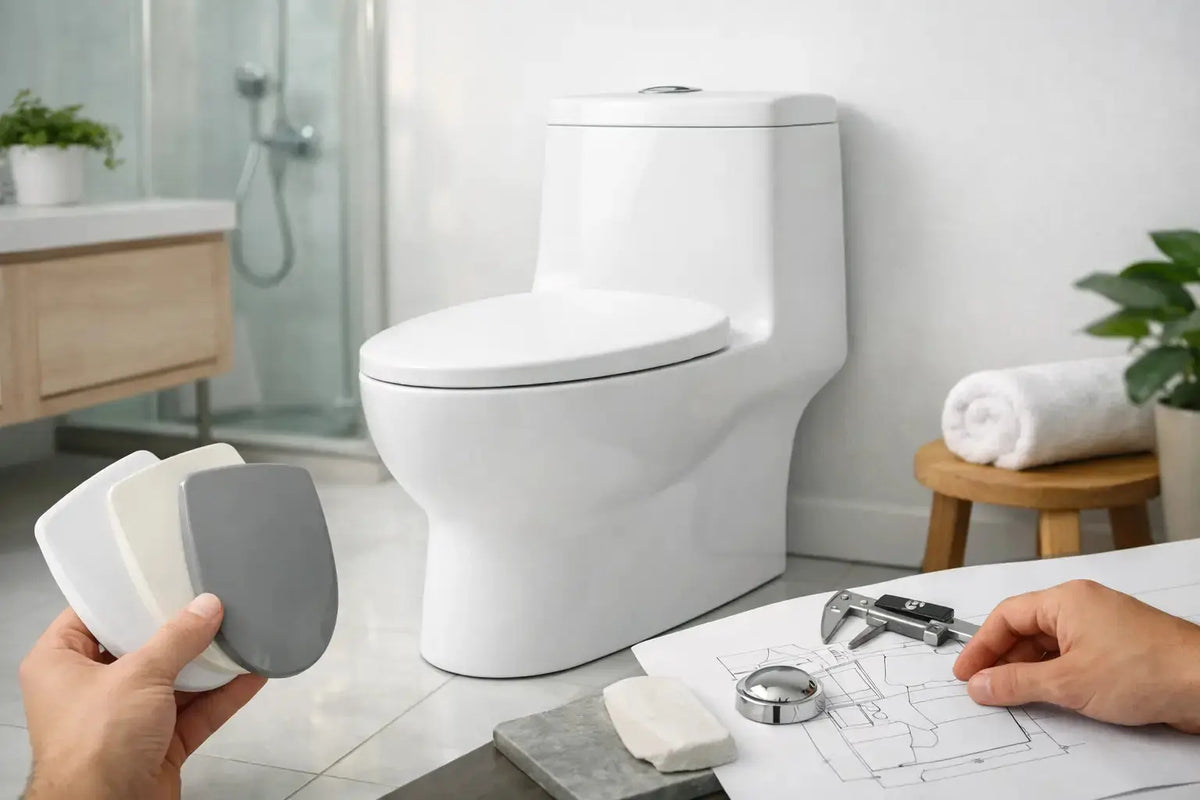
A one-piece toilet can solve two problems at once: it updates the look of a bathroom and cuts down on the crevices that collect grime around a separate tank and bowl. If you are figuring out how to choose a one piece toilet, the right pick comes down to fit, flushing performance, comfort, and the practical realities of installation.
One-piece models are popular for ensuite renovations, powder room upgrades, condo bathrooms, and commercial washrooms where appearance and easier cleaning both matter. They tend to look more streamlined than two-piece toilets, but that cleaner profile does not automatically make every model the right choice. The details matter, especially when you are buying for a Canadian home or jobsite where rough-in size, water efficiency, and replacement timelines need to line up.
How to choose a one piece toilet without guesswork
Start with the dimensions of the space, not the finish or the brand. A toilet that looks right in a product photo can still create clearance issues with the vanity, door swing, or tub if the projection is too long or the bowl shape is too wide for the room.
The first measurement to confirm is the rough-in. In most residential applications, this is 12 inches from the finished wall to the centre of the floor drain bolts, but 10-inch and 14-inch rough-ins do exist. If you skip this step, you risk ordering a model that simply will not fit. For renovation projects, measure the existing setup rather than assuming standard sizing.
Next, look at the bowl projection from wall to front edge. In a tighter bathroom, a compact elongated bowl or a round-front model can make a real difference. Elongated bowls usually offer better comfort, but they take up more room. Round bowls save space and are often the better call in smaller powder rooms or older homes with limited clearance.
Seat height also deserves attention early in the process. Standard height toilets can work well for children and some residential settings, while comfort-height or chair-height models are often preferred by adults, aging homeowners, and commercial users. If accessibility is part of the project scope, higher seating can improve ease of use significantly.
What makes a one-piece toilet different
A one-piece toilet has the tank and bowl cast as a single unit. That sounds simple, but it changes a few things for the buyer. The most obvious difference is appearance. One-piece designs usually look more modern and integrated, which is why they show up so often in contemporary bathroom renovations.
The second difference is maintenance. Because there is no seam between a separate tank and bowl, there are fewer exterior areas for dust and buildup to collect. That can make cleaning faster in busy family bathrooms or commercial spaces.
There are trade-offs. One-piece toilets are often heavier than two-piece models, so handling them during delivery and installation can be more demanding. They can also sit at a higher price point, especially in premium collections from brands such as TOTO. For many buyers, the cleaner look and easier maintenance justify the spend. For budget-driven projects, a two-piece model may still be the more practical option.
Choose the right size for the room
When shoppers ask how to choose a one piece toilet, they often focus on style first. In practice, fit is what determines whether the purchase works.
A compact bathroom needs careful attention to overall depth and usable floor space. If the toilet extends too far, the room can feel cramped even if the fixture technically fits. That matters in condo bathrooms, basement additions, and secondary baths where every inch counts.
You should also check side clearance and front clearance against local code requirements and comfortable day-to-day use. A toilet that crowds a vanity or leaves minimal knee room will not feel premium after installation, no matter how good the finish looks online.
For replacement jobs, compare the new model's dimensions to the existing toilet. For full renovations, review the toilet layout along with the vanity, shower glass, and door movement. Contractors already do this as part of planning, but homeowners buying fixtures separately often overlook it.
Flushing performance matters more than specs alone
A toilet can check every design box and still disappoint if the flush is weak, noisy, or prone to repeat clearing. That is why flushing performance should be evaluated beyond the headline gallon rating.
Most current toilets are designed for water efficiency, with many models using 4.8 litres per flush or similar low-consumption standards. That is good for long-term water savings, but efficient does not always mean equally effective. The internal trapway, flush valve design, bowl wash, and overall engineering all affect how well the unit clears waste and keeps the bowl cleaner.
Gravity-fed systems remain common and reliable for residential use. Pressure-assisted options can deliver stronger performance in some high-use settings, but they are typically louder and less common in design-focused home bathrooms. For most households, a well-engineered gravity flush from a reputable manufacturer is the right balance.
If the toilet is going into a frequently used family bathroom, ensuite, rental unit, or commercial washroom, prioritize proven flushing performance over cosmetic extras. A sleek silhouette is useful. A toilet that needs a plunger every few weeks is not.
Comfort features worth paying for
Not every upgrade feature is necessary, but a few are worth serious consideration depending on the user and the room.
An elongated bowl is usually the first comfort upgrade buyers notice. It provides a more natural seating area and is often preferred in primary bathrooms. Soft-close seats are another practical improvement, especially in homes with children or shared bathrooms where slamming lids become a daily annoyance.
Some one-piece toilets come with skirted sides. These create a cleaner visual profile and make exterior cleaning easier because there are fewer contours around the trapway. The trade-off is that installation can be a bit more involved on some models, particularly if a proprietary mounting system is used.
You may also see features such as rimless bowl design, glazed trapways, quick-release seats, or integrated bidet functionality. These can all add value, but only if they match the scope of the project. For a straightforward replacement, dependable fit and flush performance usually matter more than feature stacking.
Style should match the rest of the bathroom
One-piece toilets are often chosen for their look, so visual fit does matter. In a modern renovation, a low-profile tank, concealed trapway, and cleaner lines can complement floating vanities, frameless glass, and minimal hardware. In a more transitional bathroom, a softer-profile one-piece model may blend better than an aggressively modern design.
Colour is usually simple - most buyers stay with white for flexibility, resale appeal, and easier fixture matching. The better design decision is usually shape and proportion. A toilet that looks balanced with the vanity and does not dominate the room will age better than one chosen purely for trend value.
This is where a broad product assortment helps. When you can compare compact, comfort-height, skirted, and premium-brand options in one place, it becomes easier to buy for the room rather than settling for the first model that seems close enough.
Installation and replacement realities
Even the best product choice can create delays if the installation details are ignored. One-piece toilets need to be checked for rough-in compatibility, supply line position, and floor condition before ordering. An uneven floor or an aging shutoff valve can turn a simple swap into a larger repair.
Weight is another factor. Because the tank and bowl are one unit, moving the toilet into place can be less convenient than installing a two-piece model in stages. For homeowners handling their own renovation, that may influence the decision. For plumbers and contractors, it is usually manageable, but still worth accounting for on site.
It also makes sense to verify what is included in the box. Some toilets include the seat, mounting hardware, and wax ring or seal components, while others do not. Checking this up front helps avoid extra trips and installation delays.
Brand, parts, and long-term support
Choosing a toilet is not just about the fixture on day one. It is also about how easy it will be to service years later. Established brands tend to offer better consistency in replacement parts, flushing components, and seat compatibility. That matters for homeowners who want a reliable long-term installation and for trade professionals responsible for future maintenance.
Premium brands often justify their price through engineering, finish quality, and serviceability, not just appearance. If the toilet is going into a primary bathroom or a higher-end renovation, it often makes sense to stay with a recognized manufacturer rather than chasing the lowest upfront price.
For buyers comparing multiple bathroom fixtures at once, Plumbing Market gives you the advantage of sourcing toilets, valves, seats, and other renovation essentials through one specialized supplier instead of piecing the order together across different stores.
The best one-piece toilet is the one that fits the room properly, performs consistently, and makes sense for the people using it every day. If you start with measurements, then narrow by flush quality, comfort, and design, the final choice gets much easier - and far more likely to hold up long after the renovation is finished.


