

A good plumbing fixtures clearance sale can save hundreds on a bathroom refresh or a full kitchen and bath project, but only if the product fits the space, the rough-in, and the job scope. That is where many buyers get tripped up. The discount looks strong, the finish looks right, and then a missing valve, an odd drain placement, or a non-returnable special item turns a bargain into delay.
For Canadian homeowners, renovators, plumbers, and commercial buyers, clearance works best when it is treated like targeted buying rather than impulse buying. The goal is not simply to spend less. The goal is to secure the right fixture, from a trusted brand, at a reduced price without creating extra cost on installation day.
What a plumbing fixtures clearance sale usually includes
Clearance can cover a wide range of products, from decorative pieces to technical components. In practical terms, that often means discontinued finishes, overstocked models, end-of-line collections, open-box inventory, or seasonal promotional stock that needs to move.
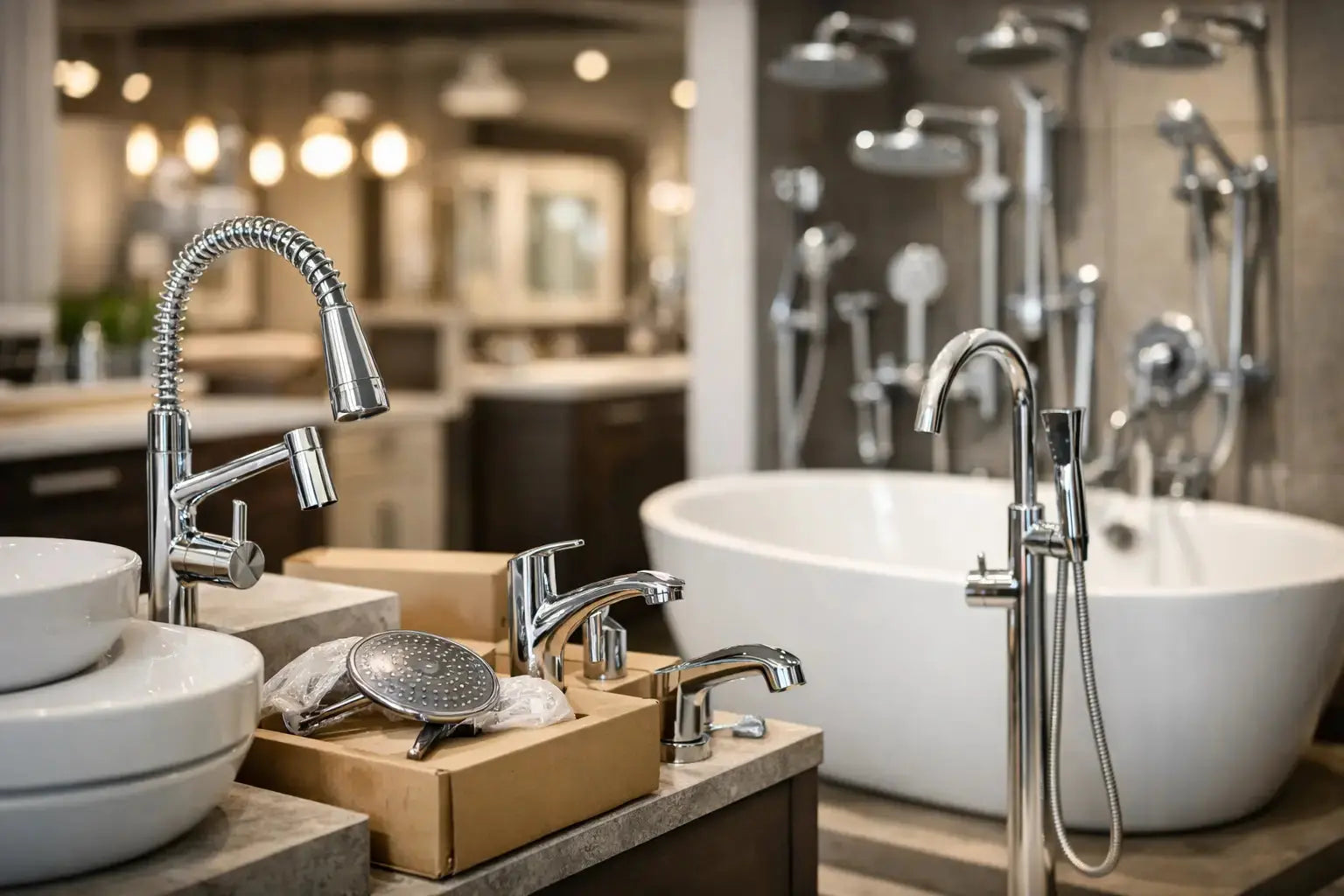
In kitchen and bath categories, clearance inventory commonly includes faucets, sinks, toilets, shower trim, bathtubs, vanities, accessories, and selected replacement parts. In some cases, it also includes rough-in valves, flush systems, commercial fixtures, and specialized components that matter more to trade buyers than retail shoppers.
That mix is what makes clearance valuable. A homeowner may find a premium lavatory faucet in the right finish for less than expected, while a contractor may spot a practical opportunity to source a matching valve and trim package at a better project cost. The buying logic is different, but the same rule applies - clearance is only useful when the product still matches the job.
Why clearance pricing happens
Not every reduced-price fixture has the same reason behind it, and that reason matters. A discontinued faucet from a recognized brand may be an excellent buy if the specs align and replacement cartridges remain available. An open-box sink may also be a smart purchase if it has been inspected carefully and the finish is intact.
On the other hand, clearance can sometimes reflect awkward inventory rather than broad value. A tub with uncommon dimensions, a toilet with a less common rough-in, or trim that requires a hard-to-find valve may sit in clearance because fewer projects can use it. The price reduction is real, but so is the compatibility risk.
That is why experienced buyers do not ask only, "How much is it off?" They ask, "Why is it on clearance, and what does that mean for installation, matching parts, and future servicing?"
How to shop a plumbing fixtures clearance sale without costly mistakes
The first thing to confirm is fit. For toilets, that means rough-in size, bowl shape, seat compatibility, supply location, and overall projection from the wall. For faucets, it means hole configuration, spout reach, deck thickness, and whether valves or drain assemblies are included. For tubs and shower systems, dimensions and plumbing placement matter just as much as style.
The second check is completeness. Clearance items are not always bundled the way standard listings are. A shower trim set may require a separate rough-in valve. A tub filler may need a matching drain sold separately. A vanity may include the cabinet but not the top, sink, or faucet. If you are pricing a project based on a clearance item, confirm every required component before you commit.
The third issue is condition. If the product is first-quality overstock, the decision is usually straightforward. If it is open box or final sale, inspect what you can. Look for chips, scratches, missing hardware, damaged packaging, or signs that key pieces were removed. For decorative products, minor imperfections may matter a lot. For technical parts, one missing fitting can delay the entire install.
Brand matters more on clearance, not less
Shoppers sometimes think clearance is the place to take chances on unknown products. In plumbing, that is rarely the best move. A lower price is more valuable when it applies to a brand with proven parts availability, clear specifications, and established warranty support.
That is especially true for fixtures that combine design and performance, such as toilets, faucets, shower systems, and electronic bidet seats. A premium model on clearance can offer excellent value because the engineering, finish quality, and service support tend to remain stronger than what you would get from a low-cost product bought at regular price.
For trade professionals, brand consistency also matters across projects. If you already know how a certain valve platform installs, or which flush components are easiest to maintain, a clearance opportunity inside that brand family can reduce cost without introducing unnecessary risk.
When clearance is ideal and when it is not
Clearance makes the most sense when your project has flexibility. If you are renovating a powder room and can choose between a few faucet styles or sink shapes, reduced inventory can open up good options. The same goes for accessory upgrades, secondary bathrooms, rental properties, and staged cosmetic improvements where exact model continuity is less critical.
It is less ideal when the project depends on a very specific specification. If you are replacing one fixture to match an existing suite, working to an approved designer schedule, or sourcing a component for an urgent repair, clearance can be hit-or-miss. The price may be attractive, but time spent chasing compatibility can erase the benefit.
Commercial buyers should be especially careful here. Clearance pricing on public washroom products, flush valves, sensor faucets, and replacement components can be useful, but only if the item aligns with maintenance standards and long-term parts access. A cheaper fixture is not a better buy if facility staff cannot service it efficiently later.
Categories where clearance often delivers strong value
Faucets are one of the strongest clearance categories because finish changes and model updates happen regularly. If the mounting configuration is standard and the included parts are confirmed, shoppers can often secure premium kitchen and bathroom faucets at meaningful discounts.
Bathtubs and sinks can also offer strong value, especially on showroom-style pieces or discontinued collections. The trade-off is logistics. Dimensions, delivery access, and drain placement need to be checked carefully, and returns may be more restrictive.
Toilets can be excellent clearance buys when the rough-in and performance specs are right. This is one category where technical fit matters more than appearance alone. Bowl height, seat inclusion, flush performance, and installation footprint all need review.
Shower systems are where buyers need the most discipline. A trim set may look like a complete solution when it is only part of one. Before buying on clearance, confirm valve requirements, flow compatibility, and whether the system includes all functional pieces needed for the installation.
Price is only one part of value
A clearance discount should be measured against the full installed cost. If a lower-priced faucet still requires extra parts, a plumber return visit, or finish compromises that affect the rest of the room, the actual savings may be smaller than they appear.
The same logic applies to project timing. Waiting for the perfect clearance item can be smart if your renovation schedule is flexible. If trades are booked, delays can cost more than the discount saves. For many buyers, the right choice is not the lowest price. It is the product that arrives on time, installs correctly, and holds up well.
This is where selection depth matters. A retailer with broad category coverage can help buyers compare clearance opportunities against in-stock alternatives across toilets, tubs, vanities, faucets, rough-in valves, parts, and commercial products. That makes it easier to decide whether the sale item is truly the best fit or simply the cheapest visible option.
A better way to approach clearance buying
The most effective clearance shoppers start with the project, not the promotion. They know the rough-in, the size limits, the finish target, the installation requirements, and the brand level they are comfortable with. Then they look for reduced-price inventory that fits those criteria.
That approach is more disciplined, but it works. It protects the design intent, keeps the install moving, and avoids spending savings on corrections. For homeowners, it means fewer surprises. For contractors and commercial buyers, it means fewer callbacks and better control over procurement.
If you are shopping a plumbing fixtures clearance sale, think like a buyer, not a bargain hunter. Measure first, verify the included components, and give extra weight to specification accuracy and brand support. A good clearance purchase should make the project easier to finish, not harder. That is the kind of value worth acting on.


