

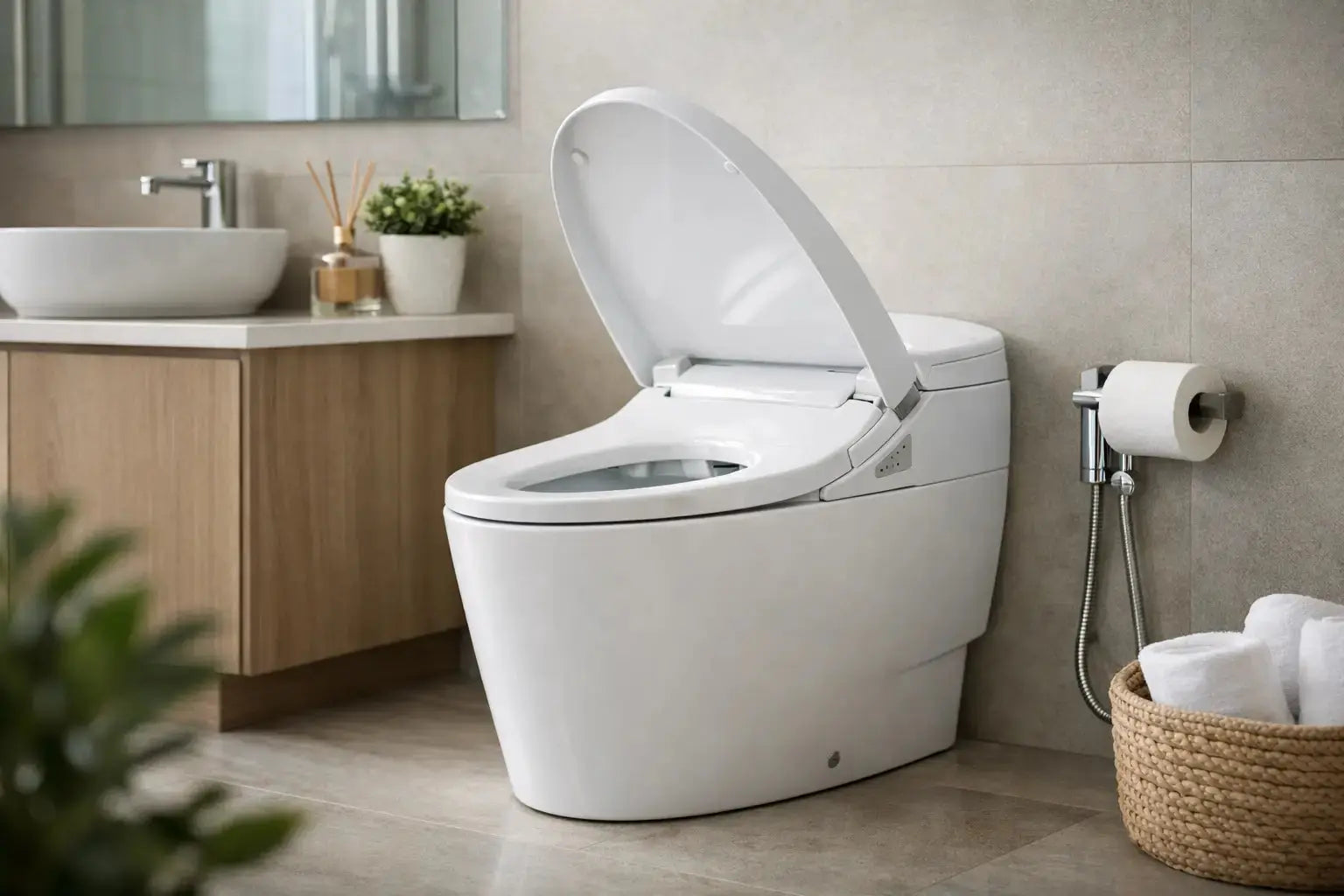
A smart toilet is not a standard fixture with a few extra buttons. It is a plumbing fixture, bidet system, electrical appliance, and comfort upgrade in one purchase. If “how to buy smart toilet” is the search that brought you here, start with the measurements and installation conditions in your bathroom, then compare the functions you will actually use.
The right model should fit the space, connect to your existing plumbing with minimal changes, meet Canadian electrical requirements, and offer reliable parts support. Features matter, but the best feature package is not useful if the toilet needs an electrical outlet or rough-in change that was never included in the renovation plan.
How to Buy a Smart Toilet: Start With Bathroom Compatibility
Before comparing wash modes, heated seats, or automatic lids, confirm the physical requirements of the room. Smart toilets are often one-piece units with a more substantial footprint than a conventional toilet, particularly when the bidet components and water connections are built into the fixture.
Measure from the finished wall behind the toilet to the centre of the closet flange. A 12-inch rough-in is common in Canadian homes, but 10-inch and 14-inch rough-ins also exist. Do not assume the existing toilet’s overall depth confirms the rough-in size. Measure it directly before ordering.
Also check the toilet’s projection from the wall, width at the widest point, and required clearance for the seat lid. In a compact bathroom, a few extra inches can affect door swing, vanity clearance, or access to a shower. Wall-hung smart toilets can save floor space visually, but they require an in-wall carrier frame and are generally best planned during a full renovation.
The other non-negotiable is power. Most integrated smart toilets need a nearby 120V grounded electrical outlet, usually with GFCI protection where required. An outlet behind or beside the toilet is cleaner than an extension cord, which should not be used for a permanent bathroom fixture. Have a qualified electrician assess outlet location, circuit capacity, and applicable local code requirements before installation.
Choose Between an Integrated Toilet and a Bidet Seat
There are two main ways to add smart toilet functions. An integrated smart toilet combines the bowl, seat, bidet, controls, and flushing system into one complete fixture. A smart bidet seat installs on a compatible standard toilet bowl.
An integrated model provides the most cohesive appearance. It can include a concealed water connection, automatic flushing, night light, warm-air dryer, heated seat, deodorizer, and remote control in a single purpose-built product. It is a strong choice for a bathroom renovation where design, bowl height, and plumbing layout are all being selected together.
A bidet seat can be a practical upgrade when the existing toilet is relatively new, the bowl shape is compatible, and you want wash functions without replacing the full fixture. It may also reduce the purchase and installation cost. The trade-off is that the final appearance depends on the existing toilet, and not every seat fits every elongated or round bowl. Confirm mounting dimensions, water supply access, and the location of the required electrical outlet.
Prioritize the Functions You Will Use Every Day
Smart toilet specifications can look extensive, so separate daily-use functions from occasional extras. For most households, wash performance, seat comfort, ease of cleaning, and flushing reliability should come ahead of novelty features.
Bidet performance starts with nozzle placement and adjustment. Look for separate front and rear wash options, adjustable water temperature, pressure, and spray position. A self-rinsing or self-cleaning nozzle helps maintain hygiene between uses. Some models add oscillating or pulsating spray patterns, which can be useful, but the basic controls should be intuitive for every user in the home.
A heated seat is one of the most valued features in Canadian bathrooms, especially in colder months. Check whether the temperature has multiple settings and whether the seat maintains its setting after power interruptions. A warm-air dryer can reduce toilet paper use, although drying performance varies by model and may take longer than users expect.
Automatic flushing is convenient, but it deserves closer attention. Determine whether the toilet offers sensor-activated flushing, remote flushing, a manual side button, or all three. A manual backup control is worthwhile in case batteries need replacement in the remote or an automatic sensor is temporarily unavailable.
Other features can improve the experience without being essential. These include automatic opening and closing lids, built-in deodorizers, bowl misting, night lights, user presets, and emergency flushing during a power outage. Decide which of these are worth paying for based on who will use the bathroom and whether the fixture is for a primary ensuite, guest bathroom, accessible washroom, or high-use family space.
Check Flushing Performance and Water Use
A smart toilet still needs to work as a toilet first. Review the flush type, water consumption, trapway design, and flush performance information provided by the manufacturer. Dual-flush models allow a reduced flush for liquid waste and a full flush for solid waste, helping manage water use without sacrificing performance when properly selected.
Look for a model designed for the water pressure and plumbing conditions in your home. The bidet functions require a water connection and operate within a stated pressure range. If your home has unusually low pressure, a booster system, or a well-water setup, review the manufacturer requirements before committing to a model.
For renovations, a skirted toilet can be especially appealing because it eliminates many of the exterior contours that collect dust around the trapway. Rimless bowl designs may also simplify cleaning, though cleaning results depend on the bowl geometry and flush pattern. Consider how easily you can reach the manual controls, shutoff valve, and service access points after the toilet is installed.
Compare Comfort, Height, and Design
Comfort is personal, and the specifications are only part of the decision. Elongated bowls generally provide more seating room than round bowls, but they project farther into the room. Standard-height toilets can suit shorter users and children, while comfort-height or chair-height options can make standing easier for many adults and seniors.
If accessibility is a priority, review seat height, load rating, remote-control placement, and whether the lid opens automatically. A higher seat is not automatically the best choice for every user, particularly where children or shorter adults use the bathroom regularly.
Design should also match the rest of the renovation. One-piece smart toilets create a clean, contemporary profile and minimize seams. White remains the most practical choice for broad fixture coordination, while matte finishes or more distinctive shapes may suit a design-led ensuite. Confirm whether the toilet includes the remote, mounting hardware, shutoff components, and any required trim or supply connections.
Budget for Installation, Not Only the Fixture
The installed cost can change significantly depending on the existing bathroom. Replacing a conventional toilet in a location with a 12-inch rough-in, nearby outlet, and accessible shutoff valve is relatively straightforward. Adding a new electrical circuit, moving a water supply, correcting an offset flange, or opening finished walls will increase the scope.
Plan for the toilet, electrician, plumber or qualified installer, possible outlet work, new shutoff valve or supply line, and any flooring or wall repairs. For wall-hung models, include the carrier system, in-wall tank components, framing, and access panel requirements. Contractors should receive the exact product specification sheet before rough-in work begins.
It is also wise to consider long-term ownership. Compare warranty coverage for the ceramic fixture, electronics, bidet seat, remote, and internal flush components separately. Choose recognized brands with clear replacement-parts availability. A smart toilet has more serviceable components than a conventional gravity toilet, so access to compatible remotes, filters, valves, seats, and electronic parts matters.
Review These Specifications Before Ordering
Use the product specification sheet to verify the details that cannot be corrected easily after delivery:
- Rough-in requirement, overall dimensions, bowl shape, and required clearances
- Electrical voltage, plug type, outlet location, and GFCI requirements
- Water pressure range, water connection size, and shutoff-valve position
- Flush volume, manual flush backup, warranty terms, and included components
A smart toilet earns its place when it solves real needs: better hygiene, easier cleaning, added comfort, accessible controls, or a more polished bathroom design. Measure first, plan the power connection properly, and select the feature level that will still make sense long after the renovation is finished.


