

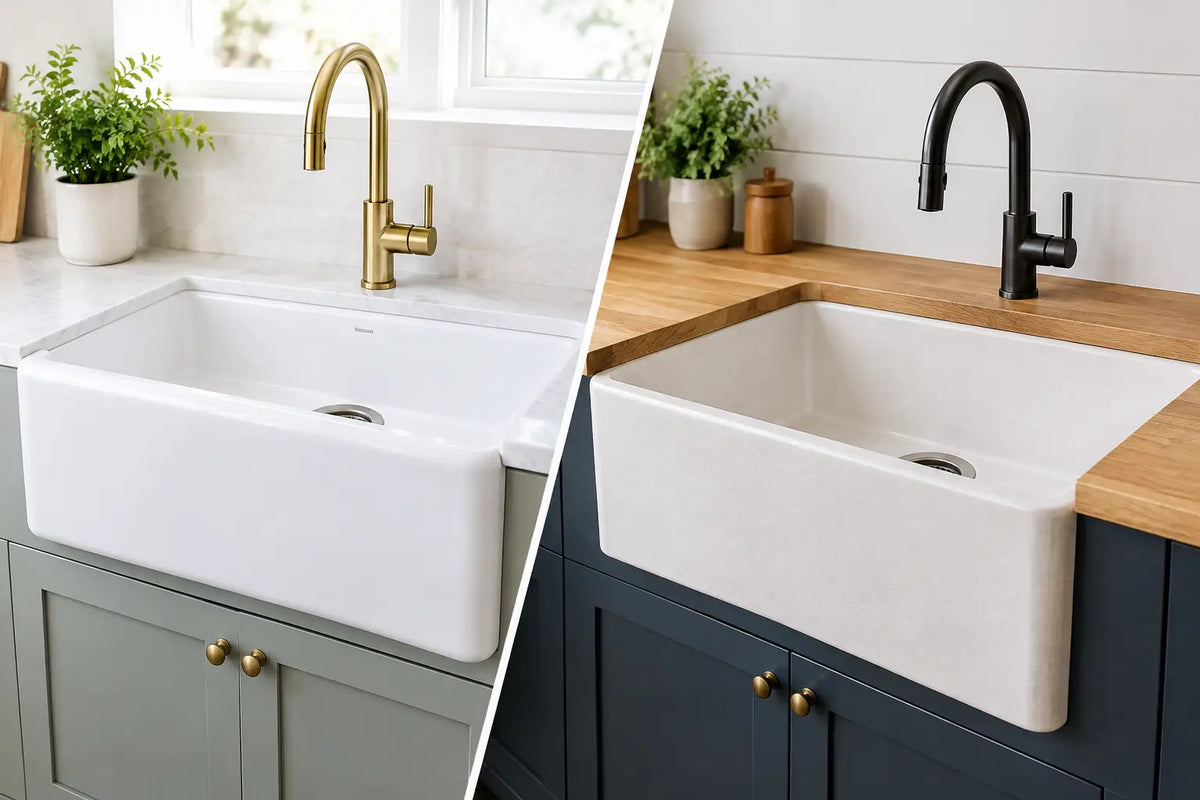
A white apron-front sink can look nearly identical whether it is described as ceramic, porcelain, or fireclay. The differences become much more relevant once the sink is carrying cast-iron cookware, being fitted into a quartz countertop, or expected to suit a busy family kitchen for years. When comparing ceramic versus fireclay sinks, the best choice depends on how the material is made, the installation method, your tolerance for maintenance, and the look you want to achieve.
For most renovation buyers, fireclay is the more common premium choice for a traditional farmhouse kitchen sink. Ceramic sinks can be an attractive option, particularly in bathroom applications and in kitchens where a lighter-duty, refined finish is the priority. Neither material is automatically better in every project.
Ceramic versus fireclay sinks: the material difference
Ceramic is a broad term. In sink shopping, it may refer to a clay-based fixture with a glazed surface, including porcelain or vitreous china products. Ceramic sinks are formed, fired, and finished with a protective glaze that creates their familiar smooth, glossy appearance. This material is widely used for bathroom basins because it is easy to clean, colour-stable, and compatible with a broad range of styles.
Fireclay is also ceramic, but it is made for more demanding conditions. It typically uses a denser clay blend and is fired at very high temperatures. A porcelain enamel glaze is fused to the body during firing, producing a hard, non-porous surface. That manufacturing process gives fireclay sinks their substantial weight, crisp shape, and reputation for durability.
The terminology can vary by manufacturer, so product specifications matter more than a category label alone. Check the listed material, sink weight, installation requirements, drain placement, and minimum cabinet width before selecting a model.
Appearance and design options
Fireclay is strongly associated with farmhouse and apron-front kitchen sinks. Its clean white finish works well with shaker cabinetry, natural stone counters, brass or matte black faucets, and both traditional and transitional kitchens. Many models have a reversible apron, with one side flat and the other featuring a decorative fluted or patterned detail.
Ceramic offers more flexibility in bathroom settings. It is available in vessel, drop-in, wall-mount, pedestal, and undermount basin styles, often with more options for shape and colour. In a kitchen, a ceramic sink can suit a lighter-use space, bar area, condo kitchen, or design scheme that calls for a clean glazed finish without the visual weight of a large farmhouse sink.
If your goal is a deep single-bowl statement sink for washing sheet pans and oversized pots, fireclay is usually the stronger match. If the project calls for a coordinated bathroom basin or a more compact sink profile, ceramic may offer more suitable options.
Durability in everyday kitchen use
A well-made fireclay sink handles normal kitchen use very well. Its dense construction and fused glaze resist stains, odours, fading, and everyday scratching. It is also less likely to absorb food residue or discoloration from coffee, tea, tomato sauce, or red wine when cleaned regularly.
That said, fireclay is not indestructible. The surface can chip if a heavy pan, sharp utensil, or hard object strikes it with enough force. A chip may expose the darker material beneath the glaze, making the damage more visible on a white sink. Fine surface marks from metal cookware are also possible, although these are often transfer marks that can be removed with a non-abrasive cleaner.
Ceramic sinks provide similar benefits from their glazed surface, but the degree of impact resistance depends on the specific product and how it is constructed. Thin ceramic bowls can be more vulnerable to cracking from a severe impact or from installation stress. For a primary kitchen sink that sees frequent cookware, dishes, and food preparation, a heavy fireclay model is generally the more dependable option.
Heat resistance and thermal shock
Both materials tolerate warm dishes and normal kitchen temperatures well. Fireclay is particularly valued for its ability to handle heat, which is helpful in active kitchens. However, no glazed sink should be treated as a landing spot for extremely hot cookware straight from the oven or cooktop.
Thermal shock is the more practical concern. This occurs when a very hot or very cold item changes the surface temperature too quickly. Pouring boiling water into a cold sink is generally less concerning than placing a red-hot pan directly on the basin, but gradual temperature changes are always safer for the finish. Use a sink grid or trivet when handling heavy, hot cookware.
Installation requirements can decide the purchase
Sink material affects more than appearance. Fireclay sinks are heavy, and an apron-front version may require cabinet modification, a reinforced base, and precise countertop planning. The cabinet must support the sink independently rather than relying on the countertop alone. This is especially important with undermount or farmhouse installations.
Before ordering, confirm the sink's outside dimensions, bowl depth, apron height, drain location, and recommended minimum cabinet size. Do not assume a 30-inch sink will fit every 30-inch base cabinet. Side walls, cabinet framing, internal drawers, and plumbing clearances can reduce usable space.
Ceramic sinks may be easier to manage because many bathroom styles are designed for standard drop-in or wall-mount installation. Kitchen ceramic sinks still require proper support, particularly if they are deep or wide. An undermount installation should follow the sink manufacturer's mounting instructions and be completed with hardware appropriate for the sink weight and countertop material.
For either material, plan the faucet and accessories at the same time. A farmhouse sink with a deep bowl may need a taller faucet with enough reach to direct water toward the drain. Consider whether you need a soap dispenser, filtered-water faucet, air gap, or side spray, as these choices affect countertop drilling and available space.
Cleaning and long-term care
The good news is that both ceramic and fireclay are straightforward to maintain. Use mild dish soap, warm water, and a soft cloth or non-abrasive sponge for regular cleaning. Drying the sink after use helps reduce mineral spotting, which can be more noticeable in areas with hard water.
Avoid steel wool, harsh scouring powders, and aggressive chemical cleaners. These products can dull the glaze over time or leave behind residue. If a dark mark appears after washing metal cookware, start with a gentle cleaner formulated for glazed surfaces rather than assuming the sink is scratched.
A bottom grid is a practical accessory for either material, but it is particularly useful with fireclay. It cushions cookware, improves drainage beneath dishes, and helps limit direct impacts. Choose a grid designed for the exact bowl shape and drain position so it sits securely without trapping debris.
Cost and value considerations
Ceramic sinks often cover a broad price range, especially in bathroom categories. Basic vitreous china basins can be cost-effective, while designer vessel sinks and specialty finishes can move into premium territory. Their value is strongest when the project needs a clean, reliable basin that coordinates with the rest of the bathroom fixture package.
Fireclay kitchen sinks usually carry a higher upfront cost because of their material, manufacturing process, size, and weight. Installation can also cost more if cabinetry needs to be altered or reinforced. That added investment can make sense when the sink is a focal point of the renovation and will be used heavily every day.
Do not compare price alone. Include the cabinet work, countertop fabrication, faucet compatibility, sink grid, drain assembly, and installation labour in the project budget. A less expensive sink that creates unexpected modification costs is not necessarily the lower-cost choice.
Which sink is right for your project?
Choose fireclay when you want a substantial kitchen sink with a classic apron-front look, a deep bowl, strong stain resistance, and long-term visual appeal. It is especially well suited to full kitchen renovations where cabinet sizing and support can be planned from the beginning.
Choose ceramic when the project calls for a versatile glazed basin, particularly in a bathroom, powder room, bar area, or lighter-use kitchen. It can deliver a polished, easy-care finish while offering more shape and installation options in many fixture categories.
For renovation projects, the right sink is the one that fits the cabinetry, countertop plan, faucet layout, and daily workload before it matches a trend. Confirm the technical details early, then select the finish and profile that make the room work as well as it looks.


