

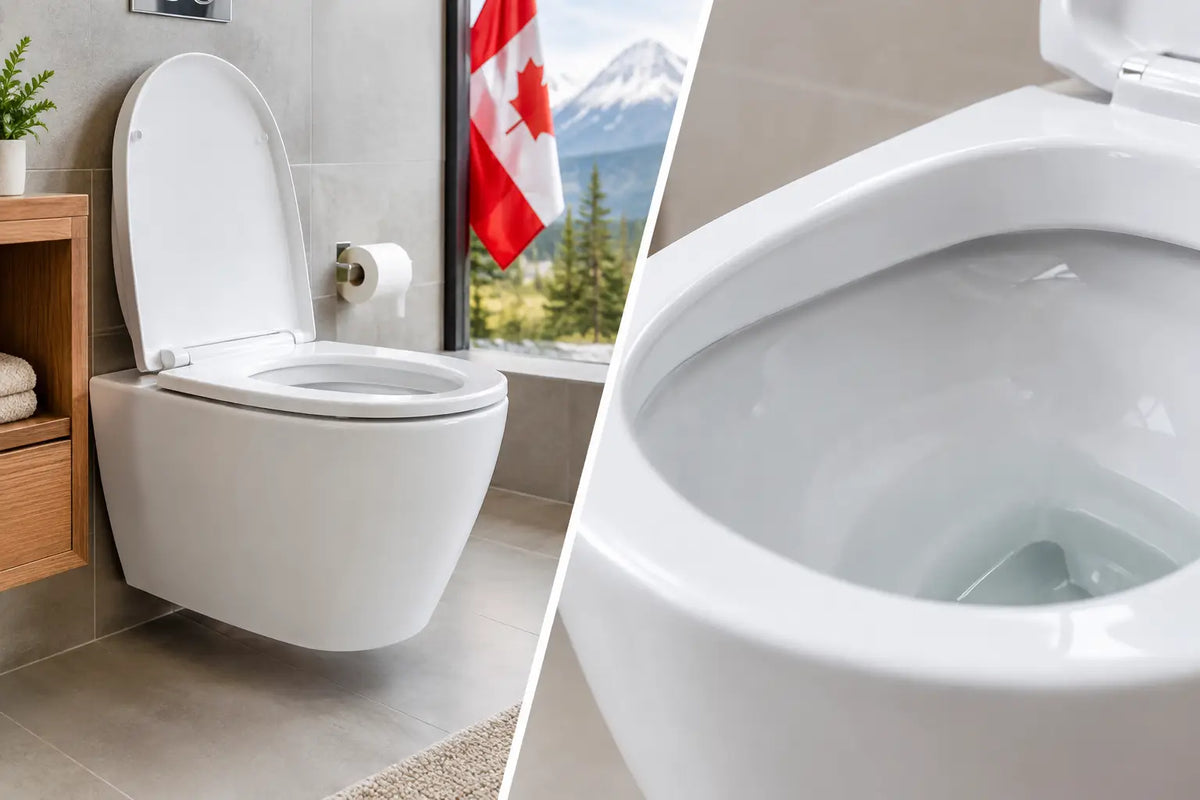
A toilet rim is easy to overlook until it is time to clean it. The concealed channel beneath a conventional rim can collect mineral deposits and bacteria, particularly in hard-water areas. So, are rimless toilets better? For many Canadian bathroom renovations, they are a practical upgrade because they simplify cleaning and can deliver an effective full-bowl flush. They are not automatically the right choice for every budget, layout, or commercial application.
What makes a toilet rimless?
A conventional toilet uses a hollow rim around the upper edge of the bowl. During a flush, water travels through this channel and exits through a series of small holes beneath the rim. Those holes distribute water around the bowl, but they are difficult to see, scrub, and rinse thoroughly.
A rimless toilet removes that enclosed channel. Instead, a carefully shaped outlet at the rear or upper section of the bowl sends water around the bowl in a controlled wash. Depending on the manufacturer, this may be described as direct flush, tornado flush, washdown, or rimless technology. The result is an open, accessible bowl edge with fewer concealed surfaces.
The design is most common in contemporary one-piece and skirted toilets, although two-piece rimless models are also available. Premium brands may pair it with glazed trapways, powerful siphon jet systems, soft-close seats, dual-flush controls, or integrated bidet functions.
Are rimless toilets better for hygiene?
For routine cleaning, the answer is usually yes. With no hidden rim channel, the upper interior of the bowl is visible and easier to wipe down. There are no small rim jets where limescale can restrict water flow or where residue can remain after a surface clean. This matters in busy family bathrooms, rental properties, hospitality spaces, and commercial washrooms where cleaning time has a real cost.
A rimless bowl does not eliminate the need for regular cleaning. It still has a waterline, trapway, seat hinges, and exterior surfaces that need attention. However, it removes one of the least accessible areas of a traditional toilet. A toilet brush and standard bathroom cleaner can reach more of the bowl without forcing cleaner up beneath the rim.
The hygiene advantage also depends on the quality of the glaze and the effectiveness of the flush. A well-made vitreous china bowl with a smooth, durable finish is less likely to hold stains. Some premium toilets add specially formulated glazes designed to reduce adhesion of waste and mineral buildup. These features can be valuable, but the basic open-rim design remains the main cleaning benefit.
Flushing performance: better design, not just more water
A rimless toilet is not necessarily more powerful simply because it has no rim. Performance depends on bowl geometry, trapway size, flush valve design, tank components, and how the water is directed. A poorly designed rimless bowl can splash or leave a weak wash path, while a well-engineered conventional toilet can flush reliably for years.
The strongest rimless designs use a shaped channel or rear jet that guides water around the full circumference of the bowl. Rather than dribbling through multiple small holes, the flush creates a deliberate, high-coverage flow. This can provide a clean bowl rinse while using the same amount of water as a comparable conventional model.
For Canadian buyers, pay attention to the rated flush volume and certification details, not only marketing language. Dual-flush toilets commonly offer a reduced flush for liquid waste and a higher-volume setting for solids. A high-efficiency toilet can lower water use without sacrificing reliability when its flushing system has been properly engineered.
Splash control is the key trade-off. An open-rim bowl gives the manufacturer less room to hide an uneven water path. Established brands test their bowl shape and flush action to keep water contained, but results vary by model. If possible, review the manufacturer specifications and choose a recognized brand with a proven flushing platform rather than selecting only by appearance.
Rimless versus conventional toilets
The most useful comparison is not rimless versus traditional in general. It is one specific toilet model versus another that fits the same bathroom, rough-in, and budget.
| Consideration | Rimless toilet | Conventional rimmed toilet |
| --- | --- | --- |
| Cleaning access | Open bowl edge is easier to inspect and clean | Underside of rim and jet holes are harder to reach |
| Hygiene | Fewer concealed areas for deposits to build up | Requires more attention beneath the rim |
| Flush action | Controlled open-channel wash, dependent on bowl design | Water exits through multiple rim holes |
| Price | Often higher, especially in modern skirted models | Broad range, including many economical options |
| Replacement parts | May use model-specific components | Common designs can be straightforward to service |
A conventional toilet remains a sound choice when cost control is the priority, when replacing a like-for-like unit, or when a facility standardizes on a familiar serviceable model. The rim itself is not a defect. It simply creates a cleaning challenge that rimless designs address more effectively.
Installation factors Canadian buyers should check
Changing to a rimless toilet does not usually require special plumbing, but the basic fit details still matter. Confirm the rough-in measurement before ordering. A 12-inch rough-in is common in Canadian homes, but 10-inch and 14-inch rough-ins are also found, especially in older properties or certain condo layouts.
Measure the available projection from the finished wall, clearance to the vanity or tub, and door swing. Elongated bowls generally offer more seating room, while compact elongated and round-front designs can preserve valuable space in smaller bathrooms. If the toilet is going into a powder room, a wall-hung model may create a lighter visual effect, though it requires an in-wall carrier system and more involved installation planning.
Also consider whether a skirted base is worth the added cost. Rimless and skirted are separate features, but they work well together. The rimless bowl reduces cleaning under the bowl edge, while a skirted base removes many of the exterior contours around the trapway. The trade-off is that skirted models may use proprietary mounting systems or have more restricted access during certain repairs.
For a replacement project, inspect the shutoff valve, supply line, flange condition, and finished floor height. A new toilet is a good opportunity to replace worn installation components and correct a weak or corroded shutoff before it becomes an emergency repair.
Cost, maintenance, and long-term value
Rimless toilets often cost more than entry-level rimmed toilets, but the gap has narrowed as the design has become more common. Price is influenced by brand, one-piece or two-piece construction, flush technology, bowl shape, seat quality, finish, and whether the toilet includes a concealed trapway or bidet seat features.
The long-term value is usually strongest when the toilet solves a clear need. In a main bathroom used by a family, easier cleaning can justify the higher fixture cost. In a design-led renovation, a rimless skirted toilet can support the clean lines of a floating vanity, wall-mounted faucet, or large-format tile. In a rental or commercial setting, reduced cleaning complexity may be more important than a premium visual finish.
Maintenance is generally straightforward. Use non-abrasive cleaners that are compatible with vitreous china and seat materials. Avoid placing chlorine tablets in the tank unless the manufacturer specifically permits them, as they can damage seals and flushing components over time. If the flush pattern changes, inspect the tank components first, then follow the manufacturer guidance for the specific bowl and flush system.
When a rimless toilet is the right choice
Choose a rimless toilet when easy cleaning, modern styling, and accessible bowl hygiene are priorities. It is particularly well suited to renovated primary bathrooms, ensuite bathrooms, powder rooms, and higher-use residential spaces. It can also be a practical choice for commercial washrooms where the fixture is specified around hygiene, water efficiency, and cleaning requirements.
A conventional model may be the better purchase when you need the lowest upfront price, are matching existing fixtures, or require a specific proven configuration for a maintenance-sensitive property. The best toilet is one that fits the rough-in, flushes consistently, has available replacement parts, and suits the people who will use and clean it.
For most renovation buyers, a quality rimless toilet from an established manufacturer is a worthwhile upgrade rather than a cosmetic trend. Compare the flush rating, dimensions, bowl shape, rough-in, and service components before deciding. That extra check helps ensure the fixture looks right on installation day and remains easy to live with long after the renovation is finished.


